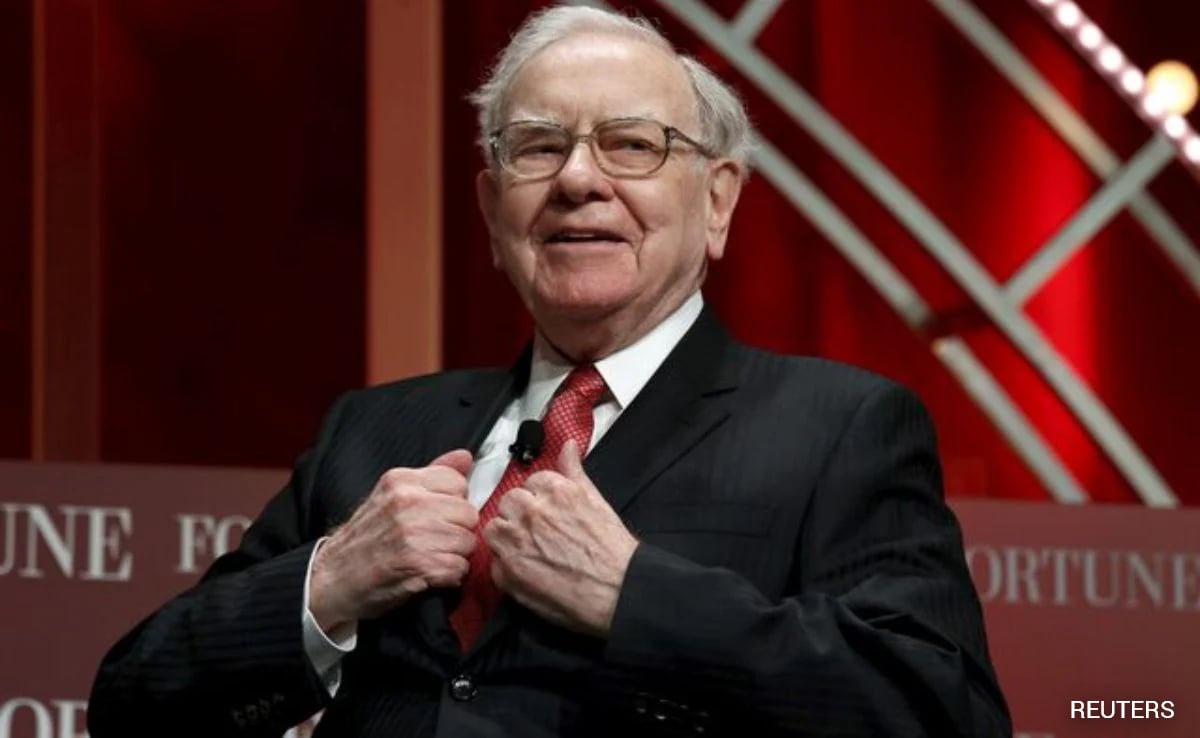
The decision was decades in the making but executed with the surgical coldness of a corporate restructuring. Warren Buffett, the world’s most famous living practitioner of "buy and hold" logic, has finally broken his longest-standing philanthropic position. By redirecting his remaining tens of billions away from the Bill & Melinda Gates Foundation, Buffett didn't just move money; he signaled a fundamental lack of confidence in the governance of an institution that was once his primary legacy vehicle. While the official narrative centers on Buffett's desire for his children to manage his wealth through a new charitable trust, the timing suggests a deeper discomfort with the personal and reputational baggage now trailing Bill Gates. Specifically, the lingering stench of the Jeffrey Epstein association has made the Gates Foundation a liability for a man who famously told his managers that he can afford to lose money, but he cannot afford to lose a shred of reputation.
Buffett is 95 years old. He is a pragmatist who views every dollar as a seed for future compounding. For years, the Gates Foundation was his preferred "index fund" for giving. It had the scale, the metrics, and the shared philosophy of its founders. But the landscape changed. The 2021 divorce of Bill and Melinda French Gates cracked the foundation’s facade, revealing internal tensions and, more critically, exposing the depth of Bill Gates’s post-2011 meetings with convicted sex offender Jeffrey Epstein. For Buffett, a man who built his career on the "Omaha brand" of folksy integrity, the association wasn't just a social faux pas. It was a failure of judgment that threatened the very efficacy of the capital being deployed.
The Reputation Tax and the Epstein Factor
Money is fungible, but credibility is not. When the details of the Gates-Epstein meetings began to leak—meetings that took place well after Epstein’s 2008 conviction—the foundation entered a defensive crouch. Buffett’s departure from the board in 2021 was the first warning shot. He framed it as a move toward a "less active role," but the reality was a strategic retreat.
The investigative reality is that Buffett operates on a logic of risk management. If the primary figurehead of your charitable vehicle is embroiled in a scandal involving the world’s most notorious pedophile, the "brand" of your philanthropy becomes toxic. Every dollar Buffett gave to the Gates Foundation was, in his view, potentially being offset by the reputational drag of the Epstein files. He saw a sinking ship of public trust and decided to get his billions onto a lifeboat.
The Epstein connection was never just about "bad optics." It represented a fundamental disconnect in how Bill Gates managed his private life versus the disciplined, data-driven image the foundation projected. Buffett, who has spent sixty years vetting CEOs for their character, likely saw this as a red flag that no amount of polio eradication could mask. He is a man who values predictability. The Epstein revelations were the ultimate unpredictable variable.
Institutional Drift and the Governance Crisis
Beyond the headlines of scandal, the Gates Foundation suffered from a more mundane but equally terminal disease: institutional drift. Buffett has always been wary of "the institutional imperative"—the tendency of large organizations to engage in mindless mimicry and self-preservation.
As the foundation grew into a massive bureaucracy with thousands of employees, it began to look less like a nimble problem-solver and more like the very government agencies it was designed to supplement. Buffett noticed. His investment philosophy relies on lean operations and decentralized authority. The Gates Foundation, meanwhile, became increasingly centralized and top-heavy.
The Power Shift to the Buffett Heirs
The most significant "how" in this reconstruction is the shift of power to Howard, Susie, and Peter Buffett. By moving the money to a new trust overseen by his children, Warren is performing a classic Buffett maneuver: he is betting on people he knows and trust structures he can control.
This isn't just a father being kind to his kids. This is a strategic pivot. The Buffett children have spent years running their own smaller foundations with a focus on boots-on-the-ground impact—Howard on food security and conflict zones, Peter on social justice, and Susie on early childhood education and reproductive rights. They represent a more visceral, less "technocratic" form of giving than the Gates model. Warren is effectively saying that the Gates experiment in "philanthro-capitalism" has reached its point of diminishing returns.
Following the Money Trait
The scale of this withdrawal is staggering. We are talking about roughly $30 billion in remaining Berkshire Hathaway shares that were originally destined for the Gates Foundation. When you move that much capital, you aren't just changing a line item; you are shifting the geopolitical weight of global health.
The Gates Foundation currently funds a massive portion of the World Health Organization’s budget. It is the primary driver of global immunization. By pulling his support, Buffett is forcing the foundation to either find new donors—a difficult task given the current climate—or significantly scale back its ambitions. This is a cold-blooded assessment of future utility. Buffett has looked at the spreadsheet and decided that his children can generate a better "social return on investment" than the embattled Gates machine.
The Illusion of the Seamless Transition
Publicly, the Gates Foundation has thanked Buffett for his "extraordinary generosity." This is the language of a forced smile. Behind the scenes, the loss of the Buffett billions is a catastrophic blow to the foundation's long-term planning.
The foundation had built its 20-year strategy on the assumption that the Berkshire Hathaway taps would remain open. Now, they are facing a future where they must compete for funding in a world that is increasingly skeptical of billionaire-led interventions. The Epstein files didn't just damage Bill Gates; they damaged the idea that a single person, or a single couple, should have the power to dictate global health policy without oversight. Buffett, ever the astute reader of the room, understands that the era of the "celebrity savior" is closing.
Accountability and the New Trust
The new trust managed by the Buffett children will likely operate with a level of transparency that the Gates Foundation lacked. While the Gates model relied on "big bets" and proprietary data, the Buffett children have historically been more collaborative with local governments and grassroots organizations.
This move also solves a major legacy problem for Warren. If he had left the money with Gates, his name would be forever tied to whatever future scandals or failures emerged from that camp. By creating a separate vehicle, he secures his own legacy. He ensures that the "Buffett Way"—simplicity, integrity, and a focus on the bottom line—remains the guiding light for his wealth, rather than the increasingly complicated and compromised Gates legacy.
The Mechanics of the Exit
Buffett’s exit is not a one-time event but a controlled burn. He has already donated more than $36 billion to the Gates Foundation since 2006. The remaining shares will be distributed into the new trust over time after his death. This prevents a sudden fire sale of Berkshire stock, which would harm his current shareholders.
The genius of the move lies in its timing. By announcing the shift now, while he is still alive and active, he prevents a chaotic legal battle after his passing. He is setting the terms of the engagement. He is making it clear that his loyalty is to the mission of effective giving, not to a friendship that has become increasingly expensive to maintain.
The Fallout for Bill Gates
For Bill Gates, this is a profound personal and professional stinging. Buffett was his mentor, his bridge partner, and his most significant validator in the world of high finance. To have that validator publicly walk away—and to explicitly hand the keys to his own children instead—is a vote of no confidence that resonates across every boardroom in the world.
The "Epstein Files" served as the catalyst, but the underlying issue was a divergence of values. Gates became a global statesman who occasionally forgot the importance of the "Omaha" brand of humility and caution. Buffett remained a man who lives in the same house he bought in 1958. That cultural gap eventually became a chasm that billions of dollars could no longer bridge.
A Different Kind of Philanthropy
The new Buffett trust will likely avoid the "top-down" approach that defined the Gates era. We should expect to see more focus on immediate, tangible results and less on the long-term, high-risk scientific gambles that Gates preferred.
This is a return to the fundamentals. Buffett likes businesses that have a "moat"—a competitive advantage that protects them from rivals. In philanthropy, he is looking for programs that have a "moat" against waste and corruption. He clearly felt the Gates Foundation’s moat had been breached. Whether through the distractions of a high-profile divorce or the shadows of past associations, the fortress was no longer secure.
The End of the Alliance
The partnership between Warren Buffett and Bill Gates was once seen as the gold standard of modern cooperation. It was a union of old-school capital and new-school technology. But as the "Epstein files" showed, even the most powerful men are subject to the consequences of their associations.
Buffett’s move is a reminder that in the world of the ultra-wealthy, silence is often the loudest statement. He didn't need to give a speech. He didn't need to write a manifesto. He simply moved his money. In doing so, he told the world everything they need to know about the current state of the Gates Foundation and the man whose name is on the door. The era of the Buffett-Gates alliance is over, replaced by a more fragmented, more scrutinized, and perhaps more accountable form of giving.
The transition is a lesson in power dynamics. Even a multi-billion dollar gift comes with strings, and those strings are tied to the character of the recipient. When the character is called into question, the money eventually follows the exit sign. This is the brutal reality of the Buffett philosophy: when the facts change, he changes his mind. The facts of the Gates Foundation's leadership changed, and the result is a $30 billion divorce that will reshape the charitable sector for a generation.
Buffett has always played the long game. By pulling back now, he is ensuring that his wealth doesn't fund a legacy of scandal, but rather a future of focused, family-led impact. It is his final, and perhaps most significant, investment. Use this as a template for understanding how reputation functions as the ultimate currency in global business; once it is spent, no amount of wealth can buy it back.