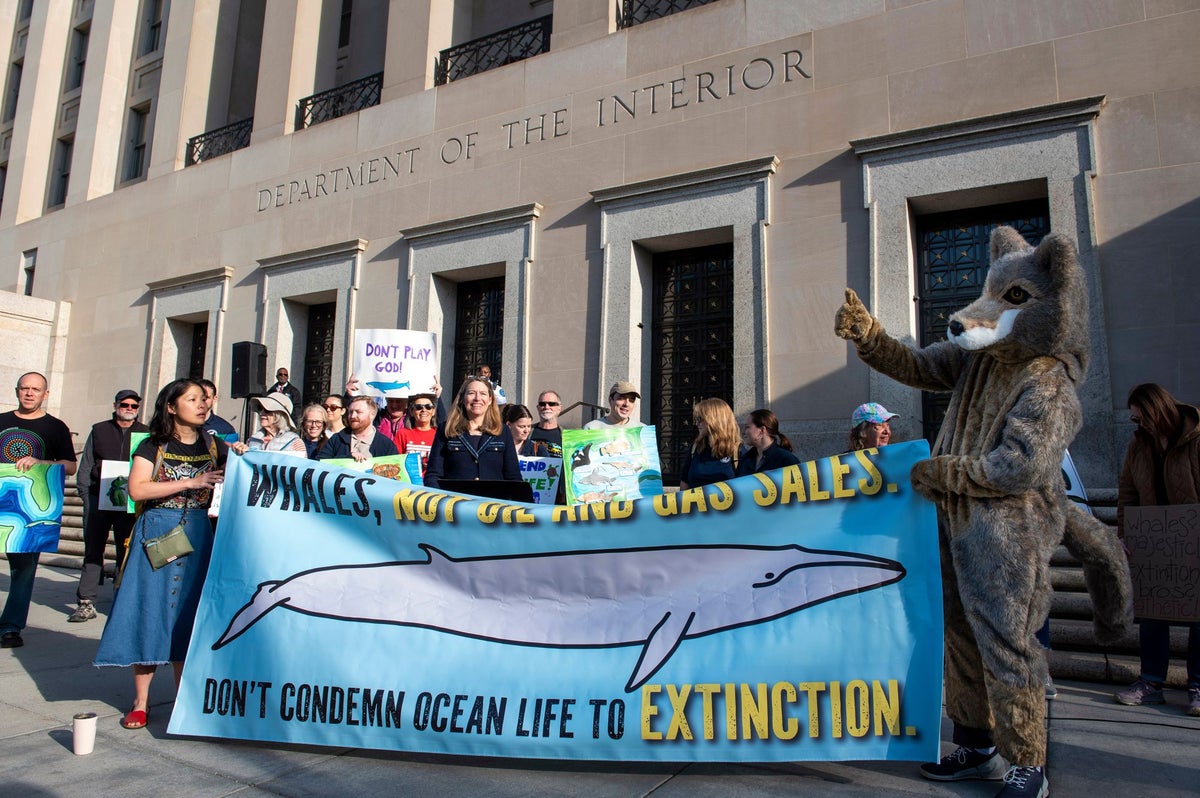
The federal government maintains a dormant legal mechanism so powerful it is often referred to as the nuclear option of environmental law. Formally known as the Endangered Species Committee, this cabinet-level body has the authority to permit the extinction of a species if the economic benefits of a project are deemed significant enough. For decades, this committee has remained a historical curiosity, rarely invoked and even more rarely utilized. However, the Trump administration has signaled a clear intent to revive this panel to break the bureaucratic gridlock currently stalling massive oil and gas developments on federal lands.
The move targets a fundamental friction point in American infrastructure: the Endangered Species Act (ESA). While the ESA is designed to prevent the disappearance of at least 1,600 species, critics argue it has been weaponized by environmental groups to block industrial progress through endless litigation. By convening the "God Squad," the executive branch seeks to bypass the standard judicial review process, effectively prioritizing energy security and economic output over localized ecological preservation. This isn't just a policy shift. It is a structural overhaul of how the United States balances natural conservation with the urgent demand for domestic resource extraction.
The Mechanics of an Extinction Waiver
To understand the weight of this strategy, one must look at how the committee actually functions. It is not a standard regulatory board. The panel consists of seven high-ranking officials, including the Secretaries of Agriculture, Army, and Interior, along with the Chairman of the Council of Economic Advisers and a representative from each affected state. For a project to receive an exemption, five of these seven members must agree that there are no reasonable or prudent alternatives and that the action is in the public interest.
This high bar exists because the stakes are absolute. When the committee votes to move forward with a project that threatens a species' existence, they are making a permanent trade. In the past, this was done for the Tellico Dam in Tennessee and the Grayrocks Dam in Wyoming. In the current context, the focus has shifted toward the sprawling oil fields of the Permian Basin and the untapped reserves in the Arctic. The administration’s logic is straightforward: the economic ripples of a multi-billion dollar drilling operation outweigh the survival of a specific subspecies of shorebird or lizard that might inhabit the site.
Drilling Through the Regulatory Thickett
The primary frustration for energy developers is not the existence of the animals themselves, but the Section 7 consultation process. This is the legal requirement that federal agencies ensure their actions do not jeopardize a listed species. In practice, this often results in years of biological surveys, mitigation negotiations, and lawsuits that can bankrupt a project before a single drill bit touches the ground.
By threatening to bring in the Endangered Species Committee, the administration is essentially forcing a shortcut. It serves as a blunt instrument to end the "sue and settle" tactics employed by activists. If a project is designated as a matter of national security or critical economic importance, the standard environmental hurdles are suddenly viewed as obstacles to be cleared rather than regulations to be followed. This approach treats energy independence as a moral imperative that justifies the risk of losing biological diversity.
The Economic Calculus of Extraction
Oil and gas production on federal lands accounts for a significant portion of the American energy portfolio. Proponents of the committee's revival argue that the current system ignores the opportunity cost of conservation. When a drilling lease is suspended due to the habitat of a rare dragonfly, the loss isn't just felt by the oil company. It manifests in higher energy prices for consumers, lost tax revenue for states, and a weakened geopolitical position for the country.
Industry analysts point to the massive reserves in the Arctic National Wildlife Refuge (ANWR) and the coastal plains as prime candidates for this intervention. These areas are believed to hold billions of barrels of oil, but they are also home to polar bears and caribou. Under previous administrations, the "precautionary principle" dictated that the risk to wildlife was too great. The current directive flips that script, arguing that the risk to the American economy of not drilling is the greater threat.
The Risks of a Permanent Precedent
Opponents and even some moderate conservationists worry about the long-term fallout of normalizing the God Squad. If the committee becomes a standard tool for industrial approval, the Endangered Species Act loses its teeth. The fear is that once the seal is broken for oil drilling, it will be used for mining, timber, and urban sprawl.
There is also the matter of legal stability. While the committee can grant an exemption, those decisions are almost certain to be challenged in the D.C. Circuit Court of Appeals. A rushed decision by the panel could lead to a judicial backlash that ties up the project even longer than the original environmental review would have. Reliable policy requires a foundation that survives the next election cycle, and a partisan use of the extinction waiver might be too fragile to endure.
A Shift in Environmental Governance
The resurgence of this committee represents a broader transition toward a utilitarian view of nature. In this framework, the environment is a resource to be managed for human benefit rather than a sanctuary to be protected at all costs. It reflects a growing impatience with a regulatory regime that many in the heartland feel has prioritized global ecological goals over local livelihoods.
For the laborers in the oil patches of North Dakota and the refinery workers on the Gulf Coast, this isn't an abstract debate about biodiversity. It is about the viability of their industry. The administration is betting that the public care more about the price at the pump and the stability of the power grid than the plight of a species they will never see in the wild.
The Realities of Modern Resource Management
Success in this arena will require more than just a majority vote on a committee. It requires a sophisticated integration of mitigation banking and technological innovation. Even if a project is granted an exemption, the public and the courts will expect some form of compensatory conservation elsewhere. This creates a market for "habitat credits," where developers pay to protect or restore land in one area to offset the damage done in another.
Technology also plays a role in narrowing the conflict. Modern directional drilling allows companies to access reserves from miles away, potentially staying clear of sensitive nesting grounds while still extracting the resource. However, the administration’s push for the God Squad suggests they are tired of compromise. They are looking for a definitive win that establishes energy production as the supreme priority of federal land management.
The use of the committee is a gamble that the American people are ready for a harder, more pragmatic approach to the natural world. It assumes that the era of environmental sentimentality is being replaced by an era of industrial realism. Whether this leads to a boom in domestic energy or a collapse of federal conservation standards depends entirely on how the panel exercises its near-total power in the coming months.
The board is set, and the participants are taking their seats. The choice to involve the highest levels of the executive branch in the fate of a single species marks the end of an era where environmental protection was seen as an inviolable constant. Now, everything has a price, and for the right amount of oil, that price might just be the existence of the species itself.
Ensure the economic data for each proposed drilling site is verified against current Department of Energy projections before the first gavel falls.