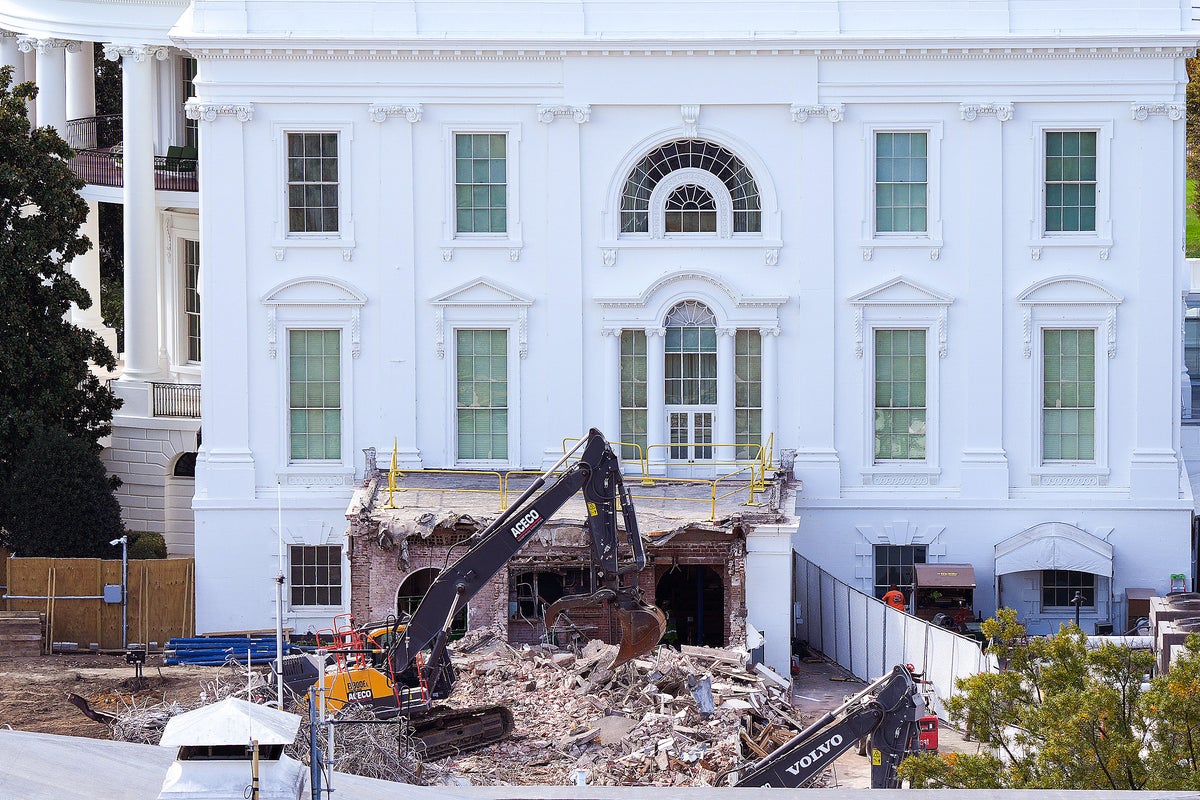
The media is obsessed with the gavel. They see a judge’s ruling pausing construction on the White House ballroom and they smell blood. They frame it as a legal defeat, a bureaucratic quagmire, or a simple case of "Orange Man Bad" vs. The Rule of Law.
They are missing the entire point.
In the high-stakes world of luxury development and political branding, a "pause" isn't a failure. It’s an asset. While journalists frantically type about building codes and injunctions, they ignore the fundamental mechanics of high-end real estate and the psychology of scarcity. This isn't just about a room where people dance; it's about the theater of power.
The Scarcity Loop
Most developers see a stop-work order and panic. Their interest rates are ticking. Their crews are sitting idle. But for a figure like Trump, the ballroom has already served its primary purpose before the first marble slab was even laid. It exists as a symbol of aspiration and a focal point for conflict.
Every day that ballroom remains unfinished is another day it dominates the news cycle. In the attention economy, an "under-construction" sign is often more valuable than a finished product. It creates a narrative of the "Great Work" being stifled by the "Deep State" or "The Establishment."
This is basic branding. You don't sell the steak; you sell the sizzle. And if the steak is currently being held hostage by a federal judge, the sizzle becomes a roar.
I have spent decades watching developers navigate zoning boards and judicial oversight. The ones who win aren't the ones who follow the rules most strictly; they are the ones who turn the rules into a weapon. By positioning the ballroom as a "beloved" project being unfairly targeted, the project gains a soul. It stops being a capital expenditure and starts being a crusade.
The "So Wrong" Defense as Market Positioning
When Trump calls a judge "so wrong," he isn't just venting. He is signaling to a specific base of investors, donors, and supporters that he is the only force willing to "build" in a world designed to "regulate."
The "lazy consensus" among political commentators is that these legal setbacks damage his credibility. The opposite is true. In the luxury sector, exclusivity is often defined by the difficulty of acquisition. If it were easy to build a private ballroom in the most protected house in the world, it wouldn't be worth building.
Consider the mechanics of historic preservation and government contracts. These are notoriously slow, grueling processes. By injecting a high-profile legal battle into the mix, Trump ensures that his specific vision for the space is the only one anyone talks about. The judge’s ruling didn't kill the project; it fossilized it in the public imagination as an inevitable triumph.
The Cost of the "Safe" Path
Let’s talk about the alternative. Imagine a scenario where the construction went off without a hitch. The ballroom opens. The ribbon is cut. Within forty-eight hours, the news cycle moves on to the next shiny object. The ballroom becomes a footnote—a nice room in a big house.
By fighting for it, he increases its "perceived value" exponentially. This is a tactic used by the elite in Manhattan real estate for a century. You create a controversy around a penthouse or a private club. You make the permit process a public spectacle. By the time the doors actually open, the demand to be inside is ten times higher because of the perceived struggle to make it exist.
Why the Critics Get It Wrong
- They Value Completion Over Narrative: Journalists think the goal is a finished room. The goal is a sustained headline.
- They Misunderstand Bureaucratic Friction: They see a ruling as a wall. A seasoned developer sees it as a speed bump that justifies a price hike or a fundraising drive.
- They Ignore the "Antifragile" Nature of the Brand: As Nassim Taleb argues, some things benefit from shocks. Trump’s real estate brand thrives on being the underdog in a fight he has every intention of winning eventually.
The Technical Reality of the "Pause"
Let’s get into the weeds of construction management. A "pause" in construction at this level rarely means the work stops. It means the focus shifts.
The architects are still refining the $CAD$ files. The procurement teams are still sourcing the gold leaf and the crystal. The legal teams are filing the appeals. This is what we call "productive friction." It allows for a cooling-off period where costs can be reassessed and the public’s appetite for the project can be tested.
If you think a judge in a robe is going to stop a multi-billionaire from finishing a vanity project in his own residence, you haven't been paying attention to how power works in this country. The law is a series of arguments, not a series of facts.
The Ballroom as a Political Weapon
The media frames the "beloved White House ballroom" as a frivolous addition. They ask: "Why does he need this?"
Wrong question.
The right question is: "What does the ballroom represent to the people who will never step foot in it?"
It represents the ability to reshape the most rigid institution in the world—the Presidency—into something that reflects personal taste and individual will. It is a middle finger to the "gray men" of the civil service who believe the White House belongs to the archives.
To his supporters, the ballroom is a proxy for the country. If he can’t even build a room in his own house without a judge interfering, how can he fix the nation? The "pause" isn't a legal setback; it's a campaign ad.
The Inevitability of the Finished Product
Stop looking at the injunction. Look at the momentum.
In every major development project I’ve consulted on, the "middle phase" is always the messiest. It’s where the lawsuits fly and the budget looks like a disaster. This is where the amateurs fold.
But Trump isn't an amateur developer. He is a man who understands that the "wrongness" of a judge is a matter of perspective. If he wins the appeal, he’s a hero who beat the system. If he loses the appeal, he’s a martyr for the cause of "building things."
In both scenarios, the ballroom becomes legendary.
The mistake the competitor article makes is treating this as a news story. It’s not news. It’s a performance. And in this performance, the judge is just a supporting actor playing the villain.
The ballroom will be built. The gold will be polished. The dancers will arrive. And when they do, the story won't be about the $10,000-a-night marble; it will be about the man who fought the government for the right to put it there.
Don't bet against the man who knows how to turn a "Stop" sign into a billboard.