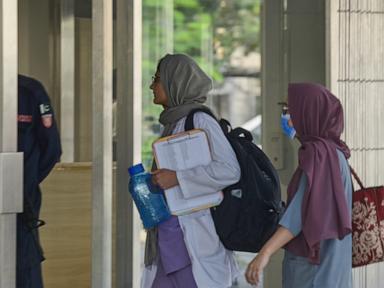
The fatal structural breakdown at the Pakistan Institute of Medical Sciences nursery in Islamabad exposes the dangerous asymmetry between institutional vulnerability and emergency response capabilities. When a mechanical compressor failure inside an air-conditioning unit triggered a catastrophic fire on the third floor, fifteen neonates occupied an environment lacking adequate passive and active suppression systems. Fourteen infants perished not merely from the thermal event itself, but from the rapid exponential expansion of toxic combustion byproducts within an enclosed clinical footprint.
The Mechanics of Rapid Compartment Failure
Clinical neonatal units present specific environmental constraints that complicate fire safety engineering. Infants housed in incubators or open radiant warmers possess zero ambulatory agency. Their survival depends entirely on continuous environmental control and uninterrupted mechanical intervention.
In the Islamabad incident, official investigative findings established that the compartment degraded catastrophically within a two-minute window. This rapid phase transition from an isolated localized electrical or mechanical fault to a full-room thermal runaway points to several compounding engineering vulnerabilities:
- High oxygen enrichment configurations common in neonatal intensive care units accelerate ignition rates and intensify flame propagation vectors.
- Suboptimal fire-stop sealing around ductwork allows toxic smoke to migrate across pressurized architectural zones before detection arrays trigger alarms.
- The absence of automatic pre-action sprinkler systems or localized gas suppression grids inside high-risk nursery compartments eliminates the crucial automated defense layer required before human evacuation can begin.
When infrastructure lacks automated containment, the burden of intervention shifts entirely to human actors operating under extreme physiological and psychological duress.
The Dynamics of Micro-Intervention Under Duress
Security footage documenting the response inside the burning ward provides a stark metric for operational constraints during a crisis. Nurse Razia Noreen entered the burning enclosure and executed an extraction within an eight-second window, securing the single surviving infant before structural conditions rendered re-entry impossible.
This event highlights the severe limits of human response speed relative to thermal propagation curves. The operational variables governing the rescue included:
- Proximity latency, or the physical distance between the responder's staging area and the point of origin when the alarm sequence initiated.
- Thermal density thresholds, which dictate the maximum tolerable heat flux a human body can penetrate without protective equipment.
- Atmospheric visibility degradation, caused by dense particulate accumulation that obscures spatial orientation within seconds.
While the state conferral of the Sitara-i-Khidmat and financial compensation recognize individual valor, systemic risk management cannot rely on outlier behavioral performance to compensate for engineering deficiencies.
Administrative Liability and Institutional Redesign
Immediate regulatory fallout involved the suspension of eight high-ranking officials, including the hospital executive director, the head of the neonatal department, and various security and emergency management leads. Criminal proceedings ordered by executive mandate target both municipal oversight bodies and private contractors responsible for facility maintenance.
True institutional reform requires shifting from punitive administrative shuffling to a rigorous audit of capital infrastructure. Hospital facility management across developing municipal sectors must decouple safety compliance from budgetary constraints. Implementing mandatory thermal-imaging early warning grids, compartmentalized ventilation shut-offs, and localized clean-agent suppression systems transforms a vulnerable open-ward architecture into a resilient, fail-safe environment.
Deploy capital expenditure into automated suppression infrastructure and continuous mechanical asset auditing rather than post-hoc administrative restructuring.