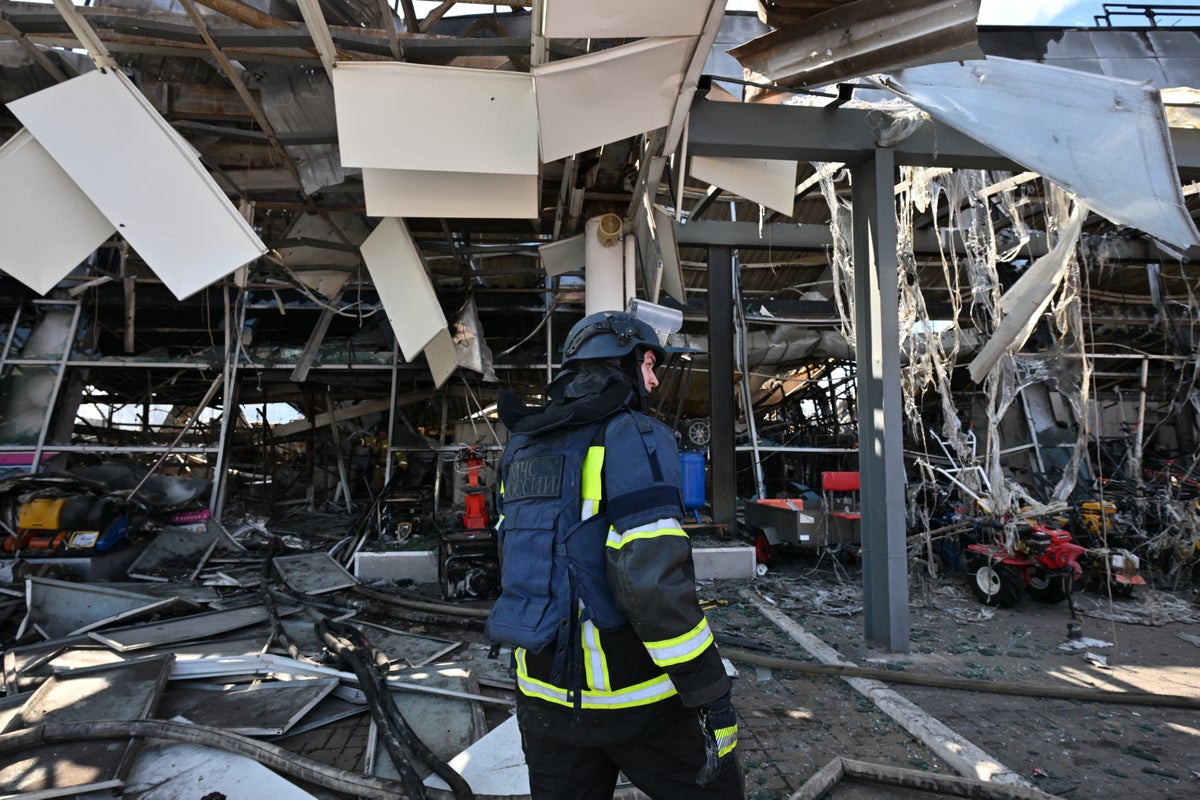
Every single time the ground heaves in the world's largest archipelago, the media rolls out the exact same exhausted script. The headlines flash with dramatic death tolls, weeping survivors, and trembling magnitude numbers. Then comes the predictable chorus of commentators mourning the wrath of Mother Nature, the unpredictable fury of the Ring of Fire, and the helpless tragedy of living on a tectonic powder keg.
It is lazy, dangerous nonsense. Recently making waves recently: Why Tweets Do Not Run The Strait Of Hormuz And Why Washington Knows It.
Nature does not kill people in earthquakes. Bad engineering, systemic institutional cowardice, and decades of willful planning blindness kill people. When a 7.7-magnitude earthquake strikes, the earth is merely releasing pent-up stress along a fault line. That is a geophysical fact. What happens next—whether a neighborhood turns into dust or simply sways and survives—is entirely a human choice.
I have walked through post-disaster zones across Southeast Asia, and the pattern is always identical. The fault lines get the blame, but the real culprit is a toxic mix of corrupt municipal permitting, unreinforced masonry, and an emergency response framework that treats structural mitigation as an afterthought rather than the primary line of defense. Additional details regarding the matter are explored by TIME.
Let us dismantle the comfortable narrative that Indonesia is simply cursed by geography.
The Magnitude Myth
The entire media obsession with earthquake magnitude is a distraction. Measuring energy release on a logarithmic scale gives journalists a dramatic number to slap on a screen, but it tells you almost nothing about human risk.
An 7.7-magnitude tremor in the middle of a barren desert or striking a city built with strict seismic codes is an inconvenience. The exact same magnitude hitting a region bloated with unreinforced brick buildings, substandard concrete, and zero soil liquefaction mitigation is a catastrophe.
Seismologists know this. Engineers know this. Yet the news cycle continually focuses on the Richter scale as if the earth is personally hunting down human populations. By framing these events as acts of God, we absolve the real architects of disaster: municipal leaders who sign off on cheap construction and central governments that starve local infrastructure budgets.
Take a hard look at how modern structural engineering handles seismic energy. Modern buildings are not designed to stand rigidly against an earthquake; they are designed to move with it. Base isolators, viscous dampers, and high-ductility steel frames absorb and dissipate the kinetic punch before it can snap vertical load-bearing columns.
Yet, across thousands of Indonesian townships, homes and commercial shophouses are thrown together with sea sand, rusted rebar, and hollow concrete blocks. When the ground accelerates at high frequencies, these structures shatter instantly. The fault is not tectonic. The fault is economic and political.
The Cost of Cheap Concrete
The dirty secret of urban expansion in developing seismic zones is the race to the bottom on construction costs. Rapid urbanization creates a hyper-demand for housing that outpaces regulatory oversight.
When families or small-scale developers build homes, they cut corners because they have to. Cement is expensive. Quality steel is expensive. Professional engineering oversight is a luxury few can afford. So they build vertically using heavy concrete roofs supported by thin, unreinforced masonry walls.
During an earthquake, heavy roofs act like hammers, smashing the fragile walls beneath them. This pancake collapse mechanism is responsible for the vast majority of fatalities in Indonesian seismic events. It is a completely understood mechanical failure. We have known how to fix it for a century.
Why do thousands still die in identical circumstances decade after decade? Because retrofitting existing housing stock is politically unpalatable and financially exhausting. It is much easier to hold a televised moment of silence, distribute plastic tents, and wait for the next tremor to reset the news cycle.
The Bureaucratic Paralysis of Disaster Response
When a major tremor hits, the international community floods the zone with aid, medical tents, and temporary water purification units. It is noble work, but it is also a reactive band-aid on a systemic wound.
Emergency management agencies love to talk about response times, logistics pipelines, and search-and-rescue proficiencies. These are vital metrics when a disaster happens, but they represent a catastrophic failure of imagination beforehand. If your primary strategy relies on pulling bodies out of rubble, you have already lost the war.
True disaster resilience is boring. It looks like municipal inspectors enforcing building codes with absolute ruthlessness. It looks like micro-loans subsidized for low-income homeowners to retrofit their foundations. It looks like geological micro-zoning that bans heavy construction on high-liquefaction coastal silt.
None of these measures win elections next Tuesday. None of them generate emotional B-roll for evening broadcasts. Consequently, budgets for proactive mitigation are systematically starved to fund reactive theater.
Redefining Resilience
If we want to stop writing the same obituary for Indonesia every few years, we have to stop treating earthquakes as natural disasters and start treating them as infrastructure failures.
We need to abandon the fatalism of the Ring of Fire narrative. Japan sits on the exact same tectonic collision zones, yet modern Japanese cities routinely shrug off massive subduction-zone tremors because their building codes are absolute laws of physics, not optional suggestions.
The next time the ground shakes and the media starts lamenting the fury of the earth, remember what is actually happening. The earth is just doing what it has done for four billion years. The tragedy is entirely man-made.
Stop mourning the geography. Start auditing the contractors.