A thousand miles from any active frontline, the kitchen is quiet. Amina watches the kerosene lamp flicker against the cracked walls of her home in a coastal village outside Dar es Salaam. The lamp is a luxury now. Last year, the fuel cost half as much. Today, she had to choose between filling the canister or buying enough maize flour to last the week. She chose the flour, but the bag is smaller than it used to be.
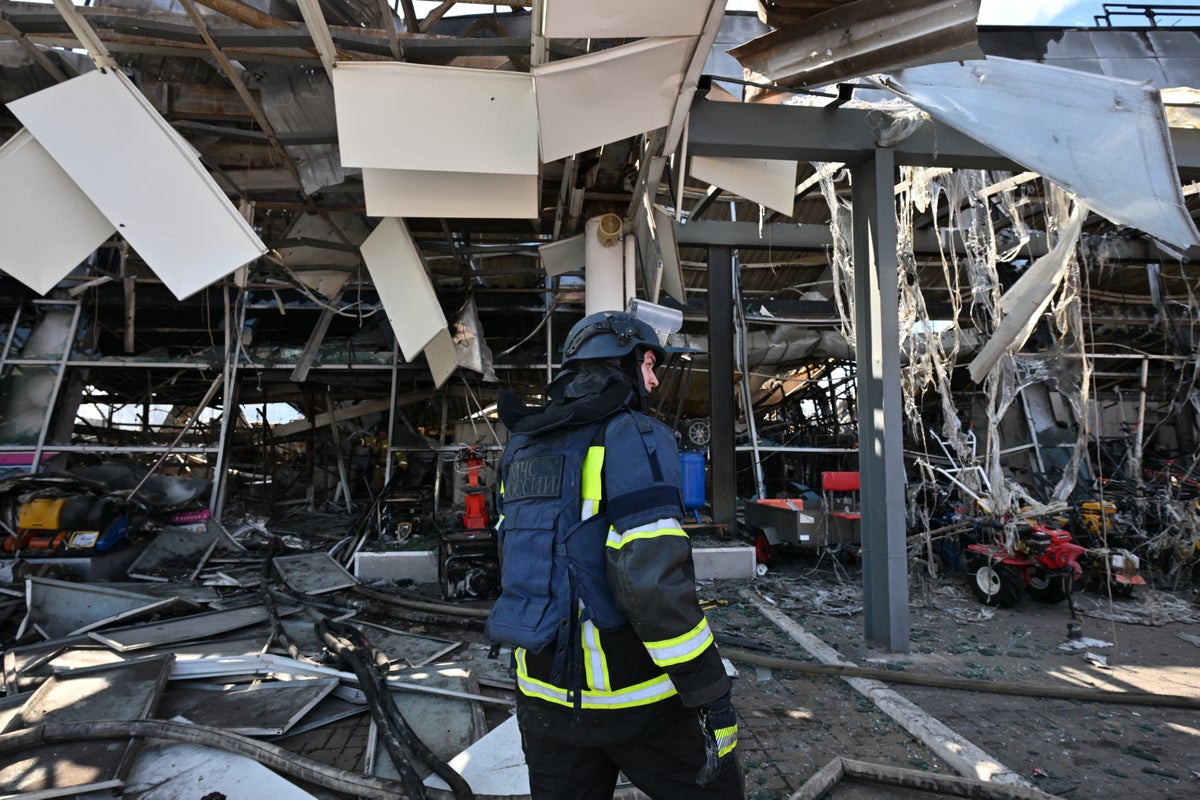
Amina has never heard of the complex geopolitical treaties discussed in European capitals. She does not follow the shifting alliances of Eastern Europe or the sudden blockades in the Black Sea. Yet, the shockwaves of those distant explosions traveled across oceans, moving silently through global supply chains until they arrived on her doorstep, demanding payment in the form of hunger.
This is the hidden tax of global conflict. It is a tax levied not on the combatants, but on those who have absolutely no say in the matter.
The Gravity of the Global South
When world leaders gathered recently at the G7 outreach summit, the rhetoric on the main stage naturally gravitated toward military strategy, sanctions, and defense budgets. The focus was on the immediate fire. But Indian Prime Minister Narendra Modi stood before the assembly to point out a different, more pervasive crisis: the smoke is suffocating those who live downwind.
His message was sharp, stripped of diplomatic fluff. The countries of the Global South are bearing the heaviest burden of conflicts they did not start, do not fuel, and cannot stop.
Consider how the modern world is wired. We are told globalization is a net positive, a web that connects us all. But when a thread snaps in one hemisphere, the entire net constricts around the neck of another. Food, fuel, and fertilizer. These are not abstract commodities traded on ticker screens; they are the baseline requirements for human survival. When conflict chokes their supply, the prices skyrocket. A billionaire in New York might notice a slight uptick in their investment portfolio expenses. A mother in Tanzania notices her child going to sleep with an empty stomach.
It is an ethical imbalance of staggering proportions. The nations least responsible for global instability are the ones paying the highest price for it.
The Fertilizer Crisis and the Empty Field
To understand the mechanics of this economic violence, look at a single grain of rice.
Farmers require fertilizer to coax crops from tired soil. For decades, a significant portion of the world’s chemical fertilizer ingredients moved through specific shipping lanes in Eastern Europe. When conflict erupted, those lanes closed. Sanctions tightened the knot. Suddenly, the cost of nourishing the earth doubled.
Imagine a hypothetical farmer named Rajesh in Uttar Pradesh. He is not a statistic. He is a man who knows the texture of soil like the back of his hand. Rajesh looks at the price of urea at the local market and realizes he cannot afford to buy enough for his entire acreage. He cuts his purchase in half.
The equation is brutal and linear. Less fertilizer means a smaller harvest. A smaller harvest means less food in the local markets six months down the line. Multiply Rajesh by tens of millions across Asia, Africa, and Latin America. This is how a war in Europe mutates into a food security crisis in the tropics.
It is easy to get lost in the numbers, to talk about percentage drops in GDP or basis points in inflation. But the reality is measured in missed meals. It is measured in daughters pulled out of school because the family needs extra hands to scratch a living from unyielding earth.
A Broken Architecture
The global financial and political systems were built in the shadow of World War II. They were designed by a handful of victorious nations to maintain stability among themselves. They were never intended to give an equal voice to the developing world.
Think of it as a house where the foundation is shifting, but only the residents in the basement are getting crushed. The decision-making bodies of the world’s most powerful institutions—the UN Security Council, the international financial frameworks—remain frozen in time. They reflect the world of 1945, not the world of today.
Modi’s intervention at the summit was an insistence that this architecture is no longer fit for purpose. You cannot manage a globalized economy by ignoring the priorities of two-thirds of the planet's population. When decision-making power is concentrated in the hands of a few wealthy nations, the solutions they devise will naturally protect their own interests first.
The Global South is not asking for charity. It is demanding equity.
There is a fundamental difference between the two. Charity relies on the whim of the giver; equity requires systemic change. It means reforming international institutions so that the vulnerability of developing economies is factored into global decision-making before the sanctions are leveled and before the proxy wars are funded.
The Energy Trap
Then there is the question of power. Literally.
When Western nations cut off their reliance on specific energy pipelines due to political conflicts, they did not suddenly stop consuming energy. Instead, they went into the open market with deep pockets, buying up liquefied natural gas and oil from alternative sources.
The result? They priced out everyone else.
Countries like Pakistan and Bangladesh found themselves unable to compete in bidding wars against wealthy European nations. Cargo ships carrying fuel were literally redirected mid-ocean, breaking contracts with developing nations because European buyers were willing to pay double or triple the price. The consequence for the citizens of those outbid nations was immediate: rolling blackouts, factories shutting down, and hospital generators running dry.
This is the true face of the conflict's spillover. It is not an accident; it is the logical outcome of a system that prioritizes the comfort of the wealthy over the survival of the vulnerable.
Beyond the Horizon
The sun begins to rise over Amina’s village. The kerosene lamp is out, its small reserve saved for the next night. She walks toward the market, her steps heavy with the knowledge that her currency buys less today than it did yesterday.
The decisions made in air-conditioned rooms in Europe or Washington feel impossibly distant from her reality. Yet, they dictate the rhythm of her days and the hunger of her children.
The global community stands at a crossroads that has nothing to do with lines on a map or military alliances. It is a choice about human value. If the international community continues to treat the Global South as collateral damage in the games of superpowers, the fabric of global trust will entirely unravel. Stability cannot be built on a foundation of systemic neglect. The true measure of a global civilization is not how well it protects its strongest members during a storm, but whether it allows its most vulnerable to drown.