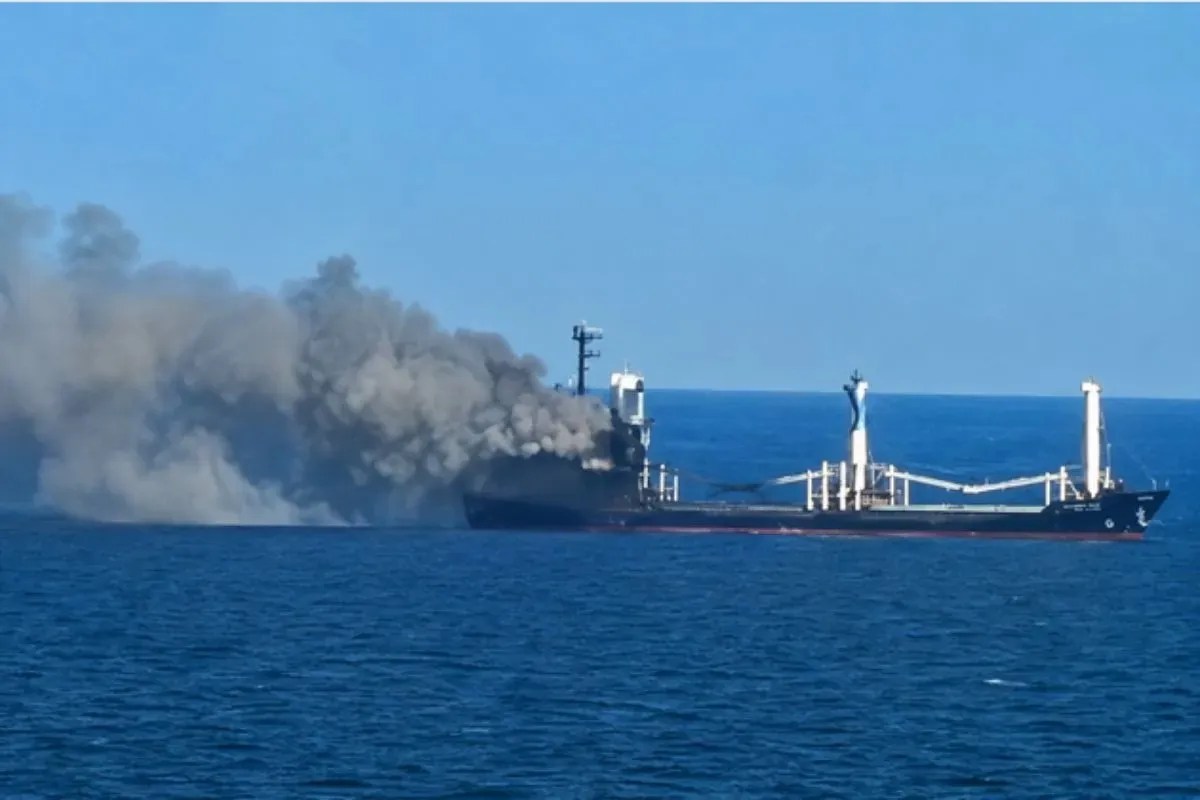
A merchant vessel was struck by an unidentified projectile while transiting the Strait of Hormuz today, resulting in a reported crew casualty and prompting an immediate security alert from the United Kingdom Maritime Trade Operations. This incident, while brief in the initial reports, marks a dangerous escalation in a waterway that serves as the world’s most critical maritime oil chokepoint. The lack of clarity regarding the weapon system—whether a drone, anti-ship missile, or sabotage device—is by design. It creates a fog of war that complicates diplomatic responses and insurance assessments for every other ship currently in the region.
The Strait of Hormuz is not merely a geographic passage; it is the jugular vein of the global economy. Approximately one-fifth of the world’s total oil consumption and a significant portion of liquefied natural gas pass through this narrow gap every single day. When a vessel is hit, markets react instantly. Futures prices spike not just because of the immediate damage, but because of the latent fear that the transit corridor is no longer secure. You might also find this connected coverage useful: The Sound of Silence Left Behind in the Halls of Learning.
The Mechanics of Deniable Aggression
Attacks in this region have evolved significantly over the last decade. We have moved past the era of overt naval blockades. The current method favors what analysts often describe as gray-zone warfare. By using projectiles of unknown origin, state and non-state actors can inflict material damage and human cost while maintaining a thin veneer of plausible deniability.
Consider the tactical utility of a small, low-altitude suicide drone. These devices are inexpensive to produce, difficult to track on traditional radar systems designed for larger aircraft, and can be launched from small, civilian-style craft. When such a device hits a tanker, it causes a disruption that far outweighs the cost of the munition itself. Insurance premiums for vessels traversing the Strait climb sharply following these events. Those costs are inevitably passed down to the consumer at the gas pump in distant capitals, creating a ripple effect of economic volatility. As extensively documented in recent articles by USA Today, the results are significant.
The use of unknown projectiles forces regional navies to commit significant resources to monitoring every small contact. This is an exhausting game of cat and mouse. It diverts focus from broader strategic objectives and forces commanders into a reactionary posture.
Insurance Markets and the Hidden Toll
The economic cost of this insecurity is often hidden behind the jargon of the maritime insurance industry. Following the news of today's casualty, underwriters will reassess the risk profile for the entire Strait. This is known as a war risk premium adjustment.
For a massive container ship or supertanker, a small percentage increase in insurance costs translates to hundreds of thousands of dollars per voyage. When shipping companies decide that these costs, coupled with the threat of physical harm to crews, are too high, they redirect traffic around the Cape of Good Hope. This adds weeks to transit times and creates massive inefficiencies in global supply chains.
The human element remains the most tragic component of these security lapses. Sailors on commercial vessels are not combatants. They are workers tasked with keeping the global trade system functional. When they become targets, the recruitment and retention crisis that already plagues the shipping industry will only deepen. We are seeing a slow-motion abandonment of professional maritime careers because the risk-to-reward ratio has tilted dangerously toward the former.
The Failure of Conventional Deterrence
For years, international naval coalitions have operated in the Strait with the stated goal of maintaining freedom of navigation. They employ patrols, radio communications, and shows of force to signal stability. However, the incident today demonstrates that traditional naval power struggles to address asymmetric threats.
A guided-missile destroyer is highly effective against another warship. It is far less effective against a low-cost, surface-level drone launched from an unflagged vessel in the middle of a busy shipping lane. The rules of engagement for these coalitions are intentionally conservative to avoid accidental escalation into a full-scale regional war. Aggressors recognize this limitation. They operate just beneath the threshold of what would trigger a major military response.
Diplomatic channels are currently strained, and the regional architecture for maritime security is fragmented. Without a unified, multilateral response that addresses the intelligence-sharing gap regarding these mysterious projectiles, the frequency of these incidents is likely to climb. The perpetrators are not looking for a decisive naval battle; they are looking to normalize instability.
Structural Vulnerabilities in Global Energy Logistics
The reliance on a single, narrow passage for a significant volume of global energy is a relic of twentieth-century economic design. While pipelines have been proposed to bypass the Strait of Hormuz, the political and geographic realities make them difficult to implement. Consequently, the world remains tethered to a bottleneck that can be pinched by a single, well-placed strike.
The incident reported today is a reminder that the global trade system is brittle. We rely on the assumption of order in international waters, yet that order is increasingly contested by actors who benefit from disorder. When a ship is struck and lives are lost, the international community often responds with temporary outrage, followed by a return to business as usual until the next event.
This cycle of incident and indifference is a dangerous strategic failure. It incentivizes further provocations. If the international response remains confined to condemnation without addressing the root capabilities of the groups launching these projectiles, the maritime corridor will remain an open wound in the side of the global economy.
True security in the Strait requires more than just military presence; it requires a fundamental shift in how insurance, intelligence, and diplomatic pressure are applied to those providing the technology and the sanctuary for these attacks. Until the cost of maintaining this shadow war becomes higher than the strategic benefit for those behind it, the projectiles will continue to fly, and the vulnerability of the global supply chain will remain exposed.