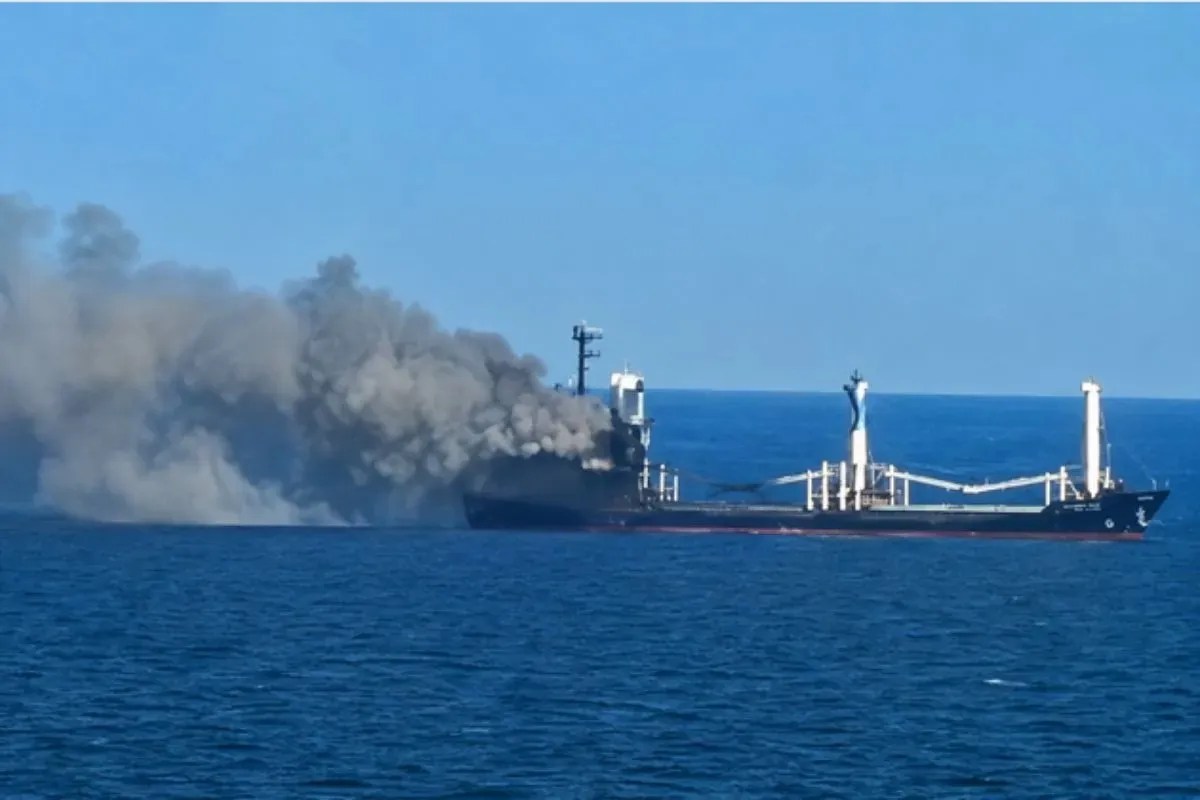
Stop looking for a "cause" in the latest attack in the Strait of Hormuz. When you read the headlines screaming about rising tensions or another mysterious projectile hitting a tanker, you are being fed a sedative, not an analysis. The mainstream narrative wants you to believe this is a sequence of unpredictable escalations. It is not. This is a cold, calculated exercise in geoeconomic theater, and you are the audience being played for price volatility.
The lazy consensus holds that these attacks are random acts of regional instability. This is intellectually dishonest. I have spent enough time tracking shipping manifests and naval positioning to tell you that nothing in the Strait happens by accident. The Strait is arguably the most monitored strip of water on the planet. When a vessel gets hit by an "unidentified projectile" while effectively under the surveillance umbrella of multiple global powers, it is not a failure of security. It is a feature of the current geopolitical standoff.
Imagine a scenario where the Strait of Hormuz is not a "chokepoint" that needs to be "defended," but a lever that is being pulled by both Washington and Tehran to manipulate global energy indices.
The reality is that these incidents provide the perfect cover for shifting economic agendas. When the market panics, oil futures jump. When oil futures jump, the entities with the right positions—or the right political capital to burn—make out like bandits. The media focuses on the "human cost" and the "rising tension" to keep you emotionally anchored to the drama, while the structural changes to the regional power dynamic occur in the background, untouched by the noise.
You ask if this will lead to a broader war. That is the wrong question. The question you should be asking is: who benefits from the perception of a looming war?
Currently, Iran is playing a high-stakes game of attrition, using maritime disruption to force a seat at a table that has been locked for months. Meanwhile, the U.S. narrative—often fueled by declarations about "territorial waters" and "freedom of navigation"—masks a frantic attempt to maintain a decaying status quo. The "tensions" you hear about are merely the friction of two tectonic plates grinding against each other. Neither side wants an all-out kinetic conflict because that would destroy the very value of the lever they are fighting over.
If you are invested in energy or logistics, stop betting on the "normalization" of the region. This is the new baseline. The volatility is baked into the price. The "security threats" are the market's way of ensuring that the cost of moving goods remains permanently inflated, serving as a de facto tax on global trade that the major players have tacitly accepted.
I have seen companies scramble to reroute fleets every time a headline like this drops, losing millions in fuel and time, acting on the false premise that "order will be restored." They are suckers. They are reacting to symptoms instead of reading the map. The map says that the Strait of Hormuz is no longer a public thoroughfare; it is a proprietary asset under constant, low-intensity negotiation.
If you want to survive this, stop waiting for the "crisis" to resolve. The resolution is not coming. The diplomatic theater—the talk of UN resolutions, the hand-wringing by regional powers, and the empty threats from distant capitals—is exactly that: theater.
Understand the geometry of the situation:
- The physical damage to a tanker is a rounding error compared to the insurance premiums and market positioning that follow the news cycle.
- The actors involved are playing a game of chicken where the brakes have been intentionally removed.
- Your confusion is the intent.
Stop checking the news for the next attack. Start tracking where the regional capital is flowing when the Strait goes dark. That is where the truth lives. You are not witnessing the end of stability; you are witnessing the birth of a more expensive, more dangerous, and entirely predictable new era.
Stop asking when it ends. It does not end.