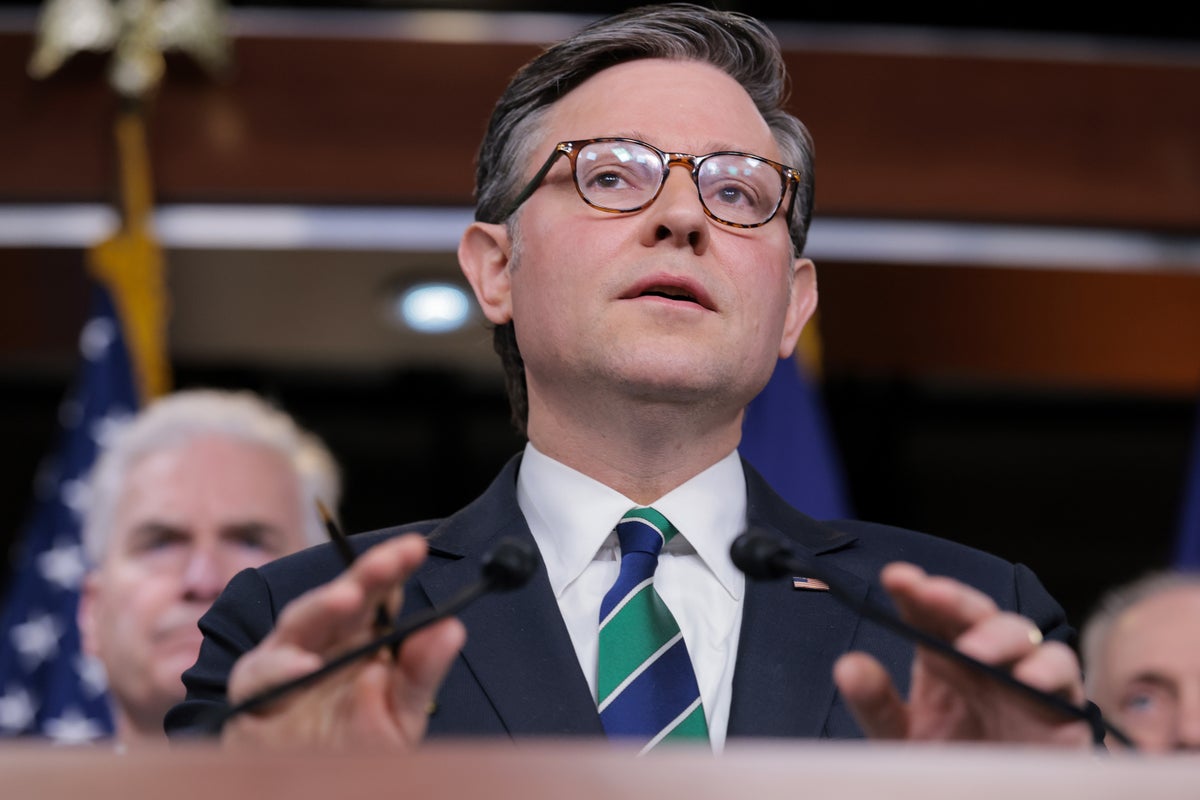
The media obsession with "naming names" is a parlor trick designed to distract you from how risk management actually works. When Speaker Mike Johnson is grilled about the SAVE America Act and asked to point to specific instances of non-citizen voting that swung an election, the press thinks they’ve found a "gotcha" moment. They haven't. They’ve only exposed their own ignorance regarding systemic vulnerability.
In any other industry—cybersecurity, banking, aviation—waiting for a catastrophic failure before patching a known hole is considered criminal negligence. In politics, for some reason, we call it "waiting for evidence."
The SAVE America Act isn't about litigating 2020. It is about closing a barn door that should never have been built with a faulty latch in the first place.
The Zero-Day Vulnerability of the Voter Roll
Critics of the SAVE America Act rely on a logic so flawed it would get a Chief Information Security Officer fired in a week. They argue that because we haven't caught a massive, coordinated wave of non-citizens voting, the vulnerability doesn't exist.
This is the Survivor Bias of political science.
In cybersecurity, we talk about "Zero-Day" vulnerabilities—flaws in the code that haven't been exploited yet, or at least haven't been detected. The current system, which largely relies on the "honor system" backed by the 1993 National Voter Registration Act (NVRA), is a gaping hole in the hull.
Most states do not require documentary proof of citizenship to register for federal elections. They require a signature. If you think a signature is a "robust" security measure in 2026, I have some oceanfront property in Nebraska to sell you.
When Johnson refuses to play the "list the fraud" game, he’s rejecting a rigged premise. You don’t need to see a plane crash to know that letting passengers carry axes into the cabin is a bad idea.
The "De Minimis" Myth
The most common pushback is that non-citizen voting happens in "infinitesimal" numbers. This argument is intellectually lazy.
- Detection Gap: Our systems are not designed to find these voters. Most states do not cross-reference voter rolls with Department of Homeland Security (DHS) databases or SAVE (Systematic Alien Verification for Entitlements) in real-time. If you don't look, you won't find.
- Margin of Victory: In a country where local, state, and even federal races are decided by a few hundred or thousand votes, "infinitesimal" is a relative term.
- Institutional Trust: Security is as much about the perception of integrity as the integrity itself. A system that refuses to verify the most basic requirement for participation—citizenship—is a system begging for a legitimacy crisis.
Imagine a scenario where a bank tells its customers, "We don't actually check IDs for withdrawals, but don't worry, we haven't noticed anyone stealing much lately." Would you keep your money there? Of course not. But we are expected to keep our "democratic capital" in a system that operates on exactly that principle.
The Hidden Cost of "Easy" Registration
The 1993 "Motor Voter" law was a product of its time. It aimed to maximize participation by lowering barriers. It succeeded. But in our rush to make registration "seamless" (to use a term the bureaucrats love), we sacrificed the gatekeeping function of the state.
The SAVE America Act attempts to re-introduce the concept of Documentary Proof of Citizenship (DPOC).
Opponents claim this is "voter suppression." Let’s dismantle that. Requiring a passport, birth certificate, or naturalization papers to prove you are a member of the body politic is not a "burden." It is the definition of a closed-loop system.
We require more documentation to board a flight to Cleveland or buy a pack of cigarettes than we do to hand over the keys to the most powerful government on earth. That isn't "progressive." It's absurd.
The Data Science of Voter Rolls
Let’s talk numbers, not anecdotes.
Maintenance of voter rolls is notoriously bad. A 2012 study by the Pew Charitable Trusts found that approximately 24 million—one out of every eight—voter registrations in the United States were no longer valid or were significantly inaccurate. More than 1.8 million deceased individuals were listed as voters.
When the underlying database is that messy, adding a layer of non-citizen participation (even accidental) creates a "noise" floor that makes actual fraud almost impossible to isolate.
The SAVE America Act isn't a "solution in search of a problem." It is a database cleanup tool. By requiring DPOC, you force a reconciliation between the voter rolls and the reality of the census.
The Sovereignty Argument
The loudest critics say the SAVE America Act is redundant because it is already illegal for non-citizens to vote.
Murder is also illegal. We still have police.
Speeding is illegal. We still have speed cameras.
Law without enforcement mechanism is just a suggestion. The federal law prohibiting non-citizen voting lacks a proactive verification requirement. It relies on the threat of deportation or prison after the fact.
This is "reactive security," and it is the weakest form of protection. Proactive security prevents the breach before it happens. If a non-citizen is added to the rolls because a DMV clerk checked the wrong box during a driver’s license application, that person is now in legal jeopardy through no malicious intent of their own.
By requiring proof upfront, the SAVE America Act actually protects non-citizens from accidentally committing a felony. Why aren't the "immigrant rights" groups cheering for that?
The Battle of the Databases
The real reason the SAVE America Act faces such vitriol isn't about "access." It’s about control.
The Act would require states to remove non-citizens from their rolls. This requires states to talk to the federal government. Specifically, it requires the DHS to share data with state election officials.
Currently, this process is a bureaucratic nightmare. It is fragmented, slow, and often blocked by political appointees who view data transparency as a threat.
The SAVE America Act would codify this data sharing. It would turn our election infrastructure into a modern, synchronized network rather than a collection of 50 different 19th-century filing cabinets.
The High Cost of the Status Quo
I’ve seen organizations—from tech startups to massive government agencies—ignore "minor" security flaws because the fix was "too expensive" or "inconvenient."
The cost is always higher later.
If we wait until a presidential election is decided by a margin smaller than the number of unverified voters on the rolls, the resulting civil unrest will make the current political climate look like a Sunday school picnic.
We are playing a high-stakes game of chicken with our national stability.
Why the "No Evidence" Argument is Gaslighting
When a reporter asks Mike Johnson for "one example," they are engaging in a logical fallacy called the Appeal to Ignorance. They are suggesting that because we haven't comprehensively audited the rolls to find the non-citizens, they must not exist.
But we know they exist.
- In 2024, Ohio Secretary of State Frank LaRose identified 137 non-citizens on the state’s voter rolls who had twice been prompted to confirm their citizenship.
- In 1996, a contested House race in California (Sanchez vs. Dornan) saw a congressional investigation find that 624 non-citizens had voted.
Are these numbers "millions"? No. But they are non-zero. And in a system that relies on the "consent of the governed," even a 0.5% error rate is a crisis of consent.
The SAVE America Act is the equivalent of a "Patch Tuesday" for the U.S. Constitution. It is boring, it is technical, and it is absolutely necessary.
Stop asking for the "receipts" of the last robbery and start asking why the vault door is currently standing wide open.
Verify the rolls. Secure the vote. Stop pretending that "hope" is a security strategy.
Would you like me to draft a technical breakdown of how state voter databases could integrate with the DHS SAVE system to automate this verification?