The media wants you to look at the solemn salute, the draped coffins, and the heavy silence of Dover Air Force Base as a moment of pure, unadulterated patriotism. They frame a president’s presence at a Dignified Transfer as the ultimate metric of commander-in-chief "empathy." They are lying to you.
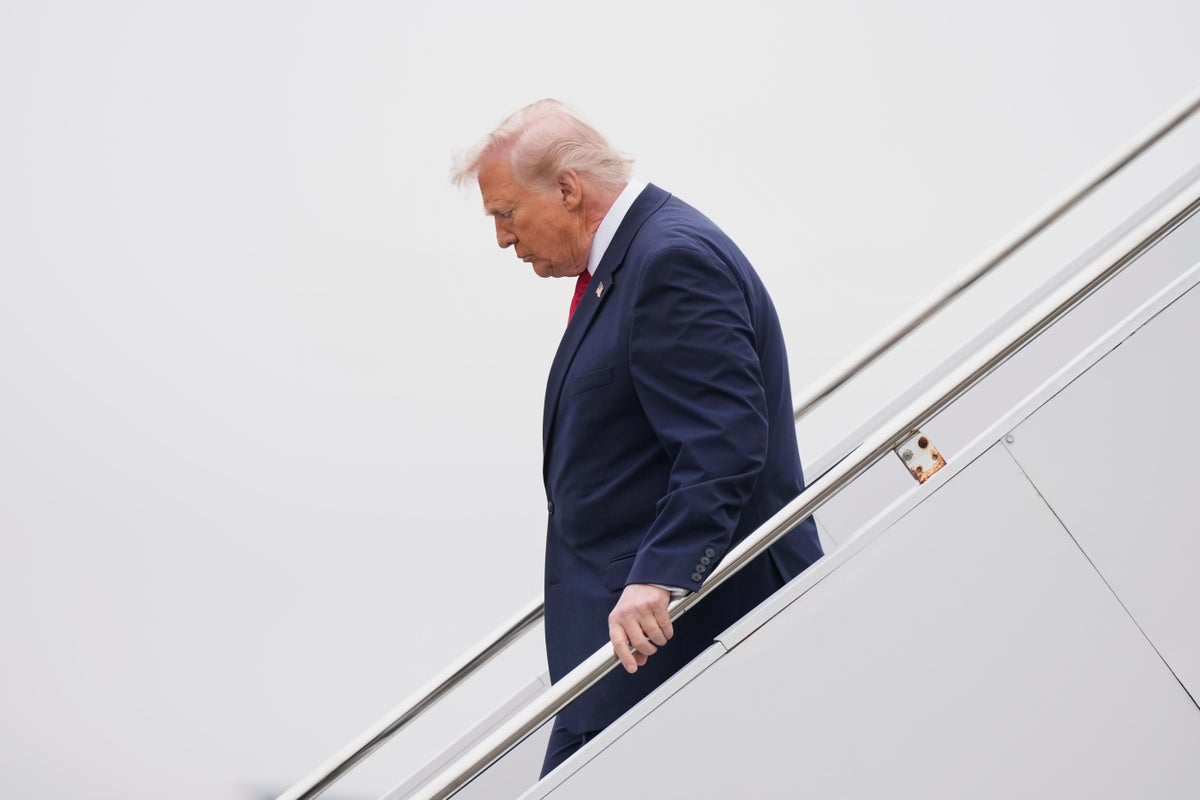
When Donald Trump, or any modern executive, travels to Delaware to meet the remains of fallen service members, we aren’t witnessing a private act of grief. We are witnessing the tactical deployment of a photo-op designed to scrub the blood off a failed foreign policy. Meanwhile, you can explore related developments here: The Cold Truth About Russias Crumbling Power Grid.
The Empathy Trap
The standard reporting on these events focuses on the "respect paid." It suggests that by simply showing up, a leader validates the sacrifice. This is a shallow, dangerous consensus. It allows the public to feel a sense of closure without ever asking why those six service members were in a Middle Eastern crossfire to begin with.
I have spent years watching the machinery of Washington turn human loss into political capital. The "Dignified Transfer" is a strictly choreographed military evolution. It is supposed to be about the families. Yet, the moment a motorcade arrives, the focus shifts from the casket to the candidate. We have reached a point where a leader’s absence is treated as a scandal, while their presence is treated as a policy. It is neither. To understand the complete picture, check out the recent article by NBC News.
The Math of Failed Deterrence
Let’s stop pretending these deaths are "the price of freedom" in a vacuum. These six deaths are a direct result of a strategic vacuum. When we talk about the Middle East, we use vague terms like "stability" and "presence."
If we apply a cold, analytical lens to the current posture, the $Loss/Benefit$ ratio is broken.
$$R = \frac{\sum (Strategic Gains)}{\sum (Lives Lost + Trillions Spent)}$$
If $R$ remains near zero for two decades, showing up at the tarmac isn't "honoring" the dead. It is a performance intended to distract from a failing equation.
The "lazy consensus" says it’s enough for a president to look sad for thirty minutes on a windy runway. The contrarian truth? If a president hasn't defined a win condition that prevents the next six coffins from arriving, their presence at Dover is an insult, not an honor.
The Myth of the "Apolitical" Dover
There is a persistent myth that Dover is a sacred, apolitical space. That died the moment the press pool was allowed to turn the "Dignified Transfer" into a litmus test for "presidentialness."
I’ve seen the internal memos. Staffers don’t just discuss the logistics of the flight; they discuss the lighting. They discuss which family members might "cause a scene" by being too angry. They curate the optics of sorrow to ensure the incumbent—or the challenger—looks like a pillar of strength.
If you want to actually honor the service members killed in the Middle East, stop praising the politicians who show up for the cameras. Start demanding they explain why the mission they sent these people on has no measurable end date.
Why the Media Loves the "Respect" Narrative
The press loves the Dover story because it’s easy. It’s "human interest." It avoids the messy, complicated reality of why we still have targets painted on the backs of Americans in Iraq, Syria, or Jordan.
- Argument A: Trump is showing he cares more than his predecessors.
- Argument B: Trump is using the dead for a campaign boost.
Both arguments are wrong because they accept the premise that the visit is what matters. The visit is a distraction. The real story isn't the salute at the ramp; it's the broken procurement cycles, the shifting "red lines" that nobody enforces, and the fact that we are still playing a game of geopolitical Whac-A-Mole with lives as the mallet.
The Professionalism of Grief
Military families are often used as shields. If you criticize a president’s visit to Dover, you are accused of "disrespecting the fallen." This is the ultimate conversational shutdown. It’s a logical fallacy used to protect the elite from the consequences of their signatures on deployment orders.
True respect isn't a silent nod in Delaware. True respect is the refusal to send a single soldier into a region where the objective is "to prevent a vacuum." Nature abhors a vacuum, but the Pentagon loves one because it justifies a permanent, unfunded presence.
The Cost of Symbolic Leadership
Symbolism is cheap. Steel is expensive. Blood is irreplaceable.
When we prioritize the "optics" of mourning, we create a feedback loop where leaders feel they have fulfilled their duty by looking somber. This lowers the bar for intervention. If the political "cost" of a dead soldier can be mitigated by a well-timed trip to Delaware and a sympathetic tweet, then the barrier to entry for the next skirmish remains dangerously low.
We need to stop grading leaders on their ability to attend funerals and start grading them on their ability to prevent them.
Stop Asking the Wrong Questions
The media asks: "Will this help his polling with veterans?"
The families ask: "Why is my son/daughter in a box?"
The insider asks: "How does this visit extend the life of a failed strategy?"
If you find yourself moved by the images of a leader at Dover, ask yourself why you aren't more moved by the briefing papers that led to that moment. We have become a nation that values the ritual of the return over the logic of the departure.
The next time you see a headline about a politician "paying respects" at Dover, ignore the suit. Ignore the salute. Look at the flag-draped transfer cases and realize that those individuals died for a policy that most of the people on that tarmac can't even articulate.
Stop buying the theater. Demand the strategy.
Would you like me to analyze the specific Pentagon deployment stats for the region where these service members were lost to show the discrepancy between stated goals and reality?