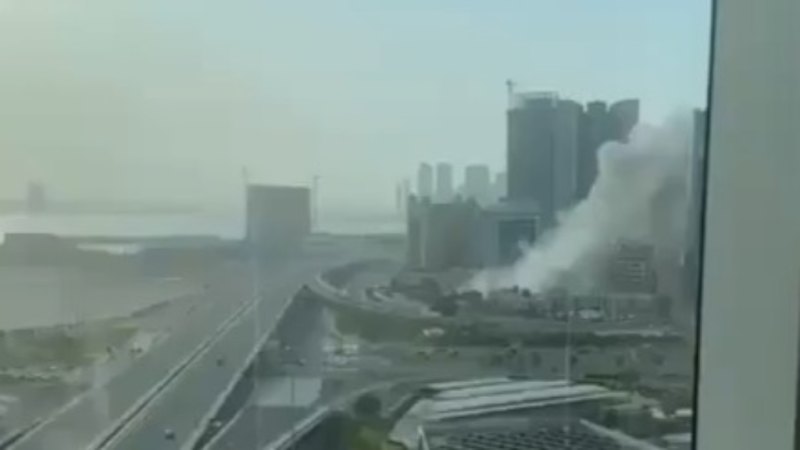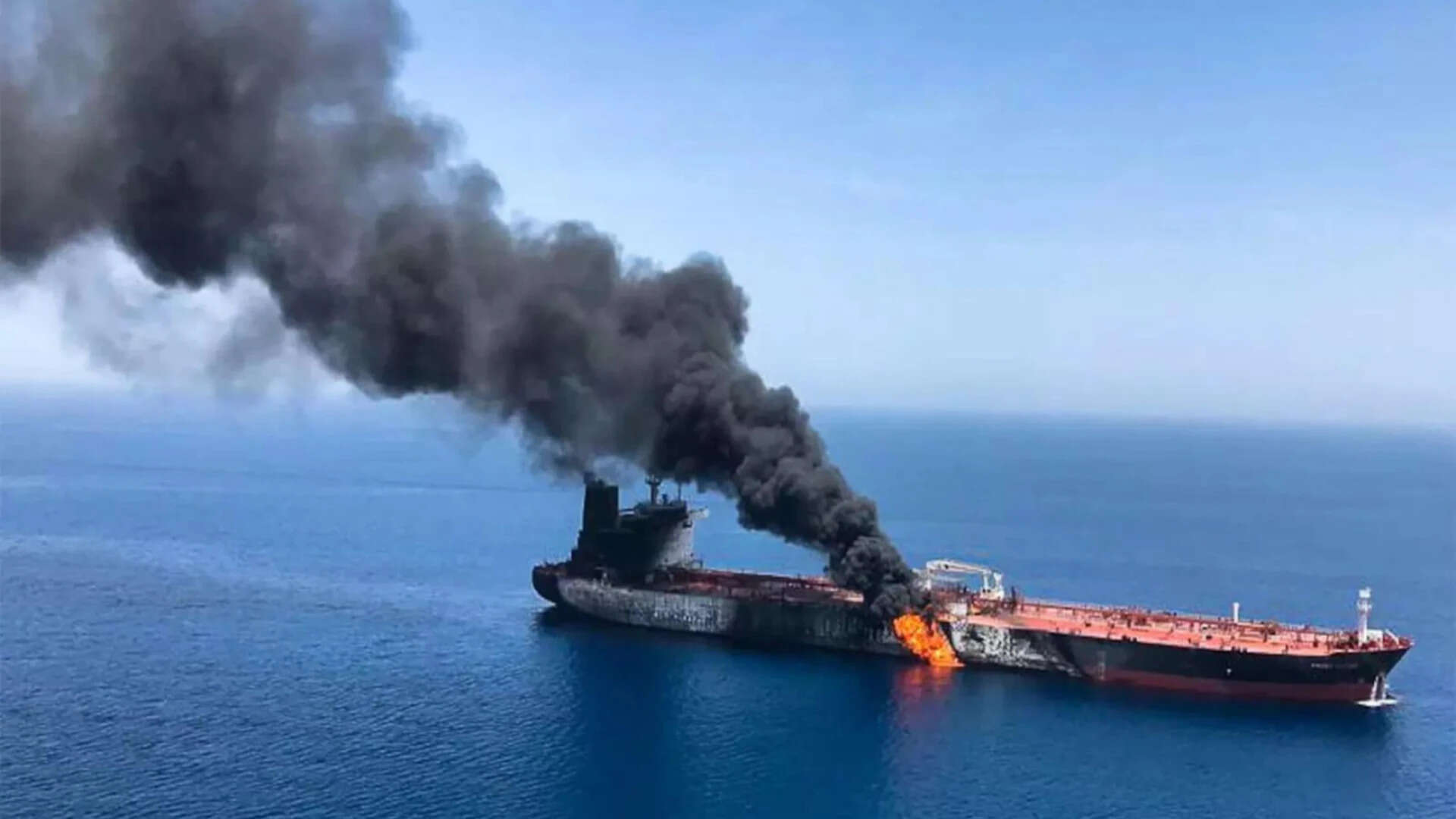
The headlines are predictable. A tanker takes a hit near the coast of Oman, smoke rises against the horizon, and the global media machine immediately pivots to the "Chokepoint of the World" narrative. They want you to believe we are one drone strike away from $200 oil and a total collapse of global commerce. They focus on the drama of 15 sailors being evacuated as if it’s a harbinger of the apocalypse.
It isn't.
In reality, these skirmishes are the cost of doing business in a region that has been "on the brink" for forty years. If you’re trading on the news of a single tanker hit, you’re the liquidity for people who actually understand maritime logistics. The consensus is lazy, driven by a 1970s trauma response that no longer fits the modern energy map.
The Myth of the Fragile Flow
The Strait of Hormuz is roughly 21 miles wide at its narrowest point. That is not a "chokepoint" in the way a doorway is a chokepoint; it is a massive stretch of water. To actually "close" the Strait, an aggressor would need a sustained, high-intensity naval blockade capable of defying the U.S. Fifth Fleet and every regional power whose GDP depends on those exports.
Most "analysts" treat a kinetic incident like a binary switch: open or closed. It’s never been that way. Even during the "Tanker War" of the 1980s, when hundreds of ships were attacked by Iran and Iraq, the oil never stopped flowing. Shipping rates went up. Insurance premiums spiked. But the crude reached the refineries.
Why? Because the economic incentive to move oil is higher than the political incentive to stop it. Even the actors supposedly threatening the Strait—specifically Iran—rely on those same waters to export their own sanctioned barrels and import refined goods. Closing the Strait is a suicide pact, not a strategic lever.
Why the 15 Indians Evacuated Don't Change the Math
The media loves the human interest angle. "15 Indians evacuated" makes for a gripping sub-headline, but in the cold calculus of global trade, it is noise. The crew is the most replaceable part of the vessel.
The real story isn't the evacuation; it's the Hull and Machinery (H&M) and Protection and Indemnity (P&I) insurance markets. When a tanker is hit, the London markets don't panic; they recalibrate.
- War Risk Premiums: These are calculated daily. A hit near Oman might cause a 10% jump in premiums for a seven-day voyage.
- Freight Rates: Shipowners pass these costs directly to the charterers.
- The Result: The consumer pays an extra three cents at the pump, while the shipowner continues to operate.
If you want to know if a crisis is real, stop looking at the news and start looking at the "Additional Premium" (AP) areas designated by the Joint War Committee (JWC). If the JWC hasn't drastically expanded the boundaries or hiked rates to prohibitive levels, the "crisis" is just a Tuesday in the Middle East.
The Shale Buffer is Your Shield
The "Oil Shock" narrative died in 2014, yet we keep trying to revive it. In 1973, the U.S. was a captive customer. Today, the U.S. is the world’s largest producer of crude oil.
When a tanker gets hit in the Gulf, the physical supply of oil to the United States barely flinches. The impact is purely psychological and reflected in the Brent-WTI spread. Most of the oil flowing through Hormuz is headed to Asia—China, India, Japan, and South Korea.
If there is a legitimate supply disruption, it’s Beijing’s problem, not Washington’s. The fact that the U.S. Navy still spends billions to secure the transit of oil destined for its primary geopolitical rival is one of the great ironies of the 21st century.
The Strategic Petroleum Reserve (SPR) Fallacy
Critics argue that the depleted SPR leaves us vulnerable. They’re wrong. The SPR was designed for a total maritime cutoff in an era of scarcity. In a world of Permian Basin dominance, the SPR is a price-smoothing tool, not a survival kit. We have enough domestic production to keep the lights on. The "crisis" in the Middle East is now a regional tax on Asian manufacturing, not an existential threat to Western civilization.
The Geography of Misdirection
The recent hit occurred "near Oman." Look at a map.
The Gulf of Oman is vast. It’s deep. It’s significantly harder to monitor or "choke" than the narrow transit lanes inside the Strait itself. Attacks here are "Grey Zone" tactics—designed to create just enough fear to move the needle on a diplomatic table without actually starting a war that the aggressor would lose in 48 hours.
I’ve spent years tracking maritime risk. I’ve seen boards of directors authorize millions in security spending based on a single CNN clip. It’s a waste of capital. Security in the Strait isn't about more guards on deck; it's about understanding that the "threat" is the intended product. The goal of the attack is the headline, not the sinking of the ship.
The Hidden Winners of Maritime Instability
Who benefits when a tanker is hit?
- Commodity Traders: Volatility is their oxygen. A "crisis" allows them to squeeze the "fear premium" out of the market.
- Alternative Pipeline Operators: Every time Hormuz looks risky, the case for the East-West Pipeline across Saudi Arabia (to the Red Sea) or the Habshan–Fujairah pipeline gets stronger.
- Defense Contractors: Kinetic incidents justify the presence of carrier strike groups and the sale of missile defense systems to Gulf states.
The losers? The retail investor who panic-sells their energy stocks or the small business owner who locks in high fuel hedges at the top of the fear cycle.
Stop Asking "Will the Strait Close?"
It's the wrong question. The right question is: "How much is the market willing to pay for the illusion of a closure?"
The Strait of Hormuz will not close. The global economy is a self-healing organism that routes around damage. Ships will find new flags, insurers will find new price points, and the oil will find a way to the burners.
If you're watching the smoke from a single tanker, you're missing the wildfire of reality: the Middle East is no longer the center of the energy universe, and these "crises" are increasingly irrelevant to the bottom line of the global economy.
Ignore the "evacuation" updates. Watch the insurance benchmarks and the Asian refinery intake. Everything else is theater for people who don't know how to read a balance sheet or a nautical chart.
Stop treating every spark like a wildfire.
Move your capital into the companies that own the pipelines that bypass the Strait, or the ones that produce the shale that makes the Strait irrelevant. If you're still betting on the "Hormuz Choke" to change your life, you're forty years too late to the trade.
Stop reacting. Start calculating.
Next time you see a headline about a tanker in the Gulf, do yourself a favor: turn off the news and check the price of Western Canadian Select. That’s where the real world is happening.