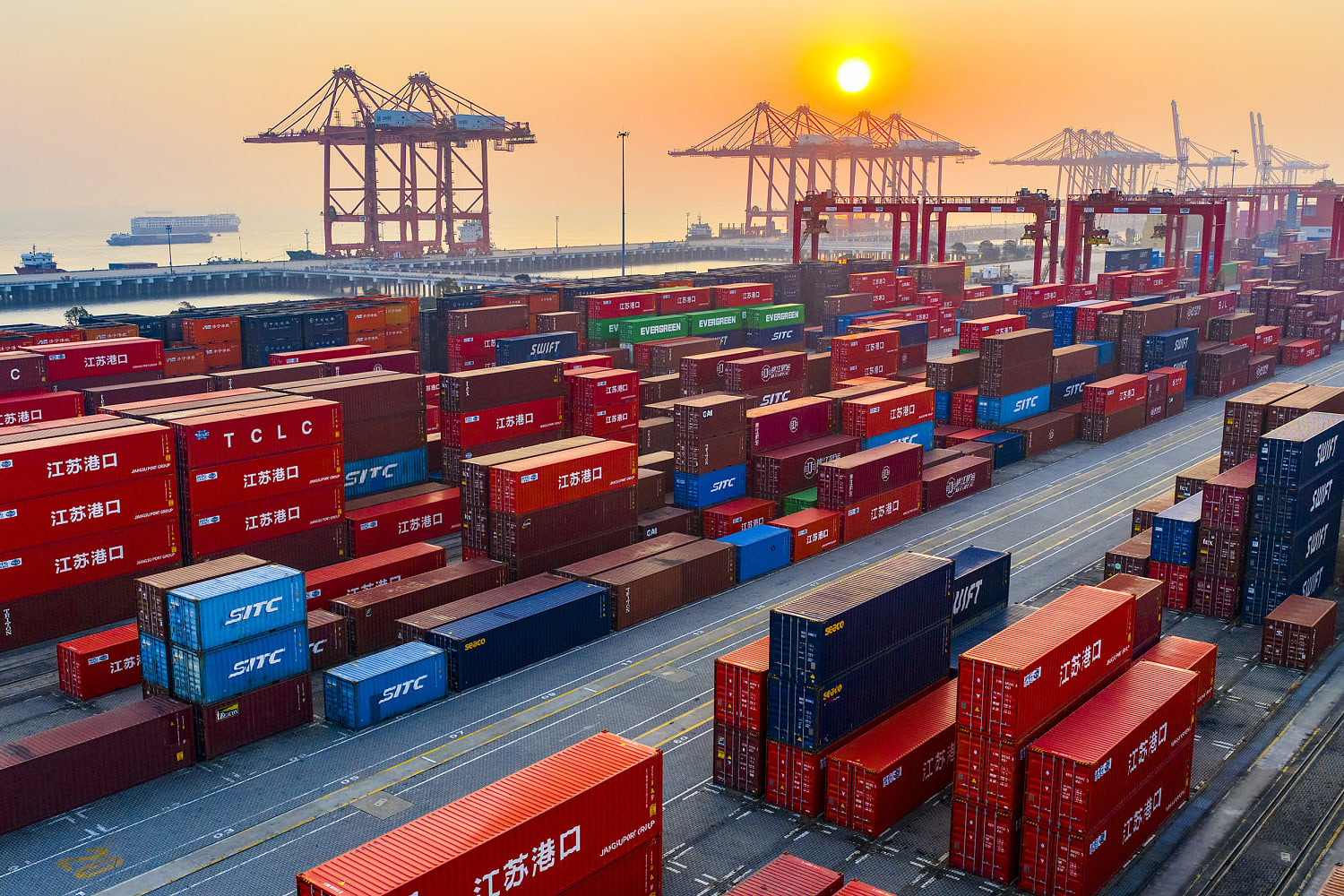
The world is far too comfortable with the idea of "stable" energy prices. We look at $70 or $80 oil and think we’ve reached a boring plateau. That’s a dangerous mistake. Right now, about 20% of the world’s total petroleum liquids consumption passes through a single, narrow chokepoint. If the Strait of Hormuz closes for any significant length of time, the $100 oil mark won't just be a milestone. It'll be the starting line for a global economic breakdown that looks a lot like the nightmare of 1973.
You've probably heard analysts talk about "geopolitical risk premiums." It's a fancy way of saying traders are scared. But most people don't grasp the physical reality of the Persian Gulf. We’re talking about a waterway that, at its narrowest, has shipping lanes only two miles wide in each direction. If tankers stop moving through those lanes, the math of global supply stops working immediately. There is no "Plan B" that can replace 21 million barrels of oil a day.
The Math of a Global Shortage
Let's look at the numbers. They aren't pretty. The U.S. Energy Information Administration (EIA) tracks these flows meticulously. They’ve noted that the Strait of Hormuz is the world’s most important oil chokepoint for a reason. It isn't just about crude oil. It's about Liquefied Natural Gas (LNG) too. Qatar sends massive amounts of LNG through that gap. If you’re sitting in an apartment in London or a factory in Tokyo, your heat and power are tethered to a strip of water thousands of miles away.
If 20 million barrels a day disappear from the market, prices won't just go up 10% or 20%. They'll moon. Markets don't react linearly to shortages of essentials. They panic. When supply drops below a certain threshold of demand, the price reflects the desperation of the highest bidder, not the cost of production. We saw this during the 1970s Arab Oil Embargo. Oil prices quadrupled. In today’s terms, we aren't talking about $100 oil. We're talking about $200 or $300 oil.
Why Pipelines Won't Save Us
People often point to pipelines as the safety net. Saudi Arabia has the East-West Pipeline. The UAE has the Habshan-Fujairah line. These are impressive feats of engineering, sure. But they're nowhere near enough. Even if every single bypass pipeline in the region ran at 100% capacity, they’d only handle a fraction of what currently goes by sea.
Specifically, the total available bypass capacity is roughly 7 to 8 million barrels per day. Do the math. If 21 million barrels normally go out and only 8 million can be diverted, you still have a 13 million barrel hole in the daily global supply. That’s more than the entire daily production of the United States. You can’t just "innovate" your way out of a physical shortage that large overnight.
The 1970s Ghost is Real
The comparison to the 1970s isn't just hyperbole. It’s a structural warning. Back then, the shock led to "stagflation"—the miserable combination of stagnant economic growth and high inflation. Central banks today are already struggling to keep inflation in check. Throw a massive energy spike into the mix, and their playbooks become useless.
When energy costs spike, everything else follows. Fertilizer costs more, so food prices jump. Shipping costs more, so every item on a store shelf gets a surcharge. This isn't just about what you pay at the pump. It’s about the total cost of existing in a modern economy. The 1970s taught us that once these inflationary expectations bake into the system, they're incredibly hard to kill.
Asia is the First to Feel the Burn
If you think this is a Western problem, you haven't looked at the shipping manifests. China, India, Japan, and South Korea are the primary customers for Hormuz-bound oil. Over 75% of the crude moving through the strait goes to Asian markets.
If that flow stops, the industrial engines of the East seize up. China’s manufacturing sector relies on steady, relatively cheap energy. Without it, their export-led economy falters. That ripples back to the West in the form of massive supply chain disruptions. You won't just be paying more for gas; you won't be able to buy the laptop or the car parts you need because the factories in Shanghai or Busan don't have power.
The Military Reality
Closing the strait isn't just about parking a few ships in the way. It’s about sea mines, land-based anti-ship missiles, and drone swarms. Modern asymmetrical warfare makes it incredibly difficult to "guarantee" safe passage. Even if the U.S. Navy or a coalition fleet moves in to reopen the lanes, the insurance companies will be the final judges.
No tanker captain is going to sail a $100 million vessel with $200 million worth of cargo into a combat zone if the insurance premiums are higher than the profit. We’ve seen this in the Red Sea recently. Even limited conflict drives shipping rates through the roof. A full-scale closure of Hormuz would make those Red Sea disruptions look like a minor traffic jam.
Inflation is a Choice Until it Isn't
Governments love to talk about "energy independence." The truth is that we're all part of one big, interconnected pool. Even if a country produces all its own oil, the global price dictates what local producers charge. If the world price is $150, an American driller isn't going to sell it to a local refinery for $70 out of the goodness of their heart.
This means a Hormuz crisis is a global tax on every human being using electricity or transportation. It's a regressive tax that hits the poorest hardest. It breaks budgets and forces governments to make impossible choices between subsidizing fuel or letting their economies slide into recession.
Preparing for the Unthinkable
So, what do you actually do with this information? You don't panic, but you stop assuming the status quo is permanent. If you’re running a business, you look at your supply chain. How much of your "low cost" sourcing depends on stable energy prices in Asia? If you’re an investor, you look at how sensitive your portfolio is to a sudden, violent spike in CPI.
Energy security is often treated as a boring policy topic. It stays boring until it becomes the only thing that matters. The 1970s showed us how fast the world can change. We've spent forty years building a global trade system that assumes the Strait of Hormuz stays open. That's a massive bet. If we lose it, $100 oil will be the least of our worries.
Check your exposure to energy-sensitive industries now. Diversify your logistics. Stop believing that "just-in-time" delivery works when the most important gate in the world is slammed shut. The risk isn't zero, and the cost of being wrong is total.