Pennsylvania Avenue has always possessed a peculiar geometry. It is a thoroughfare designed to project power while maintaining an uneasy, democratic intimacy. You can stand on the sidewalk outside the North Lawn and feel, with a strange and thrilling vertigo, that the most important office on earth is separated from your shoes only by a stretch of manicured turf, a few wrought-iron pickets, and a shared history.
That geometry is shifting.
Concrete does not negotiate. It does not pause to consider the symbolic weight of a transparent republic. When a proposal surfaces to erect a permanent or semi-permanent fence around Lafayette Park—that historic staging ground for dissent, picnickers, protestors, and dreamers just north of the White House—it is rarely just about security. It is about a fundamental renegotiation of how a free citizenry relates to the symbols of its own governance.
Picture Marcus, a federal architect who spent twenty years learning how to make buildings look imposing without making them look hostile. He knows the vocabulary of steel and stone. He knows that every inch of added height on a perimeter wall sends a silent, permanent message to the people walking past.
"We are building our own fortress," Marcus said over a cup of lukewarm coffee, tracing the edge of a blueprint with his thumb. "And the terrible irony of security architecture is that the more you fortify the perimeter, the more you convince yourself that the enemy is already inside."
The proposal making its way through the federal panel review process regarding a fence at Lafayette Park is not born in a vacuum. It is the continuation of an architectural paranoia that has escalated block by block over the past two decades. To understand why this matters, we have to look past the bureaucratic language of security assessments and crowd-control metrics. We have to look at what happens to a city when its public squares turn into checkpoints.
Lafayette Park has never been a passive green space. It is an operating theater of American democracy. Alice Paul and her fellow suffragists stood there in 1917, holding banners that challenged Woodrow Wilson, enduring cold stares and eventual imprisonment. Vietnam War protestors chanted under its elms. Civil rights activists, anti-apartheid coalitions, labor unions, and climate marchers have all found a home on its gravel paths. The park functions as a pressure valve for the American experiment.
When you introduce a permanent or heavy-duty barrier to that space, you alter the air pressure.
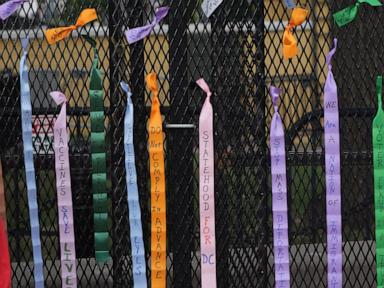
Consider what happened in the summer of 2020. Amid sweeping civil unrest, temporary non-scalable fencing went up around the White House complex, turning Lafayette Park into a cordoned-off zone behind razor wire. For months, the public was locked out. The grass turned brown under the shadow of heavy metal barricades. To many who walked past, it felt less like a protective measure and more like a retreat. It was the physical manifestation of a government turning inward, drawing up the drawbridge against its own populace.
Now, the discussion moves from emergency response to permanent infrastructure. A federal panel review means the idea has graduated from late-night panic to serious bureaucratic consideration.
Why does this happen? The logic of security is an infinite regress. Once you build a five-foot fence, someone will point out that a determined individual can climb it. So you raise it to eight feet. Then you add anti-scaling measures. Then you push the perimeter outward to create a kill zone or a buffer. Before long, the public square is no longer public. It belongs entirely to risk management algorithms.
We must admit a hard truth here. The threats are real. In an era of heightened political polarization, volatile demonstrations, and real security vulnerabilities, those tasked with protecting the executive branch carry an impossible burden. Nobody wants to be the official who ignored a credible threat. The impulse to wrap the White House in layers of impenetrable defense is entirely understandable from the perspective of a risk analyst sitting in a windowless room.
Yet, architecture is destiny. The physical choices we make shape our political behavior.
If you wall off Lafayette Park, you do not just stop potential intruders; you sever the visceral connection between the citizen and the executive. You teach generations of children who visit Washington that their leaders must be hidden behind fortifications, untouchable and remote. You replace the messy, beautiful, chaotic reality of an open democracy with the sterile quiet of a military installation.
There is a psychological cost to living behind walls. Psychologists call it defensive architecture, but it acts on the soul just as much as the body. When a city begins to armor itself, its inhabitants adopt an armored mindset. Trust erodes in direct proportion to the rise of bollards and security gates.
We have been down this road before. After the Oklahoma City bombing in 1995, Pennsylvania Avenue directly in front of the White House was closed to vehicular traffic. At the time, critics wailed that it would choke the city, that it would permanently rupture the ceremonial heart of the capital. The closure happened anyway. Over time, pedestrians adapted. The street became a pedestrian plaza, a strange sort of hybrid space.
Yet closing a street to cars is fundamentally different from walling off a public park. A street is for transit; a park is for communion. Lafayette Park belongs to the public domain in a way that asphalt never quite does. It is where you go to hold a sign, to eat a sandwich on a park bench while staring up at the statue of Andrew Jackson, or to feel the immense weight of history pressing down on a Tuesday afternoon.
As the federal panel continues its review, the debate will likely get bogged down in technical specifications. They will argue about sightlines, historical preservation acts, crowd flow capacities, and material costs. They will use terms like mitigation and integration.
Do not be fooled by the dry vocabulary. This is a philosophical battle disguised as a zoning hearing.
The core question is deceptively simple, yet almost impossible to answer to everyone's satisfaction. How much of our openness are we willing to sacrifice in the name of safety, and at what point does our defense mechanism destroy the very thing we are trying to protect?
The afternoon sun dips low behind the Treasury Building, casting long, fractured shadows across Lafayette Park. Tourists lift their phones to snap pictures of the executive mansion through the existing fence, their faces illuminated by the blue glow of screens. A lone protestor holds a faded placard near the Andrew Jackson statue, shouting into a wind that carries the hum of downtown traffic. The grass is green, the gravel crunches underfoot, and for now, the barrier is permeable enough to let the world in. But the blueprints are waiting on a desk, and the concrete is always ready to be poured.