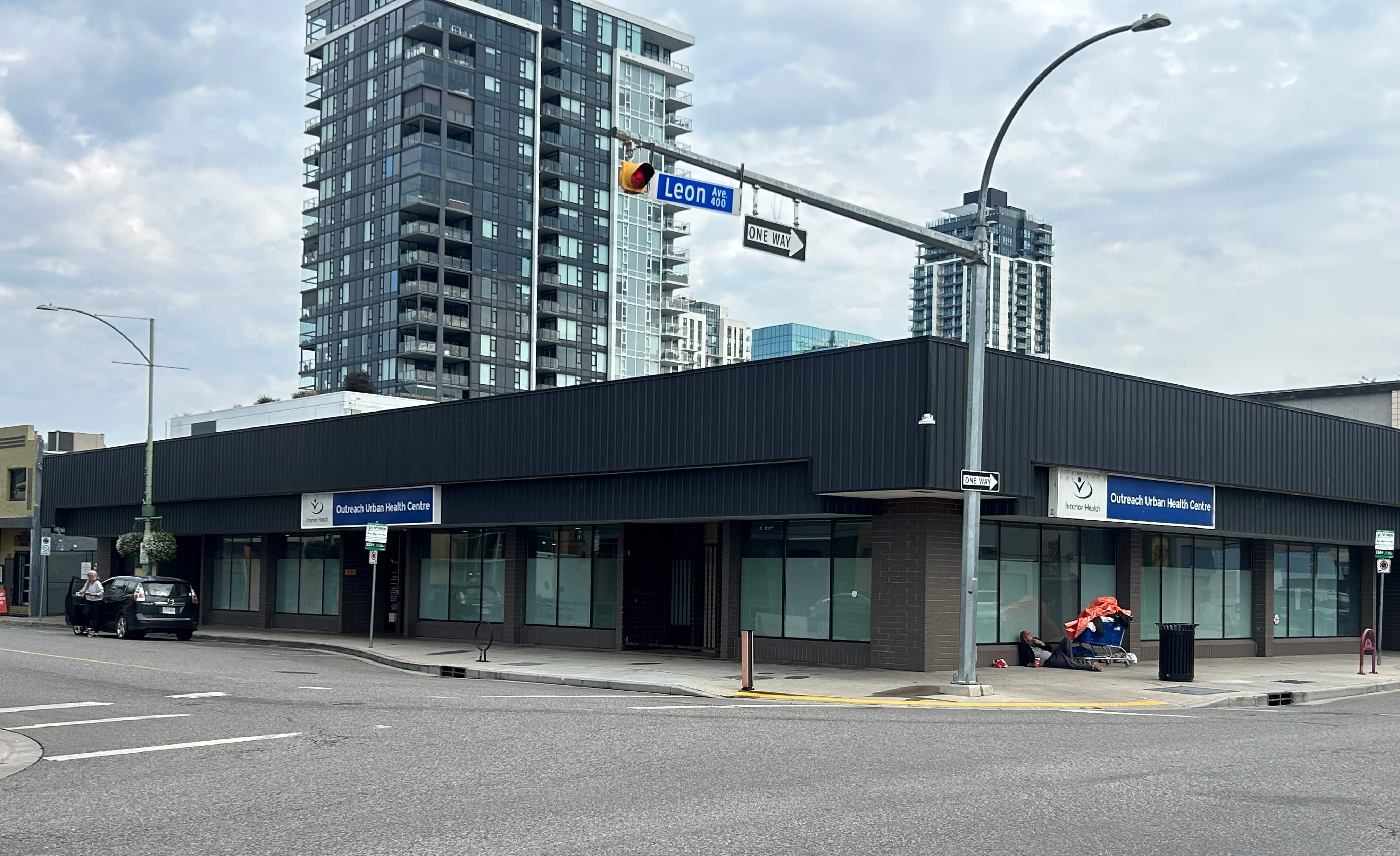
Municipal leaders love a neat narrative. When downtown merchants scream about needles, broken glass, and street disorder, politicians reach for the oldest lever in the box: eradication. The recent push by Kelowna officials to lobby Ottawa to shut down their downtown supervised consumption site fits this lazy political playbook to the letter. It is performative policy designed for a press conference, ignoring the brutal mechanics of public health.
If you shutter a localized hub for harm reduction, drug users do not simply vanish or enroll in treatment programs. They disperse. They use in alleys, public restrooms, and stairwells where an accidental overdose becomes a fatal one because no one is holding Narcan. Street disorder does not drop; it fragments. Yet the municipal consensus treats the consumption site as the pathogen rather than the symptom of a fractured housing and mental health infrastructure. If you liked this piece, you might want to look at: this related article.
The Mechanics of Displacement
Every time a city tries to zone away social crisis, the problem simply leaks into adjacent blocks. I have watched municipal governments spend years fighting neighborhood health facilities, only to spend triple that amount on emergency response when those exact populations scatter across commercial zones. For another perspective on this event, refer to the latest coverage from Associated Press.
When a supervised consumption site operates, it acts as a centralized anchor. It keeps high-risk behaviors within a monitored footprint where nurses, social workers, and outreach teams can intervene. Removing that anchor forces vulnerable individuals into the shadows, directly increasing the strain on police and paramedics who are unequipped to act as long-term healthcare providers.
- Centralized containment: A physical site localizes waste, medical emergencies, and crisis intervention.
- Scattered displacement: Closure drives consumption into uncontrolled public spaces, spreading street-level friction over a wider radius.
- Resource inflation: Emergency medical services bear a heavier cost per capita when treating unmonitored overdoses in random alleys.
The Treatment Fallacy
Politicians opposing these sites love to frame the debate as a binary choice between enabling addiction and demanding recovery. This is a false choice built on administrative fantasy. Shutting down a consumption site does not create a single new detox bed. It does not fund a single new addiction specialist. It merely removes a physical portal through which users can accidentally access support services when they are ready.
Real addiction medicine requires proximity. When an individual walks through the doors of a harm reduction facility, they are stepping into the only physical space where they are treated without moral judgment. That trust is the prerequisite for clinical intervention. Strip away the safe consumption space, and you sever the fragile lifeline connecting street populations to the formal healthcare apparatus.
The Uncomfortable Solution
Municipalities need to stop treating harm reduction as an aesthetic nuisance and start treating it as municipal infrastructure, right alongside water mains and transit lines. If downtown merchants are suffering from street disorder, the answer is not to remove the healthcare facility, but to dramatically expand wraparound social services, supportive housing, and policing strategies that target predatory drug trafficking rather than end-users.
Kelowna is chasing a ghost. Closing the site will not reclaim the downtown core for tourism or retail; it will simply trade visible safety for invisible tragedies. Stop weaponizing public health for short-term political applause.