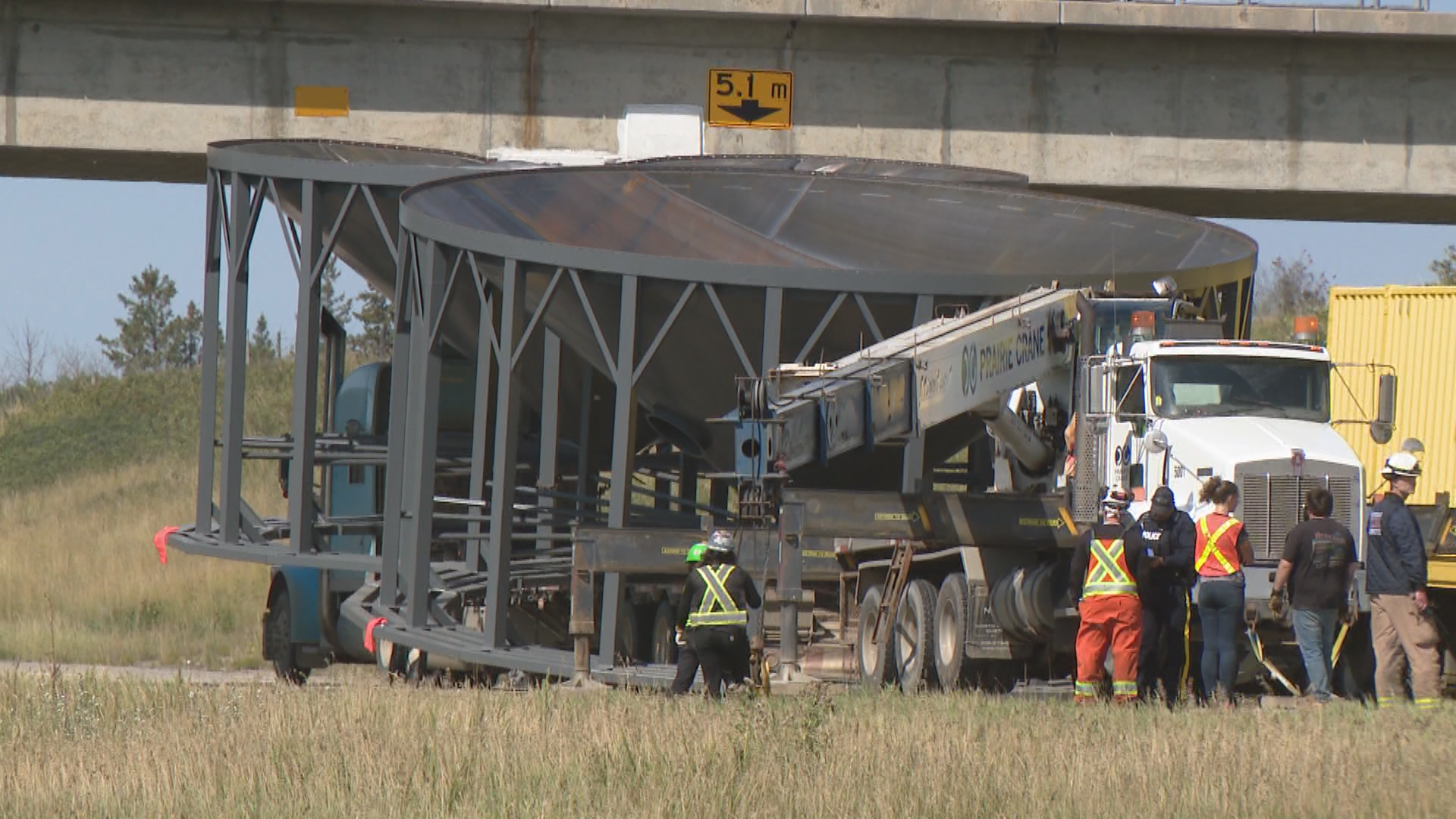
The recurring collision of commercial transport loads with fixed regional infrastructure exposes structural flaws within provincial logistics oversight. When a semi-trailer hauling oversized equipment strikes a railway bridge on Highway 16 near the Borden Bridge, the event is categorized conventionally as an isolated driver error. Shifting the analytical lens from individual culpability to network-wide systemic vulnerability reveals a different reality. This recurring friction between high-clearance cargo and fixed-height spans demonstrates a predictable breakdown in pre-trip risk management, regulatory enforcement, and permit-to-route validation protocols.
Understanding why transport vectors repeatedly impact fixed assets requires evaluating the operational variables governing heavy haulage. Commercial transport operates under tight economic margins, creating strong behavioral incentives to bypass optimal asset configuration, split-load requirements, or designated routing mandates. When examining the sequence of failures culminating in structural impacts across provincial corridors, three primary operational vectors emerge.
The first vector involves load geometry and cargo staging decisions. Transporting industrial machinery, modular components, or oversized cones on specialized step-deck or flatbed trailers alters the center of gravity and total vertical profile. Operators balancing dimensional limits frequently face a binary choice: configure the load within strict legal height thresholds by splitting shipments into multiple trips, or consolidate the cargo to maximize single-trip efficiency at the expense of vertical clearance. When economic pressures favor consolidation, operators introduce margin-of-error compression. A minor miscalculation in how cargo is seated on a step-deck trailer can easily consume the remaining centimeter of clearance beneath a 5.1-meter fixed span.
The second vector centers on routing compliance and permit discrepancy. Commercial carriers moving oversized freight operate under mandatory permitting frameworks designed to map safe vertical trajectories across provincial highway networks. These permits stipulate exact routing based on surveyed bridge clearances. A collision indicates a critical failure point within this administrative chain. Either the physical dimensions declared during the permit application phase failed to match the actual post-loading configuration, or the driver deviated from the prescribed logistical blueprint. The systemic risk multiplies when enforcement mechanisms rely primarily on reactive penalties rather than proactive, mandatory physical clearance verification checkpoints prior to entering high-density or restricted infrastructure zones.
The third vector relates to infrastructural asset age and corridor design alignment. Regional transportation arteries like the Yellowhead Highway accommodate freight volumes and cargo dimensions that far exceed the historical design parameters established decades ago when these bridges and overpasses were constructed. While modernizing every legacy structure across a vast geographic expanse remains financially prohibitive, the mismatch between contemporary industrial transport demands and legacy vertical clearances guarantees a baseline statistical probability of impact. Without active mitigation, structural vulnerability increases proportionally with freight traffic density.
Mitigating these systemic failures requires shifting from punitive deterrence to preventive operational control. Regulatory bodies must move past post-incident fines and municipal bylaw charges toward mandatory pre-transit clearance verification protocols. Commercial carriers should implement mandatory laser-profiling gates at major industrial staging hubs to catch non-compliant vertical profiles before vehicles access provincial highways. Aligning economic incentives with infrastructure preservation will remain impossible as long as the cost of a delayed shipment remains lower than the administrative friction of compliance. Enforce strict digital integration between permit offices and real-time load measurements, and the frequency of structural impacts will decline.