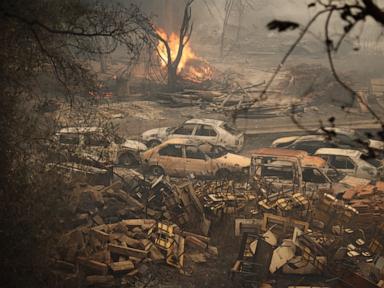
The heat does not merely arrive in the Algerian summer. It descends. It sits upon the Atlas Mountains like a heavy, leaden wool blanket, sucking the moisture from the scrub oak, the olive groves, and the ancient soil until the entire landscape becomes a coiled spring.
Everyone who lives here knows the smell of impending disaster. It is not smoke, not yet. It is the smell of baked dust and fried pine needles, a dry, electric scent that makes the back of your throat itch before you even see a spark.
When the fires came last year, they did not burn as fires used to burn. They exploded.
Picture, if you will, a hypothetical resident—let us call him Malik—standing on his balcony in the province of Tizi Ouzou. He looks up toward the ridge where his family has harvested olives for three generations. He sees a smudge of gray against the blinding blue sky. Within twenty minutes, that smudge is a towering, roaring column of black cumulonimbus flammability, pumping its own weather into the upper atmosphere, generating winds that hurl burning embers half a mile ahead of the actual front.
Malik does not have time to grab his father’s photographs. He has minutes. Sometimes seconds.
That is the reality behind the dry ticker-tape headlines that flash across international screens: Algerians battle deadly wildfires. It sounds bureaucratic. It sounds manageable. It sounds like an emergency service doing its job with quiet competence.
It is nothing of the kind. It is an apocalyptic scramble for survival, where villagers grab wet rags, tree branches, and garden hoses, fighting walls of flame that sound like roaring freight trains. By the time the flames are beaten back, dozens of lives are extinguished, whole ecosystems are reduced to charcoal, and the collective psyche of a nation is charred just a little bit more.
Then comes the state response. Then comes the law.
President Abdelmadjid Tebboune looked at the ash-choked valleys and made a decision born of absolute fury and political desperation. The death penalty. For arson.
It is a stark, heavy-handed hammer swung at a burning world. On paper, it sounds like an unyielding shield. If a match lights the match that kills a forest and a family, let the hand that held it pay the ultimate price. But human behavior, and the ecology of disaster, is rarely so neat.
Let us be honest about what is happening here. Arson in North Africa during the dry season is a complex web of malice, neglect, and tragic coincidence. Yes, there are malicious actors. There are individuals driven by vendettas, land clearing, or political sabotage who deliberately put flame to brush. But there are also farmers burning stubble who lose control, campers ignoring a glowing ember, and utility lines snapping in furnace-like winds.
When the state introduces capital punishment for a crime born of both deliberate evil and catastrophic human error, the courtroom transforms. The burden of proof skyrockets. Juries hesitate. The legal system becomes a theater of high-stakes gambling where prosecutors must prove intent in an environment where chaos is the only constant.
Consider what happens next in the quiet courtrooms of Algiers months after the smoke clears. Judges sit beneath portraits of state, thumbing through charred evidence logs. They look at defendants who often look less like masterminds of destruction and more like desperate, broken men caught in a systemic failure much larger than themselves. The death penalty becomes a political lightning rod—a way for a government to broadcast strength when it feels profoundly, terrifyingly weak against the forces of climate change and geography.
Because that is the hidden truth beneath the ashes. You cannot execute a heatwave. You cannot sentence a prolonged drought to the gallows.
The Mediterranean basin is one of the primary global hot spots for climate vulnerability. Temperatures are rising faster here than the global average. The winter rains are arriving later and leaving sooner. The brush is drier, thicker, and more volatile than it was fifty years ago.
The state can draft the harshest penal codes in the world, but if the infrastructure for early detection is lacking, if the water-bombing aircraft are too few, if the rural roads are too narrow for fire engines to navigate while panicked families are fleeing in opposite directions, the fires will win. Every single time.
We have seen this script before across the globe, from the eucalyptus forests of Australia to the pine-studded hills of Greece and California. A disaster strikes. The public demands blood or retribution. Politicians reach for the most severe tool in the legislative drawer. The laws get tougher.
And yet, the next summer, the smoke returns.
The human cost of these fires cannot be captured in a casualty toll. It lives in the children who wake up crying at the smell of barbecue smoke months later. It lives in the elderly woman who refuses to evacuate because her entire history is tied to four stone walls that now sit in a wasteland of gray ash. It lives in the volunteer firefighters—young men with soot-stained faces and blistered hands—who return to the station house in silence, knowing that next July will bring the exact same terror.
Law enforcement and deterrence have their place. Absolute recklessness with fire in a tinderbox should carry severe consequences. But a society that relies solely on the executioner's block to solve an ecological crisis is treating a hemorrhage with a band-aid.
The real battle is not fought in the courtroom with gavels and robes. It is fought in the underbrush. It is fought through controlled burns in the dead of winter, when the earth is cold and forgiving. It is fought by clearing firebreaks, modernizing rural communications, empowering local civil protection units, and investing heavily in the unglamorous, sweaty, day-to-day labor of land management.
Until Algeria—and every other nation facing the great burning of our century—shifts its focus from punishing the aftermath to preparing for the inevitable, the cycle will repeat.
Summer will return. The temperature will spike. The dry wind will blow down from the heights. And somewhere in the hills, a spark will catch.
The smoke will rise again, carrying with it the ashes of homes, the ghosts of the lost, and the heavy, lingering question of whether a nation can legislate away a fire it refuses to out-manage.