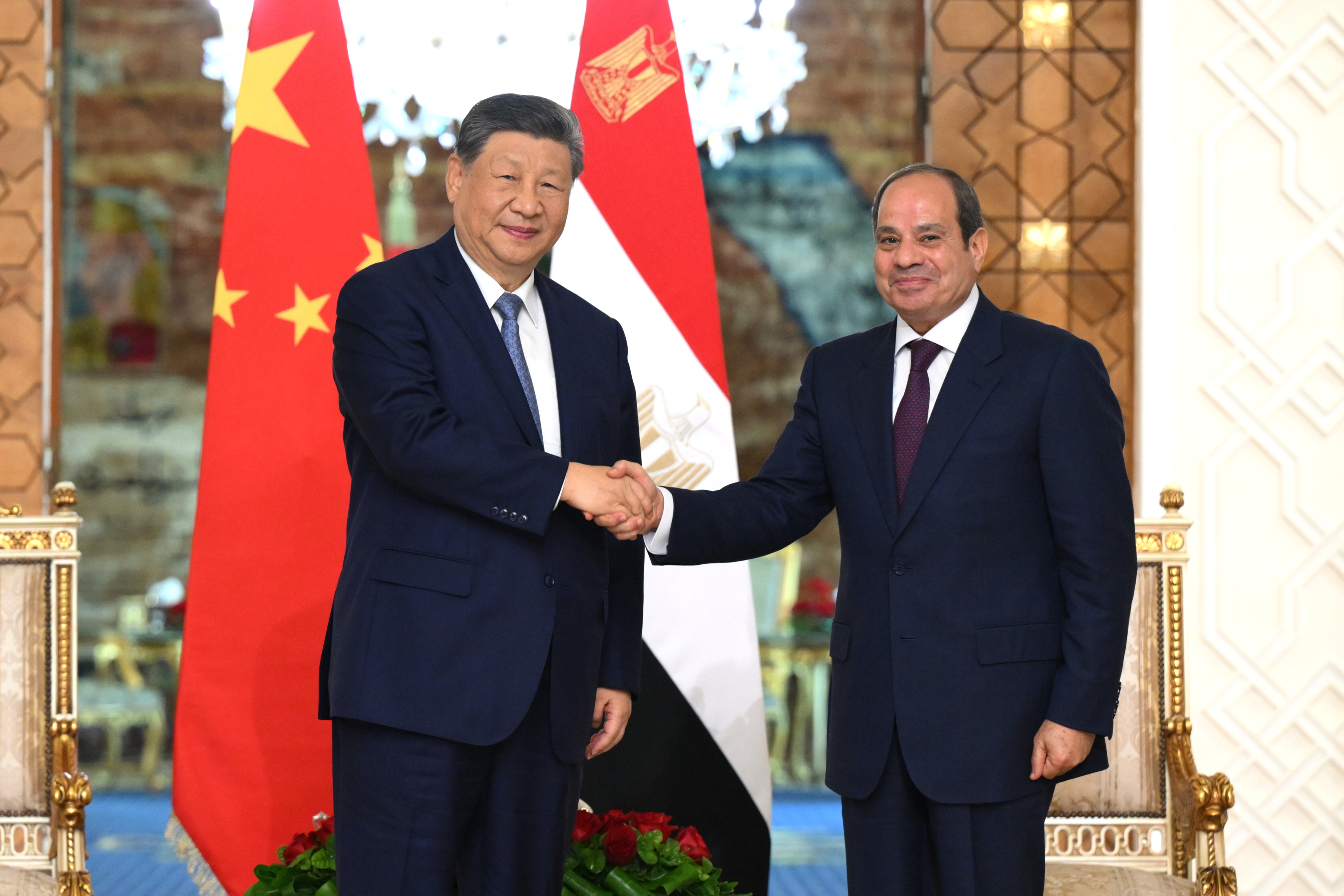
Geopolitical alignment rarely occurs through sudden convergence; it is calculated through mutual exposure management. When state visits bridge distinct security umbrellas, the underlying mechanics involve risk distribution, liquidity preservation, and spatial control. Evaluating the expanding partnership between Beijing and Cairo requires discarding generalized diplomatic narratives and examining the structural incentives driving both states. Egypt operates under chronic external financing constraints and historical reliance on Western security frameworks, yet actively pursues a policy of strategic balance. China faces maritime bottlenecks in the Indo-Pacific, intensifying technological decoupling with traditional Western markets, and an imperative to secure stable trade corridors across Afro-Eurasia.
The architecture of this bilateral relationship rests on three functional pillars: logistical choke-point dependency, industrial localization arbitrage, and defense diversification. Each pillar represents a distinct vector where Chinese capital and technological supply chains intersect with Egyptian macroeconomic stabilization needs. For another view, read: this related article.
The Logistical Choke Point Variable
Control over maritime geography dictates trade velocity. Egypt commands the Suez Canal, a conduit handling a substantial percentage of global container traffic. In periods of acute disruption within alternative waterways such as the Strait of Hormuz or the Bab el-Mandeb, the operational continuity of the Suez passage becomes a primary asset for energy-importing economies. Further insight on this matter has been published by BBC News.
Beijing views the Suez Canal Corridor not merely as a maritime shortcut under the Belt and Road Initiative, but as an indispensable node for risk mitigation. By embedding Chinese logistics hubs, container handling facilities, and industrial manufacturing zones directly within the Suez Canal Economic Zone, Beijing secures predictable throughput for its export economy. For Cairo, this dynamic attracts foreign direct investment necessary to alleviate severe foreign currency shortages and lower structural import bills without submitting entirely to orthodox multilateral lending conditions.
Industrial Localization and Capital Arbitrage
Traditional trade models defined by finished goods export from East Asia to North Africa have hit diminishing returns due to Egypt's balance-of-payment pressures and import restrictions. The current strategic phase shifts from transactional commerce to production localization.
Chinese firms are expanding capital deployment into high-value manufacturing, including electric mobility components, renewable energy infrastructure, data centers, and chemical production facilities inside Egyptian industrial parks. This structural shift offers a dual optimization function:
- Chinese manufacturers bypass rising tariff barriers and diversify production footprints outside domestic borders to counter Western trade restrictions.
- Egypt captures technological transfer, builds domestic manufacturing capacity, and integrates local labor into advanced industrial supply chains.
Bilateral financial mechanisms also reflect this structural realignment. Discussions regarding local currency settlement agreements aim to reduce exposure to dollar-denominated liquidity shocks, insulating trade flows from external monetary tightening cycles.
Defense Diversification and the Security Dilemma
Military cooperation historically serves as the tightest bond in international relations. Egypt maintains a deeply entrenched security partnership with the United States, anchored by decades of military assistance. However, Cairo's recent procurement diversification and joint military exercises, such as advanced tactical air drills involving multi-role fighter platforms, signal a calculated shift toward a multi-vendor defense strategy.
This diversification creates a complex security calculation for regional actors, particularly Israel, which monitors the erosion of traditional qualitative military edges. From Cairo's perspective, engaging with alternative defense suppliers provides negotiating leverage, prevents single-source dependency, and satisfies domestic requirements for localized defense manufacturing. China leverages this aperture to project diplomatic stability and normalize its defense footprint within a traditional Western security architecture.
Macroeconomic Tradeoffs and Execution Bottlenecks
Despite alignment on multilateral platforms like the BRICS bloc and the Shanghai Cooperation Organisation, systemic friction points constrain the partnership:
- The bilateral trade deficit heavily favors Beijing, creating long-term currency outflow pressures for Cairo unless local industrial output successfully targets export markets in Europe and sub-Saharan Africa.
- Bureaucratic friction, infrastructure execution delays, and complex regulatory environments within North Africa continue to test the risk tolerance of private Chinese capital.
- Navigating Washington's technological screening parameters requires Cairo to walk a tightrope, particularly regarding sensitive digital infrastructure, telecommunications, and artificial intelligence deployments.
To maximize the utility of this axis, Egyptian economic planners must condition inbound Chinese industrial capital on mandatory local export quotas, ensuring that joint ventures generate net-positive foreign exchange rather than serving merely as domestic market extraction vehicles. Simultaneously, Beijing must transition from high-level political signaling to deep technical integration if it intends to establish Cairo as its primary manufacturing springboard into the African continent.