The morning air in Ceuta smells of salt, diesel, and a very particular kind of waiting. Standing at the border fence, looking out toward the jagged hills of northern Morocco, you realize how thin a line separates two entirely different universes. On this side, European uniforms, bureaucratic anchors, and the heavy machinery of state security. On the other, open slopes that hold their secrets close.
When thousands of people suddenly appear at a shoreline, swimming around breakwaters in the freezing fog, the immediate instinct of power is to point a finger.
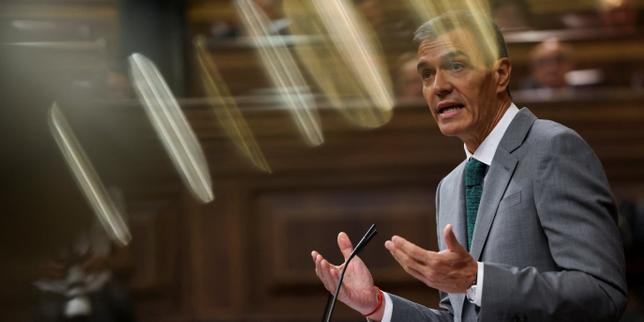
Pedro Sanchez knows this better than most. Sitting in Madrid, facing a political opposition that smells blood in every wave crashing against the Spanish enclaves, the Prime Minister had to make a choice. He could fan the flames, feed the anger, and give the public the simple, satisfying villain they craved. Or he could speak the truth of governance.
He chose the harder path.
Spain does not have solid proof of Moroccan complicity in that sudden, overwhelming migratory surge.
Let that sentence hang in the air for a moment. In a world addicted to instant certainty, where every crisis must have a mastermind pulling strings from a shadowy war room, admitting a lack of definitive evidence feels almost subversive. We want our geopolitics neat. We want a clear script where villains twirl their mustaches and heroes stand resolute.
Reality is rarely so clean.
Consider what happens on the ground during a breakdown of order. Rumors travel faster than coast guard boats. Social media channels hum with encrypted messages, false promises sold by human traffickers, and desperate hopes of families living miles away in sub-Saharan Africa. When a border bulges, politicians often confuse correlation with coordination. A neighboring state looks away, perhaps deliberately, perhaps out of sheer exhaustion or internal economic strain. Does looking away equal pushing? Legally, diplomatically, and logically, the gap between those two actions is vast.
Sanchez stood before reporters and drew that exact line.
It is a lonely position to occupy. Behind him, conservative leaders accused him of appeasement. Ahead of him, diplomats worried about the fragile architecture of the Spain-Morocco partnership, an alliance built on trade, counter-terrorism intelligence, and mutual survival. If you break that bridge, the consequences ripple instantly through olive groves, ports, and police stations from Andalusia to the Sahara.
To understand why this matters, you have to look past the political theater in Madrid and step into the shoes of a border guard working a twelve-hour shift under the unrelenting Mediterranean sun.
He does not care about geopolitical strategy when a teenager is shivering on the rocks, blue-lipped and clutching a plastic bottle for buoyancy. He pulls the kid up. He hands him a foil blanket. In that precise second, the grand debates of sovereignty and bilateral trust evaporate. There are only bodies, water, and the fragile machinery of rescue.
Yet, hours later, those same guards are pulled into briefings where men in suits demand answers. Who let them through? Was it intentional? Did Rabat open the floodgates to extract a diplomatic concession over Western Sahara or agricultural tariffs?
The intelligence services search their files. They intercept calls, analyze satellite imagery, and parse diplomatic cables. They look for the smoking gun. And what do they find? Smudges. Ambiguity. The classic fog of international relations.
Morocco has its own pressures. It sits at the literal fulcrum of two worlds, caught between a wealthy, demanding Europe that outsourcing its borders southward, and a vast continent of young people desperate for a future denied to them at home. Managing that pressure is like holding a tiger by the tail. Sometimes the grip slips. Sometimes the local police forces, underpaid and overwhelmed, simply look the other way because corruption or fatigue is easier than confrontation.
To turn that human mess into a clean narrative of deliberate state aggression requires a leap of faith that responsible leaders cannot take lightly.
Accusations without evidence are cheap. They play well on evening news broadcasts. They mobilize voters. But they also burn bridges that take decades to rebuild. Sanchez understood that tossing a match into the diplomatic dry grass might warm his political standing for an afternoon, but it would leave the entire house on fire by winter.
This is the hidden cost of our modern appetite for outrage. We demand that our leaders possess omniscient clarity. When they admit that intelligence is murky, that motives are mixed, and that absolute proof remains elusive, we mistake prudence for weakness. We want heroes and villains, forgetting that international borders are managed by tired bureaucrats navigating a permanent gray zone.
The waves keep rolling into Ceuta. The fences remain. The geopolitical chess match between Rabat and Madrid continues behind closed doors, conducted in hushed tones over secure lines.
And out on the water, the horizon remains as vast, indifferent, and mysterious as ever, reminding us that some questions do not have easy answers, and the people brave enough to say so are often the ones keeping the peace.