The mainstream media is treating the return of Alexis Tsipras like a seismic political event. Headlines across Europe are shouting about the "leftist firebrand" making a stunning comeback with his new party, the Greek Left Alliance (ELAS). They paint a picture of a fragmented opposition suddenly finding its champion, ready to march on Athens and tear down Kyriakos Mitsotakis’s conservative government amid wiretapping and train crash scandals.
It is a beautiful narrative. It is also completely wrong.
The political establishment is falling for a classic illusion. They confuse name recognition with actual power. I have spent years analyzing European sovereign debt, structural adjustments, and Mediterranean electoral shifts, and I have seen this exact movie play out. A recycled leader sets up a new boutique party, claims they are fighting for the soul of the working class, and promises a "shock of integrity."
It fails every single time.
Tsipras isn’t returning to shake up Greek politics. He is returning because the collapse of Syriza left a vacuum that his ego couldn’t ignore. But the structural realities of Greece in 2026 ensure that ELAS will not be a vehicle for governance. It will be a vanity project that accomplishes the exact opposite of its stated goal: it will cement the center-right's absolute hold on power.
The Fatal Flaw of the Fresh Faces Strategy
Tsipras has launched ELAS with a strict rule: no currently serving, active politicians are allowed in. He wants to signal a total break from the discredited political class. On paper, it sounds brilliant. In reality, it is an admission of weakness.
Political parties require infrastructure to win national elections. They need ground operations, regional offices, seasoned organizers, and candidates who understand how to mobilize voters outside the cozy cafes of Athens. By banning established politicians, Tsipras isn’t purifying his movement; he is castrating it. He is building a party of amateurs to challenge New Democracy, an entrenched political machine backed by the country’s dominant media and business dynasties.
Worse, this rule ignores the fundamental reason voters are cynical. Greeks do not distrust the left because of obscure backbench MPs. They distrust the left because of Alexis Tsipras himself.
Let’s look at the actual history. In 2015, Tsipras stood before the Greek electorate and promised to rip up the bailout memorandums. He held a referendum, watched the public vote a resounding "No" to austerity, and then immediately turned around and signed a third, even harsher bailout package with the Troika. He implemented the exact pension cuts and tax hikes he spent years campaigning against.
You can only play the anti-establishment card once. The moment you capitulate to international creditors, you become the establishment. Tsipras cannot run a campaign based on anti-corruption and institutional integrity when his own legacy is defined by the ultimate political betrayal. Voters have long memories. When government spokesperson Pavlos Marinakis remarked that Tsipras’s record will follow him forever, he wasn't just spinning; he was stating an electoral reality.
The Illusion of the 14 Percent Poll
Commentators are already pointing to early polls showing ELAS hitting around 14%, instantly vaulting over the socialist PASOK party into second place. They treat this as a victory. It is actually a ceiling.
A 14% polling position in a deeply fragmented system is a recipe for irrelevance, not power. Greece’s electoral landscape is split among seven different parties. By entering the fray with ELAS, Tsipras isn't expanding the left-wing electorate; he is merely cannibalizing it. He is taking percentages away from a dying Syriza, stealing a few points from PASOK, and competing with new anti-corruption micro-parties like the one launched by Maria Karystianou.
The mechanics of this fragmentation are devastating for the opposition:
| Party/Bloc | Current Estimated Vote Share | Political Alignment | Role in Parliament |
|---|---|---|---|
| New Democracy | ~26% - 30% | Center-Right | Ruling Party / Dominant Force |
| ELAS (Tsipras) | ~13% - 14% | Left-Wing | Fractured Opposition |
| PASOK | ~10% - 12% | Center-Left | Fractured Opposition |
| Syriza / Others | ~5% - 8% | Left-Wing / Far-Left | Fragmented Micro-Parties |
This division creates an architectural impossibility for the left. Under the current electoral system, a party needs a massive, unified block to secure an outright majority or dictate terms in a coalition. By splitting the progressive vote into three or four distinct factions, Tsipras ensures that no single left-wing party will ever have the leverage to challenge Mitsotakis.
Imagine a scenario where the 2027 elections result in New Democracy falling short of a solo majority. Mitsotakis won’t have to look left for a coalition. He will simply watch the left-wing parties tear each other apart for the right to be the leader of the opposition, while he cuts deals with minor right-wing nationalist factions to retain the Prime Minister's office. Tsipras’s entry doesn't threaten the establishment; it stabilizes it.
The Greek Economy Has Outgrown 2015 Populism
The biggest blind spot in the coverage of the ELAS launch is the economic context. Tsipras is trying to reuse his 2015 playbook: talking about income inequality, rising energy prices, and the cost-of-living crisis. He is acting as if Greece is still the desperate, bankrupt nation of a decade ago.
It isn't. Greece's macroeconomics have fundamentally shifted. While inflation and soaring housing costs are absolutely hammering working-class families, the broader economy is experiencing steady GDP growth and falling unemployment. Credit rating agencies have restored Greece to investment grade. Moody’s and S&P aren't looking at radical left-wing promises for economic stability; they are looking for continuity.
When Tsipras promises to boost wages, expand social welfare, and pivot the economy toward agriculture and manufacturing, business owners and middle-class voters don’t hear a progressive vision. They hear fiscal instability. They remember the capital controls of 2015, the closed banks, and the terrifying prospect of a "Grexit" that almost destroyed their life savings.
The modern Greek voter is exhausted. They are angry about corruption and institutional rot, yes. The wiretapping scandals and the Tempi train crash are legitimate stains on the current government. But when forced to choose between a corrupt government that delivers stable economic growth and a clean-hands populist who risks financial chaos, the pocketbook wins every single time.
The Actionable Truth for the Opposition
The premise that the Greek left needs a charismatic savior is fundamentally flawed. If progressive politics wants to return to power in Greece, it needs to stop looking backward.
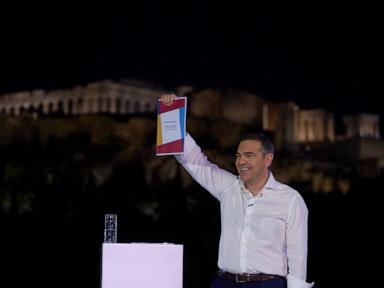
First, the opposition must accept that the era of the "firebrand leader" is dead. Voters are immune to rhetoric delivered beneath the Acropolis. What they want is technocratic competence paired with social justice. They want leaders who can explain exactly how they will fund public healthcare and transport without blowing up the national budget.
Second, Tsipras needs to get out of the way. His presence alone acts as a unifying rallying cry for the right. The center-right New Democracy party doesn't even need to defend its own scandals; all they have to do is point at Tsipras and remind voters of the 2015 crisis to send moderate voters running back to the status quo.
The launch of ELAS is not a rebirth. It is the final, desperate gasp of a political generation that doesn’t know when to leave the stage. Until the left learns to build a modern, unified policy platform rather than relying on recycled icons, they will remain exactly where they are: watching the center-right govern from the sidelines.