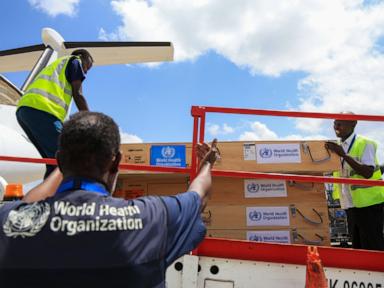
Bringing infected citizens home during a global health crisis used to be a given. Not anymore. The Trump administration is completely upending decades of public health protocol by choosing to build an Ebola quarantine and treatment facility in Kenya rather than flying exposed or infected Americans back to the United States.
It's a radical shift. During previous outbreaks, if an American doctor or aid worker got exposed to Ebola, the specialized medical planes were prepped immediately. They flew straight to high-containment units at places like Emory University or the University of Nebraska. Now, under a new policy pushed by the White House, those same citizens are going to be diverted to East Africa.
The official line from the administration is logistical convenience. A 12-hour medevac flight from the Democratic Republic of Congo (DRC) to the United States is grueling and dangerous for a patient in critical condition. Shifting them to a stable regional hub like Kenya gets them into isolation and treatment much faster.
But there's an aggressive border-control element to this choice that you can't ignore. Secretary of State Marco Rubio made the administration's stance crystal clear during a recent Cabinet meeting, stating that the U.S. will not allow any cases of Ebola to enter the country. It's a hardline containment strategy aimed at keeping the virus completely outside of American borders, even if it means keeping American citizens thousands of miles away from home.
The Reality of the Bundibugyo Outbreak
This isn't a theoretical exercise. The decision comes as health authorities desperately fight a rapidly growing outbreak of a rare Ebola strain in the DRC and Uganda. The World Health Organization (WHO) already declared it a public health emergency of international concern. This specific outbreak involves the Bundibugyo strain, which is notorious because it can be harder to diagnose initially than the more common Zaire strain.
Right now, the numbers are rising fast. Data from the Centers for Disease Control and Prevention (CDC) shows over 900 suspected cases in Congo, with at least 223 suspected deaths. Uganda has also logged a handful of confirmed cases linked to the initial cluster.
The environment in eastern Congo is a logistical nightmare. Health workers are dealing with active armed groups, massive displacement of local populations, and fractured infrastructure. Because local testing facilities initially checked for the wrong strain, the virus got a multi-week head start.
The Trump administration has already used Title 42—the public health law frequently used for border restrictions—to bar immigrants and permanent residents who have been in the DRC, Uganda, or South Sudan within the last 21 days from entering the country. Banning foreign nationals was step one. Keeping exposed U.S. citizens abroad is step two.
Inside the Kenya Facility Plan
The proposed center is a joint project involving the Department of Defense, the State Department, and the Department of Health and Human Services (HHS). The plan relies on deploying members of the U.S. Public Health Service Commissioned Corps, a uniformed branch of health professionals under HHS, to staff the site. Several officers have already received notices to prepare for deployment.
The facility aims to manage the full spectrum of Ebola care, including advanced life support and intensive monitoring. Administration officials claim that if a patient needs highly specialized care beyond what the Kenya site can provide, forward transport to Europe or elsewhere will be considered case by case.
But there's a major catch: the Kenyan government hasn't fully signed off on the plan yet. Kenyan Health Minister Aden Duale confirmed that discussions are happening regarding response mechanisms, but he carefully noted that any deal must protect the health and welfare of Kenyan citizens and follow national biosecurity laws.
Local experts are also raising red flags about the ethics of the decision. A former CDC official involved in previous Ebola responses publicly called the plan irresponsible, pointing out that Kenya doesn't traditionally run Level 4 high-containment facilities of the caliber found in the U.S., nor do they have extensive experience managing Ebola patient loads.
The Logistics of Medical Evacuations
While critics see the move as a political play to keep a terrifying virus off U.S. soil, some medical experts acknowledge the physical toll of moving highly infectious patients across continents.
Dr. Ali Khan, dean of the public health college at the University of Nebraska Medical Center, has noted that moving Ebola patients as little as possible is a standard medical recommendation. When a patient is crashing, a long-haul flight across the Atlantic can be fatal. If the U.S. military can build a true mirror image of an American biocontainment unit in Nairobi, the clinical argument for keeping patients closer to the source holds weight.
But the quality of care must be genuinely identical to what a patient would get in Atlanta or Omaha. If the facility lacks experimental therapeutics, advanced renal replacement therapy, or enough specialized staff, then American aid workers are essentially being given a lower tier of care to satisfy a political mandate.
Next Steps for Organizations on the Ground
For faith-based medical missions, non-governmental organizations (NGOs), and humanitarian aid groups currently operating in Central and East Africa, this policy shift fundamentally changes your risk assessment. You can no longer assume the federal government will fly your staff home if things go south.
First, audit your evacuation insurance policies immediately. You need to know if your private medevac providers are even permitted to transport patients to a U.S. military-run site in Kenya, or if their coverage is strictly tied to repatriation to domestic hospitals.
Second, update your internal safety protocols to account for localized quarantine. If your personnel are exposed in the DRC, their trajectory will now likely go through Nairobi or European hubs like Germany or the Czech Republic—where the U.S. recently transported a handful of exposed citizens for monitoring—rather than a direct flight back to the U.S.
Get written clarification from your regional USAID or embassy contacts on how the deployment of the Public Health Service Commissioned Corps affects non-governmental workers. The administration has indicated the facility will care for government scientists and physicians, but the exact admission criteria for independent aid workers and missionaries remain dangerously vague. You need those answers before the next infection happens.


