The headlines are screaming about $150 oil. Analysts are weeping over broken supply chains. The "experts" on cable news are hyperventilating about a US siege of Iranian ports as if the world is about to grind to a halt. They are all wrong. They are staring at the flicker of a candle while ignoring the furnace behind them.
Fear is a commodity, and right now, the market is overbought. The lazy consensus suggests that a blockade or a "long supply disruption" in the Middle East is a death knell for the global economy. In reality, a genuine, sustained crisis in the Strait of Hormuz is the violent, necessary jolt required to decapitate the world's lingering obsession with twentieth-century energy geography.
We don't need "stability" in the Gulf. We need the total evaporation of the illusion that we can’t live without it.
The Geopolitical Hostage Crisis
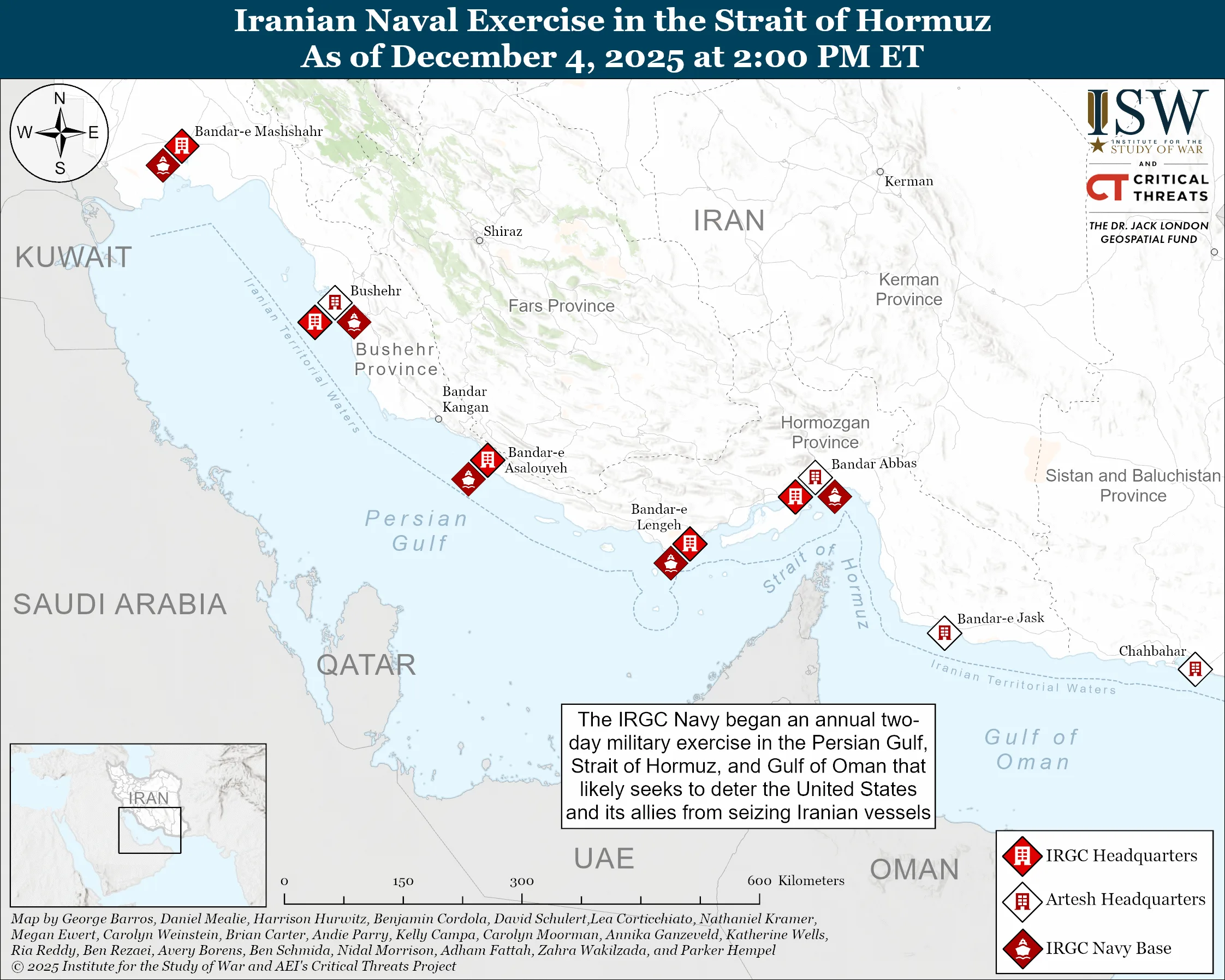
For fifty years, the global economy has lived with a gun to its head. That gun is the Strait of Hormuz. Roughly 20.5 million barrels of oil pass through that 21-mile-wide choke point every single day. The "fear" being sold to you right now is based on the idea that if Iran or the US shuts it down, we all starve.
This is the Stockholm Syndrome of energy. We have become so accustomed to this vulnerability that we treat its preservation as a moral imperative. But look at the math. The "siege" of Iranian ports isn't a disruption; it's a forced audit.
When prices spike, the signal isn't "we are doomed." The signal is "move faster."
I’ve sat in boardrooms where executives agonize over 2% fluctuations in Brent Crude. They spend millions on hedges to protect against the very scenario we see unfolding. They are wasting their time. A permanent disruption doesn’t just change the price; it changes the architecture of demand. If you want to kill the internal combustion engine, you don’t do it with subsidies for wealthy Tesla buyers. You do it by making the alternative physically unavailable.
The Myth of the "Long" Disruption
The competitor piece argues that a "long supply disruption" will crater the economy. They fail to understand the elasticity of modern industrial response.
The US is no longer the thirsty, dependent beast it was in 1973. Thanks to the Permian Basin and the sheer brutality of hydraulic fracturing, the US is a net exporter. A siege of Iranian ports actually serves American energy interests. It forces a price environment where domestic producers, currently constrained by "capital discipline" (a polite term for Wall Street's boredom with oil), are forced back into high-gear extraction.
But more importantly, a "long" disruption is a physical impossibility in a world of decentralized power.
Consider the "People Also Ask" obsession: Will gas hit $10 a gallon?
Maybe. But only for the people who refuse to adapt. The moment oil hits a sustained $120, the "break-even" math for every alternative—from green hydrogen to modular nuclear reactors—doesn't just look good; it looks like a gold mine. We are currently stuck in a period of "energy purgatory" where oil is just cheap enough to keep us lazy but just expensive enough to complain about. A siege breaks that cycle. It forces the capital flight out of legacy fossils and into infrastructure that isn't dependent on a 21-mile strip of water controlled by a theocracy.
The Siege is a Catalyst, Not a Catastrophe
The media frames a US siege of Iranian ports as an act of war that will destabilize the "landscape"—to use one of those tired words I won't touch. Let’s call it what it is: a hard reset.
Iran’s leverage exists only as long as the world believes it needs their oil. By initiating a siege, the US effectively calls the bluff. If the oil stops flowing and the world doesn't end, Iran loses its only bargaining chip.
The Real Mechanics of a Supply Shock
Let's look at the actual physics of global supply.
- Strategic Petroleum Reserves (SPR): Most G7 nations have enough in the tank to weather a 90-day total blackout.
- The China Factor: China is the primary customer for Iranian "ghost" barrels. A siege isn't just a move against Tehran; it's a direct tax on Chinese manufacturing. This forces Beijing to accelerate its own nuclear and renewable build-out, which, ironically, lowers global demand for oil even faster.
- The Efficiency Bounce: History shows that during every major energy spike, the "Energy Intensity" of GDP—the amount of energy required to produce one dollar of economic output—drops.
A siege is the ultimate efficiency consultant. It trims the fat. It kills the zombie companies that only survive on cheap transport costs. It forces the shipping industry to finally look at ammonia or nuclear propulsion instead of burning the bottom-of-the-barrel sludge they use now.
Why Your Portfolio is Positioned for the Wrong War
If you are following the "standard" advice, you are buying oil majors and shorting airlines. That is a tactical play for a strategic problem.
The contrarian move isn't to bet on the price of oil going up; it’s to bet on the irrelevance of the price of oil.
The true winners of a Hormuz blockade aren't the companies pumping more crude. It's the companies building the HVDC (High Voltage Direct Current) lines that allow power to be moved across continents. It's the copper miners. It's the engineers perfecting solid-state batteries.
I’ve watched traders lose their shirts trying to time the "peace" in the Middle East. There is no peace. There is only the periodic realization that the region's grip on the world's throat is slipping.
The current panic is a distraction. The "fear" of supply disruption assumes that the goal is to return to the status quo. The status quo is a trap. We should be praying for the disruption to be so severe, so absolute, and so "long" that we never have to care about the Iranian Navy ever again.
Dismantling the "Global Recession" Narrative
You’ll hear that $150 oil leads to a global recession. This is the "lazy consensus" at its peak.
A recession is a period of declining economic activity. But a shift in spending from "buying oil from people who hate us" to "building domestic energy infrastructure" is actually an investment cycle. It’s a massive transfer of wealth from oil-producing autocracies to technology-producing democracies.
Yes, the transition is painful. Yes, your commute gets more expensive in the short term. But the "catastrophe" is actually a massive, forced CAPEX (Capital Expenditure) program.
Imagine a scenario where the Strait of Hormuz was closed for six months.
- Global air travel would pivot to sustainable aviation fuels (SAF) at 10x the current speed.
- Virtual presence technology would finally kill the useless "in-person" meeting.
- Localized manufacturing (3D printing, near-shoring) would replace the absurdity of shipping plastic trinkets 12,000 miles on bunker-fuel-burning tankers.
The siege isn't the problem. The siege is the cure for our addiction to an outdated, fragile, and dangerous supply chain.
The Technical Reality of Iranian Port Tactics
The competitor's article treats a "siege" as a simple binary—on or off. It ignores the naval reality of the Persian Gulf. A siege is a "kinetic" audit. It identifies exactly which actors are cheating the sanctions and which are truly dependent.
If the US Navy sits off the coast of Bandar Abbas, the price of insurance for every tanker in the region goes to the moon. This is the "hidden" mechanism that actually does the work. It’s not the ships being stopped; it’s the cost of risk becoming unbearable.
When risk is priced correctly, oil stays in the ground because it’s too expensive to move. That’s not a "disruption." That’s the market finally acknowledging the true cost of Middle Eastern oil—a cost that has been hidden for decades by the presence of the US Fifth Fleet. We have been subsidizing "cheap" oil with military spending for fifty years. A siege just puts that cost on the receipt where it belongs.
Stop Asking if Oil Will Go Down
The wrong question: "When will oil prices go back to normal?"
The right question: "How do I ensure my business/portfolio/life doesn't care if oil is $300?"
The people who are terrified of this "disruption" are the ones who haven't bothered to innovate. They are the ones who thought the 2010s were the new permanent reality. They are the ones who believe that we can continue to run a 21st-century civilization on a 19th-century fuel source filtered through a medieval choke point.
The siege of Iranian ports is the best news of the decade. It is the end of the beginning. It is the moment the world is forced to grow up and leave the cradle of the Persian Gulf.
If you are waiting for the "fear" to subside so you can go back to business as usual, you have already lost. The disruption is here. It is long. It is permanent. And it is exactly what we need.
The tankers are idling. The ports are closing. The old world is dying.
Good. Let it burn.