The afternoon air in Lahore carried that familiar, heavy weight of unspoken tension—the kind that smells faintly of diesel fumes, roasted corn from a street cart, and the ozone tang of an impending storm. It was the sort of day where ordinary citizens kept one eye on the sky and the other on their smartphones, waiting for the digital pulse that dictates whether the streets are safe or burning.
Then came the flash of blue light on the screen.
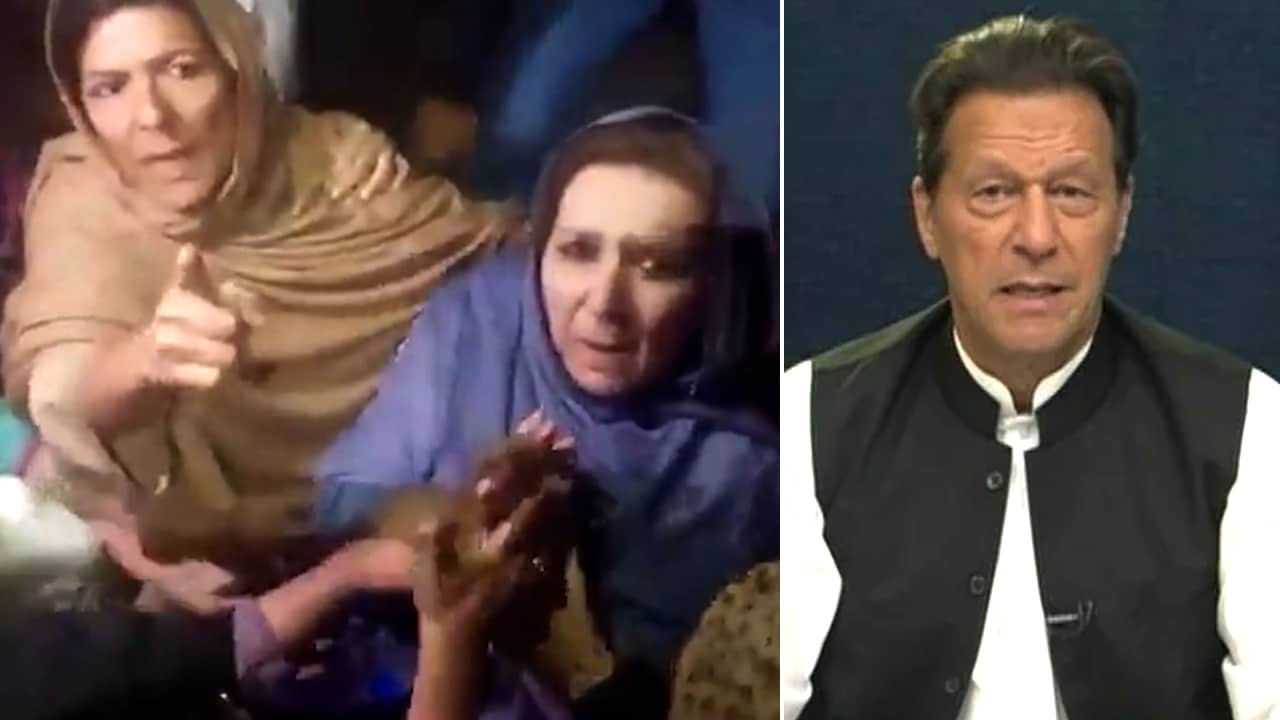
Aleema Khan and Uzma Khan—two sisters whose names have spent years orbiting the gravitational pull of Pakistan’s most volatile political saga—were gone. Not vanished into thin air, though in the murky theater of high-stakes political chess, sudden detention often feels just like it. They were taken. Swept up by law enforcement hours before their brother, imprisoned former Prime Minister Imran Khan, could roll out his party's planned mobilization against the state.
History does not always repeat itself with a bang. Sometimes, it arrives in the quiet, unceremonious click of a handcuffs ratchet in a driveway.
To understand why the arrest of two women—neither of whom hold an elected office or command an armored division—sent shockwaves from the leafy avenues of Islamabad to the crowded alleys of Peshawar, you have to look past the dry wire dispatches. You have to understand the anatomy of friction.
Politics in Pakistan has never been a mere contest of ballot boxes. It is an ancient, grinding machinery where bloodlines, khaki uniforms, and populist fervor lock teeth. When a leader is locked behind stone walls, his voice restricted to filtered notes smuggled out through legal channels, the vacuum does not remain empty. Nature abhors a vacuum. Politics abhors silence even more.
Enter the sisters.
In the absence of a charismatic figurehead standing on a container truck waving to the masses, the architecture of resistance shifted downward and outward. It fell into the hands of family. Aleema and Uzma had increasingly stepped out of the domestic sphere and into the glaring, unforgiving spotlight of political organization. They became the logistical nervous system of the Pakistan Tehreek-e-Insaf party’s street power. They translated prison messages into action. They rallied the faithful when the party’s central leadership was fractured, hunted, or driven underground.
That made them dangerous. In the calculus of state survival, a sister carrying a message can be far more disruptive than a general carrying a rifle, because you cannot court-martial a relative for standing up for her blood.
Or so the theory went.
The state, possessing the monopoly on legal violence and the institutional memory of decades of political engineering, decided to test that boundary. The sweep was swift. The justification offered by local authorities leaned on the usual bureaucratic scaffolding—public order, maintenance of peace, the prevention of unlawful assembly. The legal terminology is always tidy. It smells of fresh printer ink and sanitized air-conditioned offices.
The reality on the ground was anything but tidy.
Imagine standing on a street corner in Lahore as the news breaks. The collective intake of breath is palpable. Supporters who had spent a week preparing banners, charging phone batteries to document the protest, and coordinating carpools suddenly realized the goalposts had shifted. This was no longer just about contesting economic policies or demanding judicial independence. It was personal. It was an assault on the last remaining nodes of the PTI’s leadership matrix.
When you target the family of a populist leader, you execute a high-risk gamble. You might temporarily neutralize immediate coordination, scattering the lieutenants and freezing the logistics. But you also strip away whatever polite fiction remained about the boundaries of the conflict. You signal to every ordinary citizen that the gloves are completely off. If the sisters of the nation's most recognizable opposition figure can be picked up off the street like common trespassers, what protection does a normal shopkeeper or university student have when they step out to march?
Fear is a powerful sedative. But oppression has a strange, paradoxical twin: radicalization of resolve.
As dusk fell, the social media feeds erupted. Videos of police vans moving through shadows were traded like digital currency. Pundits on television stations—some broadcasting with a cautious, state-mandated delay, others screaming into the digital void from overseas—debated the legality of the detention under Section 3 of the Maintenance of Public Order.
Legal niceties. That is what they sound like when you are sitting in a studio thousands of miles away. Down on the asphalt, the metrics of the situation were measured in heartbeats and adrenaline.
The planned protest was designed to be a show of force, a physical manifestation of the stubborn truth that Imran Khan's populist footprint had not withered away despite his incarceration, multiple convictions, and a relentless state apparatus aimed at dismantling his party block by block. The state, equally determined to prove that the writ of the establishment remains absolute, drew a hard red line in the dust.
By removing the women who coordinated the mobilization, authorities hoped to preemptively decapitate the logistics of the march. They wanted silence. They wanted compliance.
They forgot that in South Asian politics, martyrdom and mistreatment of family members rarely dampens the fire; it usually acts as kerosene.
Consider the sheer psychological weight of this dynamic. For months, the narrative had been about legal battles—petitions filed, court dates adjourned, bail applications stalled in a judiciary that often appears to sway with the prevailing political winds. The arrest of Aleema and Uzma shifted the battleground away from the sterile courtrooms and back onto the primal terrain of family and honor. It reframed the struggle not as a disagreement over tax codes or constitutional amendments, but as an existential battle between a monolithic power structure and a family refusing to blink.
It is easy for outsiders to look at Pakistan’s endless political soap opera with a sense of weary detachment. Another day, another crackdown, another round of arrests, another cycle of protests and tear gas. The names blur together. The acronyms of the parties sound like alphabet soup.
Yet, reducing this to a simple news ticker item misses the human cost of a society caught in perpetual friction. Behind every administrative detention order is a family dinner table left half-set. Behind every police barricade is a citizen wondering if expressing an opinion online will cost them their livelihood—or their liberty.
The sisters were eventually processed, their detentions serving as the opening salvo in a weekend of high drama that saw roads blocked with shipping containers, internet speeds throttled to a crawl, and cat-and-mouse games played out between protestors and riot police across Punjab. The protest happened, but it was fractured, bruised, and reactive rather than proactive.
The state achieved its tactical objective for the weekend. The streets did not overflow with an unstoppable human tide. The immediate mobilization was checked.
Yet, strategic victories in authoritarian chess games often plant the seeds of long-term failure. Every time a door is kicked in, every time a family member is hauled away in a nocturnal sweep, the narrative of victimization hardens into an unshakeable article of faith for millions of voters. They look at the empty chairs, the silenced voices, and the heavy-handed response, and they draw their own conclusions.
The machinery of the state can lock away politicians, brothers, and sisters. It can erect steel containers across highways and shut down the digital town square. But it has yet to invent a lock sophisticated enough to cage an idea once it takes root in the public imagination.
The sun rose the next morning over Lahore, cutting through the smog with a pale, cold light. The checkpoints remained. The police stood at their posts, truncheons resting casually against their thighs. For a moment, the city looked calm, almost orderly.
But beneath the surface, the current continued to pull, silent and deep, waiting for the next tremor.