Silence.
That is the first thing you notice when a nation's banking system begins to fracture, long before the shouting starts outside the glass doors of the central reserve or the armored personnel carriers roll onto the cobblestones of the capital. It is the quiet hum of an ATM screen refusing to dispense a single guarani, the sudden absence of that familiar mechanical whirr that underpins every ordinary Tuesday in a modern city.
Consider a hypothetical morning in Asuncion—a composite sketch built from the lived realities of thousands of working families across Paraguay. Mateo, a third-generation furniture maker in the Barrio Obrero district, stands at a corner kiosk with a warm paper bag of chipa in one hand and a debit card in the other. The card declines. He tries another. Declined. Behind him, a schoolteacher in a crisp white blouse checks her phone, watching her banking application spin in an endless, unresponsive loop. Within forty minutes, the rumor mill of a tight-knit capital does what digital networks cannot: it turns private confusion into collective dread. By noon, the queues outside the major commercial branches stretch three blocks down Avenida Mariscal Lopez, baking under a subtropical sun that feels suddenly oppressive.
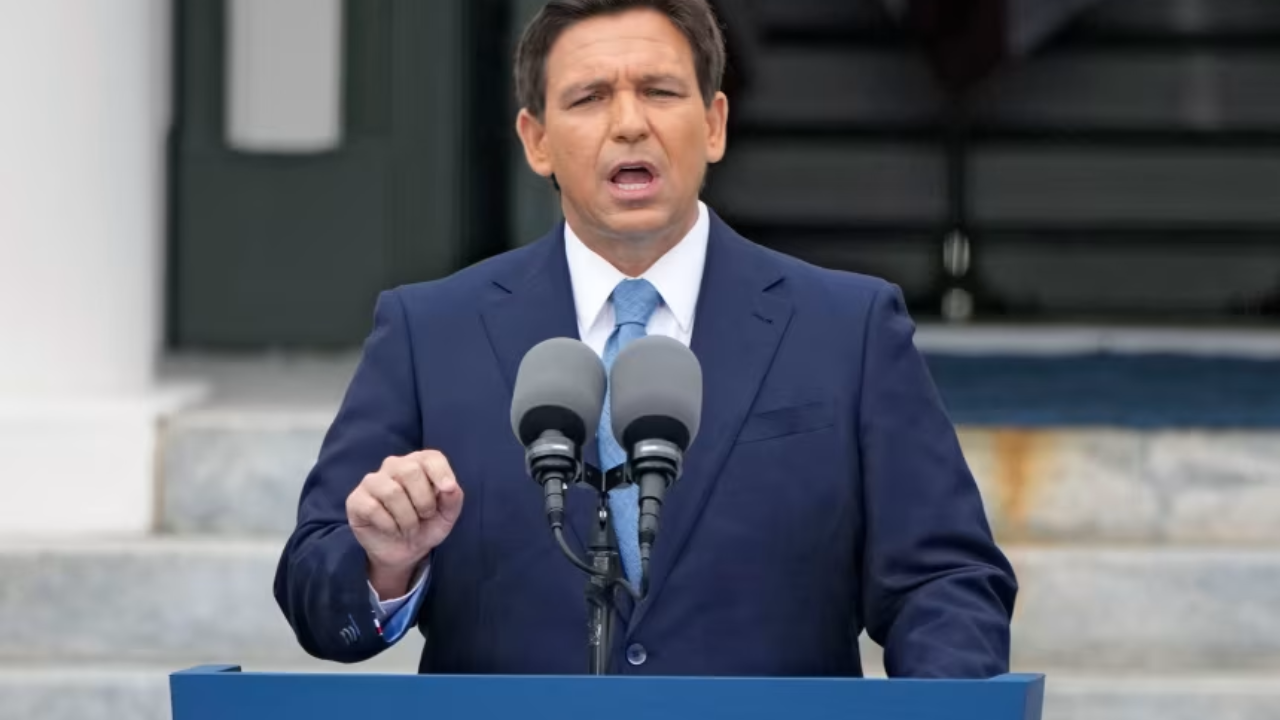
When reports emerge that President Santiago Pena has been placed under heightened military protection amid the chaos of a sudden bank collapse, the headlines naturally gravitate toward the dramatic optics of power. Armored vehicles. Perimeter guards. Emergency cabinet sessions behind heavy mahogany doors. Yet reducing this crisis to a security briefing misses the invisible architecture of trust that actually keeps a republic standing. A bank does not collapse merely because ledgers fall out of balance; it collapses because the collective agreement to believe in those ledgers evaporates in a single afternoon.
The Architecture of a Sudden Freeze
To understand why military protection becomes part of the conversation during a financial panic, you have to look at what happens when institutional credibility hits a wall. In standard financial reporting, a liquidity crunch is described in sterile terms: capital adequacy ratios, non-performing loan portfolios, interbank lending freezes. Those phrases anesthetize the reality.
Think of a commercial banking system like a municipal water grid. Every household assumes that turning the tap will produce clean water because the reservoir is full and the pipes are pressurized. In truth, the pipes only hold a fraction of the water needed if every citizen turns on every faucet at the exact same second. Modern fractional-reserve banking operates on that exact principle. Most of your money is not sitting in a basement vault with your name written on a canvas sack; it is out in the economy, funding soybean harvests in Alto Parana, paying for construction cranes in Ciudad del Este, or underwriting mortgages for young couples.
When a major institution stumbles—whether through reckless credit expansion, opaque insider lending, or a sudden shock to regional commodity flows—the rumors act like a siren telling everyone to turn on their faucets simultaneously. The pressure drops instantly. Regulators at the Banco Central del Paraguay face an impossible arithmetic problem measured in hours rather than weeks. If they intervene too slowly, the contagion leaps from one balance sheet to the next. If they intervene too aggressively, freezing accounts to stop the bleeding, they confirm the public's worst nightmare: that the money is simply gone.
For a leader like Santiago Pena—an economist by training, a former finance minister, and a technocrat who built his political identity on stability and investment-grade credibility—this specific type of storm strikes at the very core of his mandate. When the streets fill with citizens who cannot buy groceries or pay suppliers, economic policy stops being an academic exercise. It becomes a question of public order.
Ghosts of the Nineties
Nobody in Paraguay watches a bank shutter its doors without remembering the ghosts of 1995.
To grasp the emotional voltage running through Asuncion during a banking scare, you have to reckon with institutional memory. In the mid-1990s, shortly after the country emerged from decades of authoritarian rule, Paraguay suffered a systemic financial meltdown that wiped out nearly half of its domestic banks and finance companies. Families watched lifetime savings vanish into court-appointed liquidations that dragged on for a decade. Small businesses folded overnight because their working capital was locked inside frozen accounts. That trauma never fully left the national bloodstream; it simply went dormant, passed down at Sunday dinner tables as a quiet warning to keep a little cash under the mattress and never trust a glossy brochure too completely.
History does not repeat itself verbatim, yet it leaves deep grooves in the pavement. When modern depositors see liquidity dry up or hear whispers of emergency decrees, they are not reacting solely to current balance sheets. They are reacting to the inherited memory of what happens when ordinary people are forced to absorb the losses of reckless institutions.
I have sat in cramped offices with small-business owners during currency and banking freezes in Latin America, watching grown men stare at payroll spreadsheets with a numbness that looks indistinguishable from grief. You feel it in your stomach before you understand it in your head. The air in the room grows thick. Phones ring nonstop with suppliers demanding cash on delivery because checks have suddenly become worthless paper. You realize, with a cold jolt of clarity, that money is not wealth—money is just a promise, and when the promisor loses their voice, commerce reverts to barter within forty-eight hours.
Why the Uniforms Appear
So why place the presidency under military protection during a financial crisis? Critics and outside observers often misread the presence of the armed forces as a sign of imminent coup or regime collapse. The reality on the ground is usually far more pragmatic, though no less sobering.
When a banking system seizes up, the shockwaves hit different layers of society at different speeds:
- The immediate cash vacuum: Informal workers, street vendors, and day laborers—who make up a massive share of the Paraguayan economy—operate entirely on physical currency. When ATMs go dark, their income drops to zero within twenty-four hours.
- The supply chain halt: Fuel distributors, pharmacies, and food wholesalers refuse to release inventory without cleared funds, threatening essential shortages within days.
- The political flashpoint: Opposition factions, labor unions, and aggrieved depositors converge on government buildings, turning financial frustration into a referendum on the administration's legitimacy.
In that volatile window, security forces are deployed not necessarily because tanks are rolling against the state, but because desperate crowds and opportunistic agitators create unpredictable flashpoints around the presidential palace, the central bank, and the headquarters of failing lenders. Protecting the executive branch becomes a prerequisite for maintaining a functioning command center capable of negotiating emergency credit lines, organizing deposit insurance payouts, and preventing localized street clashes from spiraling into nationwide paralysis.
Still, the visual carries a heavy political cost. A president surrounded by soldiers looks besieged, even when the perimeter is purely precautionary. Every photograph of camouflage fatigues outside a government ministry feeds the exact panic the administration is trying to calm. It tells international bondholders and local savers alike that the situation has moved beyond the ledger books and into the streets.
The Invisible Mechanics of a Rescue
Behind the barricades, the actual work of stopping a banking collapse looks nothing like a dramatic movie thriller. It is grueling, claustrophobic, and deeply uncertain. Even seasoned central bankers will admit behind closed doors that during the first seventy-two hours of a bank run, nobody has complete data. Asset valuations shift by the hour. Loans that looked solid on Friday morning become uncollectible by Monday afternoon once interest rates spike and borrowers panic.
To understand how authorities try to contain the fire, imagine a wildfire jumping a highway in high winds. You cannot save every tree in the path; you have to bulldoze a firebreak wide enough that the flames starve before reaching the town.
In financial terms, that firebreak has three components. First, the central bank opens an emergency liquidity window, pumping physical cash into healthy banks so that anyone standing in line who wants their money can hold it in their hands. Paradoxically, the fastest way to stop people from withdrawing their money is to prove they can withdraw it whenever they want. Second, regulators ring-fence the failing institution—separating toxic, fraudulent, or illiquid assets into a quarantine entity while transferring insured retail deposits to solvent banks over a weekend. Third, the government activates its deposit guarantee fund, communicating clearly and repeatedly which accounts are protected and exactly when depositors will regain access.
Every step of that rescue hinges on communication that feels honest rather than rehearsed. People have an uncanny instinct for detecting official denial. When ministers go on television and declare that the system is completely rock-solid while citizens can plainly see padlocks on branch doors, credibility evaporates. Trust only begins to return when leaders speak plainly about the scope of the damage, name the rules of the intervention, and put real cash back into the machines.
The Human Ledger
What rarely makes it into the wire reports about presidential security details and central bank balance sheets is the quiet erosion happening inside ordinary households long after the barricades come down.
Consider again our hypothetical furniture maker, Mateo, in Barrio Obrero. Even if the state steps in, even if his modest savings are eventually restored through a deposit guarantee mechanism, the three weeks of uncertainty leave a permanent scar. During the freeze, he could not buy timber. He had to tell two apprentices to stay home without pay. His wife delayed a routine medical procedure because they needed to hoard whatever paper bills remained in the house. When the banks finally reopen, Mateo does not put all his money back into the account. He keeps half of it in a steel lockbox bolted to his closet floor.
Multiply Mateo by three hundred thousand households, and you begin to see the true cost of a banking crisis. Capital retreats from the formal economy into mattresses, informal lenders, and offshore accounts. Mortgage rates climb because banks demand a higher premium to compensate for political and liquidity risk. Foreign investors, who had just begun viewing Paraguay as a quiet success story of macroeconomic discipline in South America, pause their expansion plans and wait to see whether institutional guardrails actually hold when tested under pressure.
Democracy itself takes a subtle bruising. When citizens watch public funds mobilized to untangle the mess left behind by poorly supervised financiers, a bitter cynicism takes root. People ask why market discipline applies ruthlessly to a shopkeeper who misses a single tax payment, yet bends gracefully when a well-connected institution jeopardizes the savings of an entire city. Answering that question requires more than emergency decrees; it demands visible accountability, prosecutions where laws were broken, and regulatory reforms with real teeth.
After the Sirens Fade
By the time the armored vehicles pull away from the perimeter of the presidential residence and the queues outside the bank branches shrink back to normal length, the headlines have usually moved on to another crisis in another capital. To an outsider glancing at a financial terminal, the episode looks like a temporary blip—a sharp downward spike on a chart that gradually levels out.
Down on the street, the recovery moves at a much slower pulse.
Late in the evening, when the subtropical heat finally breaks over Asuncion and the buses rumble down Calle Palma, the true test of the republic unfolds quietly beneath the fluorescent glow of a corner ATM. A young woman steps up to the machine, inserts her card, and presses the keys with a hesitation she never felt a month ago. The screen flickers. Inside the steel casing, gears engage, rollers turn, and a crisp stack of bills slides into the tray. She takes the notes, counts them twice under the streetlight, and slips them into her bag before walking quickly toward the bus stop—carrying not just her wages, but the fragile, unfinished work of believing in tomorrow.