Political reporters have the memory of goldfish and the analytical depth of a puddle.
Every four years, a high-profile governor stands in front of a bank of microphones, calls a rumor about their presidential ambitions "fabricated," and insists they are 100% focused on their current day job. And every four years, the political press writes the exact same stenographic headline, treating a standard-issue tactical denial as breaking news.
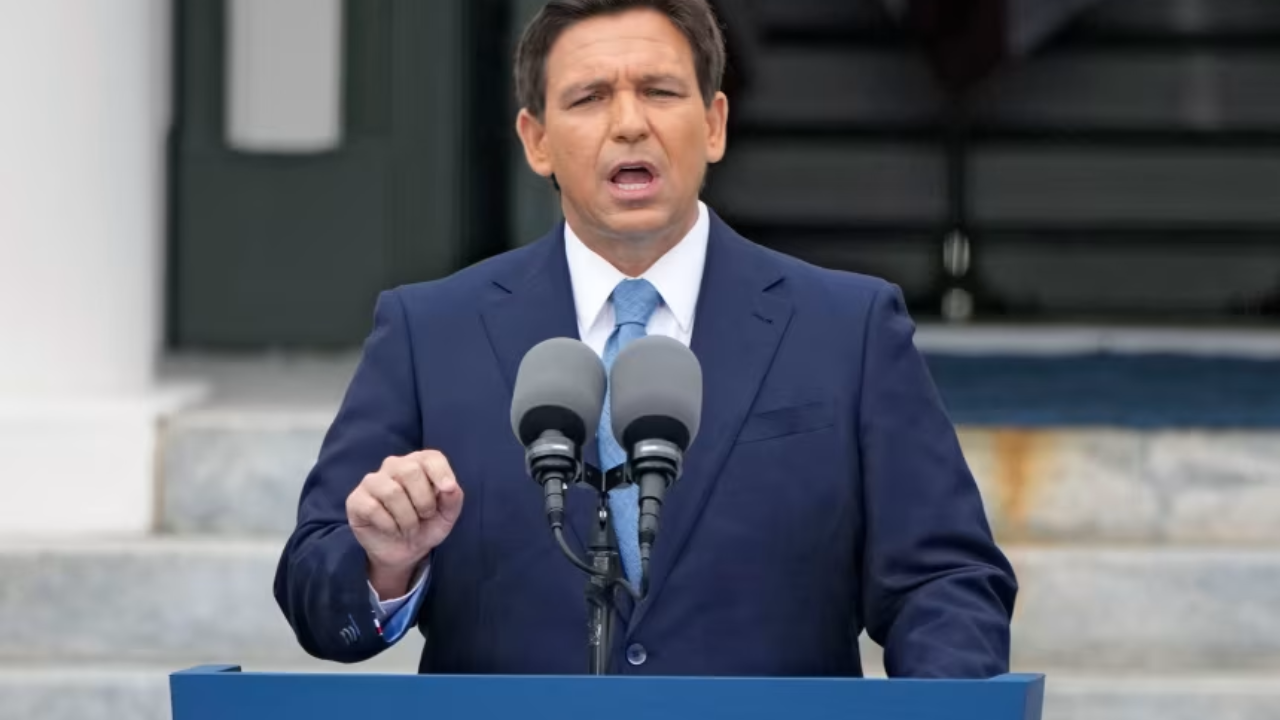
They did it again this week when Florida Governor Ron DeSantis dismissed reports of a 2028 White House shadow campaign. The lazy consensus in D.C. media circles is that DeSantis is licking his wounds from 2024, bowing to the reality of JD Vance’s presumed frontrunner status, and quietly exiting the national stage as he finishes his final term in Tallahassee.
That reading isn't just wrong. It is completely backward.
In modern American politics, an emphatic, irritated denial two years out from the Iowa caucuses isn't a sign of retreat. It is the mandatory opening move of a shadow campaign. If DeSantis were actually done with national politics, he wouldn't be angrily calling reports "fabricated." He would be smiling, letting the rumors linger, and using the free speculation to keep his leverage intact while he negotiates his post-gubernatorial cash-out.
The Anatomy of the "Shermanesque" Lie
To understand why political insiders laugh at literal interpretations of early campaign denials, you have to understand the mechanics of federal campaign finance law.
Under Federal Election Commission (FEC) rules, the moment an individual stops merely "testing the waters" and becomes an official candidate, a massive regulatory trap snaps shut.
- Contribution Limits Drop Off a Cliff: An exploratory or state-level political committee can often raise unlimited "soft money" from billionaires, corporations, and dark-money networks, depending on the jurisdiction. Once you declare a federal run, you are capped at strict individual hard-dollar limits per election cycle.
- Coordination Becomes a Felony: Before you declare, you can legally coordinate directly with the super PACs, non-profits, and ideological think tanks building your infrastructure. The second you announce, a strict legal firewall drops between your campaign and your biggest financial backers.
- The Media Target Paints Itself: Declaring early makes you the pinata. Every rival camp immediately dumps opposition research into the press, and every local policy decision you make as governor gets filtered through the lens of national pandering.
I’ve watched operatives burn tens of millions of dollars over the last three cycles because their principals couldn't resist the ego boost of confirming their ambitions too early. You lose the element of surprise. You burn through your donor base before the voters are even paying attention.
When Barack Obama famously dismissed 2008 presidential chatter in 2004 and 2005 by saying he had just arrived in the Senate and had no intention of running, the press ate it up. When George W. Bush insisted in 1998 that he was completely focused on being Governor of Texas, pundits nodded along.
Neither man was lying in the way a witness lies under oath. They were speaking campaign-ese, a dialect where "I have no plans to run" translates literally to: "My lawyers have informed me that acknowledging a plan triggers FEC reporting requirements that would destroy my fundraising efficiency."
Why 2028 Is a Knife Fight in a Phone Booth
The competitor coverage frames DeSantis’s denial around the idea that the 2028 Republican nomination is already locked up. The conventional wisdom says Vice President JD Vance is the heir apparent, the MAGA base belongs entirely to the Trump-Vance wing, and DeSantis is damaged goods after his turbulent 2024 primary collapse.
Let’s look at the actual historical data instead of pundit groupthink.
Since 1952, sitting Vice Presidents who have run for the nomination have won it almost every time—Richard Nixon in 1960, Hubert Humphrey in 1968, George H.W. Bush in 1988, Al Gore in 2000. On paper, Vance looks like an unstoppable juggernaut.
Here is the nuance the cable news panels miss: Vance is the first modern Vice President serving under a term-limited president whose movement is built entirely around a single personality rather than an ideological apparatus.
When Ronald Reagan left office in 1989, the conservative movement transferred its institutional loyalty to George H.W. Bush because Bush was the steward of the Reagan coalition. Donald Trump does not have an institutional coalition; he has a personal following. And as political scientist Samuel Popkin famously detailed in The Reasoning Voter, primary electorates don't reward loyalty to the outgoing administration when economic or political conditions shift—they look for an outsider who claims they can fix what the incumbents broke.
By November 2026, the midterms will have passed. Whatever happens in the House and Senate, the political gravity of the Trump-Vance administration will begin to fade as the lame-duck period sets in. If the economy hits a rough patch, or if foreign policy entanglements sour the base, Vance owns every single bit of that baggage. He cannot run away from the administration he is currently sitting in.
DeSantis, meanwhile, exits the Florida governor's mansion in January 2027—term-limited, unburdened by federal votes, and sitting on a massive residual donor network.
Imagine a scenario where the GOP suffers heavy losses in the 2026 midterms and inflation ticks back up in early 2027. Suddenly, the "inevitable" heir apparent looks vulnerable, and primary donors start panicking. Who is the only sitting Republican with a fully built national email list, universal name recognition, and an executive track record they can point to without explaining away Washington gridlock?
Not a freshman senator. Not a cabinet secretary. It’s the guy currently insisting he has zero interest in the job.
Dismantling the "Damaged Goods" Myth
Whenever DeSantis’s name comes up in 2028 discussions, three predictable questions dominate search engines and political green rooms. Every single one of them is built on a flawed premise.
Is Ron DeSantis’s political career over after 2024?
Only if you think politics started five minutes ago. Richard Nixon lost the presidency in 1960, lost the California governor's race in 1962, told the press they wouldn't have him to kick around anymore, and won the White House six years later. Ronald Reagan lost brutal primary battles in 1968 and 1976 before winning in 1980. Joe Biden ran embarrassing, single-digit presidential campaigns in 1988 and 2008 before winning in 2020.
In fact, a failed first run is almost a prerequisite for winning a Republican primary. The GOP rewards seniority and name ID. DeSantis’s 2024 campaign was a masterclass in strategic malpractice—bloated staff, terrible media discipline, and a baffling refusal to attack his main opponent until it was mathematically over—yet he still finished second in Iowa and commands massive institutional support among traditional conservative donors. You don't erase 100% name recognition just because your 2024 campaign manager burned through $150 million on private jets and bad consultants.
Doesn't Trump’s endorsement decide the 2028 primary?
Endorsements from outgoing presidents are vastly overrated once the primary voting actually begins. In 2000, Bill Clinton’s endorsement couldn't save Al Gore from a brutal primary fight with Bill Bradley, nor could it carry Gore across the finish line in November. In 2008, George W. Bush was so politically toxic by the end of his second term that John McCain spent the entire cycle distancing himself from the sitting president of his own party.
Even if Trump remains wildly popular with the GOP base in 2028, primary voters don't outsource their votes to a retiree. They vote based on who they think can win in November. If Vance looks weak in swing-state polling by late 2027, Trump’s endorsement won't stop donors and voters from shopping for an alternative.
Why would DeSantis deny it if he wants to keep his options open?
Because acknowledging interest right now carries zero upside and 100% downside.
Right now, DeSantis has to finish his final months as governor. The moment he admits he is looking at 2028, every bill he signs in Tallahassee gets dismissed by the press as a primary stunt, and every single Trump loyalist in the Florida legislature turns against him to curry favor with the White House. By calling the report "fabricated," DeSantis buys himself peace in his own statehouse, keeps his hands clean of Washington drama, and forces the press to move on to the next shiny object.
The Real Tell Isn't What He Said—It's How He Said It
If you want to know what a politician is actually doing, stop reading their transcripts and start tracking their money and their travel.
When a politician is truly done with electoral politics, they stop feeding the machine. They let their data lists go stale. They stop taking meetings with out-of-state operatives. They start sitting on corporate boards, signing lucrative book deals with massive advances, and building a speaking bureau profile to cash in on their public service. Look at Paul Ryan or Mike Pence. When the exit door opens, they walk straight into the private sector cash register.
Watch what DeSantis actually does over the next twelve months instead of listening to his press secretary.
- Follow the Data Lists: A presidential campaign's most valuable asset isn't cash; it's the house file—the verified list of small-dollar donors who gave $25 or $50 in 2024. Maintaining, cleaning, and renting out that list costs serious money. If DeSantis’s affiliated political committees keep paying vendors to maintain that donor file, he is running. Nobody pays six figures a month to keep a donor list warm for a podcast.
- Watch the State-Level Travel: Keep an eye on where his allied non-profits and political action committees spend money during the 2026 midterms. If DeSantis starts cutting checks or doing quiet fundraisers for state legislators in Iowa, New Hampshire, and South Carolina, the denial is dead on arrival. Local endorsements in early primary states aren't bought in 2028; they are rented in 2026 by helping local politicians survive their own races.
- Track the Staff Alumni: Look at where his top 2024 strategists and fundraisers land. If they all scatter to corporate lobbying firms on K Street and never look back, the operation is dismantled. If they take cushy, low-stress gigs at conservative think tanks, state policy networks, or super PACs based in Tallahassee and D.C., they are simply being kept on retainer until January 2027.
The Downside of the Shadow Game
To be clear, playing the coy denial game carries real risks, and DeSantis isn't immune to them.
The biggest trap of the shadow campaign is atrophy. By staying out of the national spotlight and refusing to engage in the 2028 conversation early, you cede the narrative to the guy who is in the spotlight. JD Vance has the bully pulpit of the Vice Presidency. He gets to stand behind the podium, dominate cable news cycles, and define what the Republican Party stands for over the next two years.
If DeSantis waits too long to drop the act, he risks waking up in early 2027 to find that Vance has already locked up every major donor, every key state chair, and every media narrative. In 2016, Jeb Bush waited until June 2015 to officially launch, thinking his massive fundraising haul would scare off the field. Instead, he allowed Donald Trump and Ted Cruz to define the race before Bush even had a campaign logo.
Furthermore, DeSantis’s personal brand suffered real, structural damage in 2024. Voters saw him struggle with retail politics. They saw him pick awkward fights with Disney while struggling to connect with average voters in Iowa diners. You can't fix a charisma deficit with a clever FEC legal strategy. If DeSantis hasn't fundamentally changed how he interacts with voters and the press, no amount of strategic patience will save him in 2028.
Stop Reading the Quotes
Political journalism thrives on taking statements at face value because stenography is cheap and actual reporting is expensive. It is much easier to write a 400-word blurb repeating a governor's denial than it is to pull FEC vendor disbursements, track state-level PAC transfers, and map out donor overlaps.
But if you actually want to understand where the 2028 race is heading, treat every word coming out of a politician's mouth right now as pure theater.
The race for 2028 didn't stop because Ron DeSantis used the word "fabricated" at a press conference. It just went underground, where the real campaigns are always built. Stop listening to what they say at the podium, pull the quarterly financial filings, and watch who gets paid.


