Sarah sits on her couch, the blue glow of her television washing over her living room. It is 9:15 PM. She is exhausted from a day of endless video calls, spreadsheets, and the baseline anxiety of modern life. She opened Netflix twenty minutes ago to find something to help her unwind. Instead, she has spent that time scrolling through rows of identical tiles, reading three-sentence synopses, and watching autoplaying trailers that shatter the silence of her apartment.
She feels a strange, modern paralysis. The sheer abundance of choice has transformed relaxation into labor. Finally, with a sigh, she switches off the television and picks up her phone to scroll through short-form social video instead.
Sarah is a single data point, but her fatigue is the central crisis of the modern entertainment business.
For a decade, the architects of streaming operated on a simple premise: give people total control, and they will watch forever. The on-demand model was hailed as the ultimate victory over the rigid schedules of old-school television. But a quiet truth has begun to emerge in executive boardrooms. Total control is exhausting.
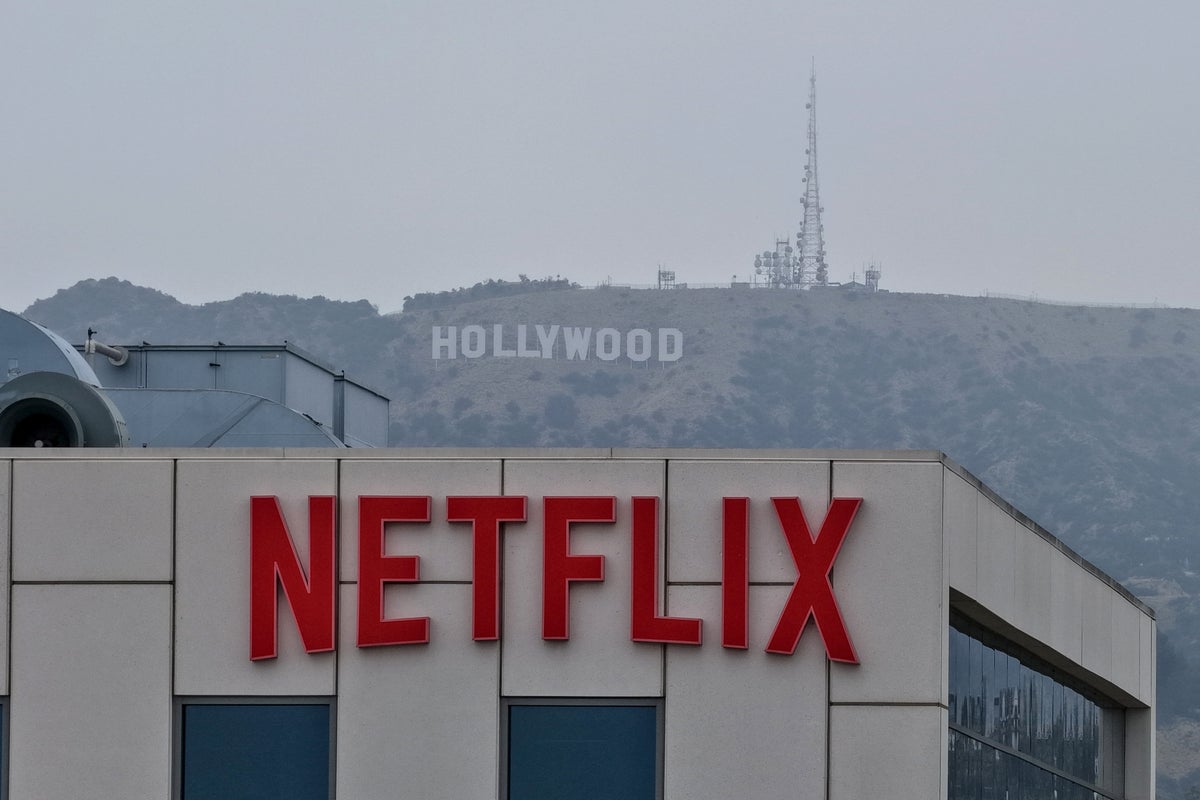
Internal anxiety inside the world’s largest streaming giant has reached a boiling point. Despite boasting over 300 million global subscribers, the pioneer of the binge-watch is facing a subtle, corrosive threat. People are opening the app, getting overwhelmed, and leaving.
According to industry data from Nielsen’s tracking metrics, the company’s share of total U.S. television viewership slipped to 7.8% recently. Combine that with a stock price that has suffered a brutal 40% decline over the past year, and the corporate armor begins to look thin. The financial health indicators remain highly profitable, but the metric that truly governs the future—human attention—is flickering. Insiders have quietly sold off $80.1 million in shares over a three-month window. The message is clear: the current model has hit a wall.
To fix this, the company is preparing to dismantle the very thing that made it famous. They are considering a return to the past.
The Tyranny of the Infinite Scroll
When streaming first arrived, it felt like liberation. You no longer had to wait until Thursday at 8:00 PM to see what happened next. You could consume an entire season of a drama in a single, breathless weekend. We traded the television guide for the algorithm.
But human psychology does not behave like a computer script. When faced with thousands of uncategorized options, the brain experiences choice overload. Economists call this the paradox of choice. Instead of feeling liberated, the viewer feels anxious. The pressure to choose the perfect show creates a psychological burden. If you pick a mediocre movie, you have wasted your precious free evening.
So you scroll. You look at the trending list. You look at the sci-fi section. You watch a trailer. The algorithm tries to guess your desires based on what you watched three months ago, but it cannot know that today you had a fight with your boss and just need comfort.
This friction is where attention dies. While the platform has successfully kept cancellation rates low—people rarely bother to delete the app entirely—the actual time spent watching is drifting away. It is moving toward platforms that require zero decision-making.
Think about how we consume video on our phones. You open an app, and a video immediately plays. If you do not like it, you swipe. You do not choose the next video; the platform chooses it for you. It requires no cognitive effort. The streaming giants are realizing that to compete with the infinite loop of social video, they must eliminate the work of choosing.
Turning the Clock Back to Move Forward
The proposed solution is a radical inversion of everything the company stood for. Executives are actively discussing the introduction of live, always-on linear channels.
Imagine opening the app and seeing a dedicated comedy channel, a horror channel, or a documentary stream. There is no play button, no episode list, and no decision to make. The show is simply running, already in progress, just like cable television in 1995.
To the purists of the digital age, this sounds like a regression. Why would anyone want to watch a movie that started twenty minutes ago when they could play it from the beginning?
The answer lies in our collective exhaustion. There is a distinct emotional comfort in stumbling across a film that is already halfway through. It removes the guilt of commitment. If you tune into the middle of a familiar comedy, you can watch for twenty minutes, laugh, and walk away. You did not have to choose it; it was just there.
This strategy shift goes beyond just running old episodes of popular sitcoms on a loop. The ambition is expanding to swallow the entire ecosystem of entertainment. The company is aggressively bidding for massive live sports properties, including discussions surrounding the 2030 and 2034 men’s FIFA World Cups, building upon existing footprints with the WWE, NFL games, and select baseball broadcasts.
They are also looking outward, exploring options to ingest third-party apps like NBCUniversal’s Peacock directly into their own interface. They tried and failed to buy Warner Bros. Discovery’s massive studio assets, so now they are shifting toward becoming a digital aggregator. They want to be the portal through which all entertainment flows.
The Ghost in the Machine
Consider the ultimate irony of this evolution. The company spent billions of dollars and over a decade perfecting an algorithmic recommendation engine designed to understand your deepest psychological preferences. It analyzed the exact second you paused a show, the colors of the thumbnails you clicked on, and the genres you frequented at midnight.
Yet, the ultimate destination of this hyper-advanced artificial intelligence might be to mimic a basic cable package from thirty years ago.
This is not a failure of technology; it is a reality check for human nature. We do not always want to be active curators of our own experience. Sometimes, we want to be passive passengers. We want a shared experience. When millions of people watch a live sporting event or a scheduled finale at the exact same moment, it creates a invisible social fabric. Binge-watching in isolation cannot replicate that feeling.
The platform's transition toward ad-supported tiers and live broadcasts is an admission that the old ways of media possessed a fundamental understanding of human behavior that technology cannot optimize away. The future of entertainment is looking less like a futuristic library and more like a crowded stadium.
Sarah sits back on her couch. She inputs a command, and instead of a grid of tiles, a live stream of a nature documentary fills the screen. A deep-sea explorer is navigating a trench. She did not choose this, but she stays. The tension in her shoulders drops. The scroll has ended.