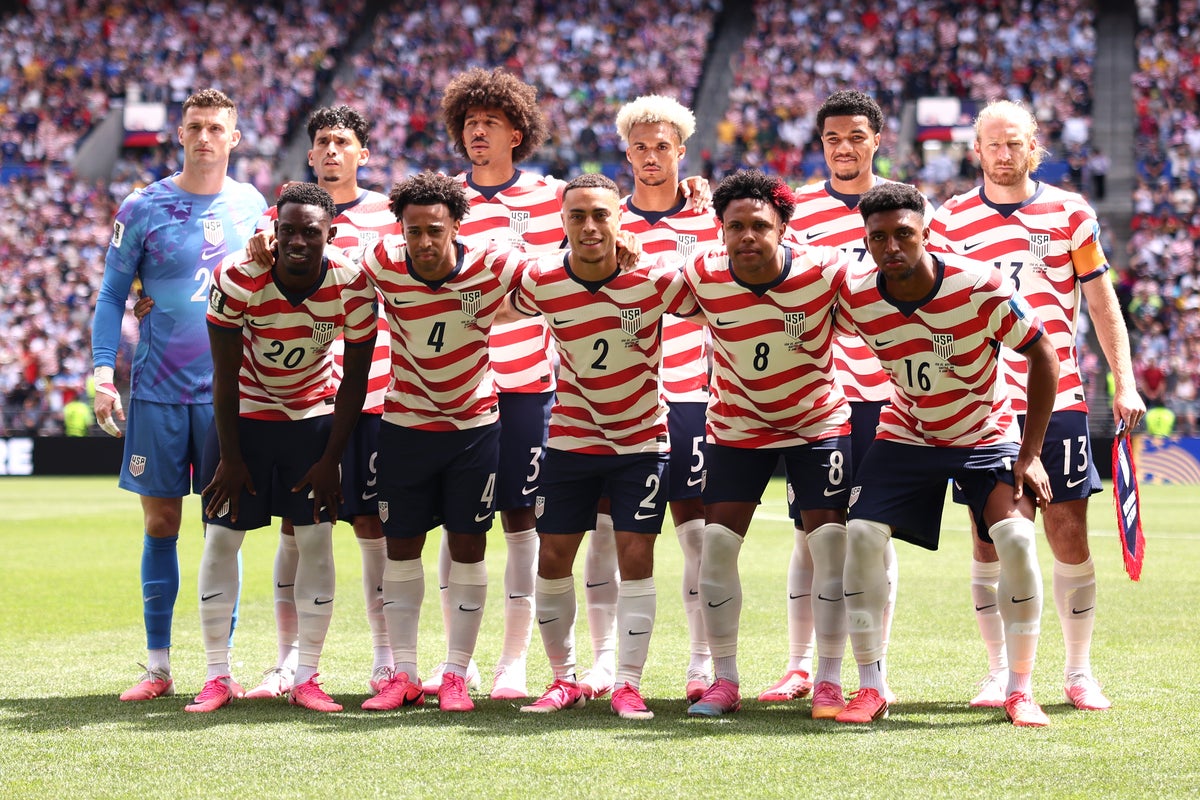
The United States Men’s National Team secured mathematical qualification for the FIFA World Cup 2026 Round of 32 via a -0 victory over Australia in Seattle. Rather than relying on individual talent to bail out stagnant sequences, the team executed a highly coordinated structural approach under Mauricio Pochettino. This performance proved that the previous -1 win over Paraguay was a repeatable tactical reality rather than a statistical anomaly.
Even with primary playmaker Christian Pulisic sidelined due to a calf injury, the tactical architecture did not collapse. The team effectively bypassed Australia's defensive configuration by exploiting width, executing high-velocity transitions, and leveraging set-piece second phases. Learn more on a connected issue: this related article.
Bypassing the Low Block: The Structural Asymmetry Framework
Tony Popovic’s Australia deployed a compact defensive block designed to deny central space and force the United States into low-probability lateral circulating passes. The United States counteracted this defensive posture through a distinct tactical blueprint:
[Left Flank Isolation]                     [Central Block]                     [Right Flank Overload]
  Balogun (High Pacing)   ----->    Burgess / Souttar Compressed  <-----     Freeman / Dest (Height/Width)
The first phase of this approach relied on isolating forward Folarin Balogun against Australia's left-sided center-backs. By anchoring Balogun high and wide on the left flank, the United States forced Australian defender Cameron Burgess to shift horizontally, stretching the distances between members of the backline. More reporting by Bleacher Report highlights comparable views on this issue.
The structural payoff arrived in the 11th minute. Balogun utilized an explosive vertical surge to turn the corner on the Australian defense. By driving a low, high-velocity cross across the face of the six-yard box, he introduced a chaotic variable into a collapsing defensive structure. Burgess, tracking back at an unfavorable body angle under maximum physical pressure, bundled the ball into his own net. This own goal was the direct result of a calculated overload that forced an back-line error under duress.
The second phase involved deep vertical space creation on the opposite flank. With Christian Pulisic out, right-back Alex Freeman and fullback Sergiño Dest formed a dynamic pairing. Freeman used his physical presence to pin the Australian wing-back deep, allowing Dest to drift inside to exploit the space between the midfield and defensive lines.
Set-Piece Optimization and Second-Phase Dominance
The second goal in the 43rd minute exposed Australia's vulnerabilities during transition phases. The sequence began with striker Ricardo Pepi holding up possession near the right end line. Pepi's ability to withstand physical contact and draw a foul created a high-value set-piece opportunity.
The execution of the set-piece revealed a clear emphasis on second-phase ball hunting. When Dest’s initial shot from the edge of the penalty area deflected off the Australian defensive wall, it looped vertically into the six-yard box.
[Deflected Shot Loops High]
         |
         v
[Ball Drops in 6-Yard Box]
   /                   \
  v                     v
Beach (Out of Position)  vs.  Freeman (Vertical Attack Vectors)
                                  |
                                  v
                               [GOAL]
This structural breakdown by Australia highlights a common flaw in low-block defensive setups: the tendency to watch the ball rather than track runners once the initial line of defense is breached. While Australian goalkeeper Patrick Beach adjusted his positioning based on Dest's initial path, Freeman anticipated the trajectory of the falling ball. Using his aerial ability, Freeman beat Beach to the apex of the ball to head home the second goal.
Midfield Containment and Preventive Defending
Defensively, the United States maintained a clean sheet by establishing complete structural control over the middle third of the pitch. By controlling 62% of total possession, the United States limited Australia's attacking options.
The defensive system relied on a high counter-press to disrupt Australia’s transition phases before they could develop into dangerous counter-attacks. Central defenders Chris Richards and Tim Ream stepped aggressively into midfield spaces to intercept clearances, suffocating Australian transition targets like Nestory Irankunda.
The structural trade-off of this high-pressing approach is the vulnerability to quick vertical counter-attacks if the initial press fails. Richards accepted a tactical yellow card in the 93rd minute to break up an intentional Australian counter-attack, illustrating the risks of this defensive system. However, restricting Australia to just 38% possession meant the Socceroos rarely generated enough sustained pressure to test the defensive backline.
Group D Matrix and Knockout Stage Implications
This victory reshapes the competitive dynamics of Group D. By securing six points across the first two matchdays, the United States has achieved historic efficiency, marking the first time the team has clinched a knockout spot in the modern era with a game to spare.
The Group D standings reflect this absolute structural advantage:
- United States: 2 GP | +5 GD | 6 Pts (Qualified)
- Australia: 2 GP | 0 GD | 3 Pts
- Türkiye: 1 GP | -2 GD | 0 Pts
- Paraguay: 1 GP | -3 GD | 0 Pts
Because of tournament tie-breaker criteria, the United States has secured a top-two finish in the group. Even a loss in the final group stage match against Türkiye on June 25 at SoFi Stadium cannot drop the co-hosts below Australia, given the head-to-head result. This points cushion allows Pochettino to rotate his squad and manage workloads ahead of the Round of 32.
The primary operational challenge now shifts to managing squad depth. While finding tactical workarounds without Pulisic was successful in this match, sustained success in the knockout rounds will require balancing creative output across both flanks. Over-indexing on Balogun’s isolated individual runs on the left creates a predictable attacking look that elite European and South American opponents can counter by deploying a permanent defensive double-team.
Pochettino must use the final group stage match against Türkiye to test alternative creative setups, ensuring the team's tactical versatility remains sharp for the knockout rounds.