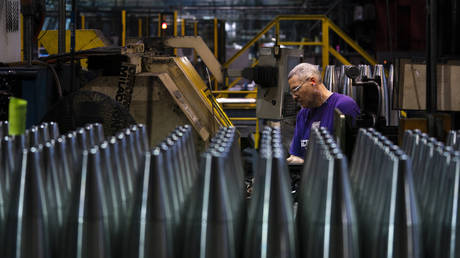
Modern defense supply chains operate on a principle of optimized inefficiency. When regional conflicts trigger sudden expenditure spikes in precision-guided munitions, the structural mismatch between commercial manufacturing timelines and military consumption rates becomes explicit. Defense industrial capacity is constrained not merely by factory floor space, but by a complex web of Tier 2 and Tier 3 suppliers, skilled labor shortages, and single-source material dependencies. Understanding how prolonged engagements strain stockpiles requires examining the operational bottlenecks, economic disincentives, and capacity-expansion vectors that govern modern defense procurement.
The Economic Mechanics of Surge Production
Surge manufacturing in the defense sector violates standard commercial logic. In a traditional market, a demand shock results in price increases and capital investment to scale production. In the defense sector, the buyer is a monopsony—the federal government—and pricing is governed by rigid long-term contracts, regulatory compliance hurdles, and fluctuating political will.
Defense prime contractors cannot simply spin up a third shift or open a new facility on speculation. The lead times for specialized components, such as solid rocket motors, guidance chips, and chemical precursors for explosives, range from 18 to 36 months. When expenditure rates in regional conflicts outpace these replenishment cycles, stockpiles deplete faster than manufacturing lines can accelerate.
The Multi-Tier Supply Chain Bottleneck
The primary restriction on output volume rarely exists at the assembly plants of major prime contractors. Instead, bottlenecks concentrate deep within the supply chain hierarchy.
- Tier 1 Integration: Final assemblers manage integration, testing, and delivery. They maintain visibility over their immediate suppliers but often lack systemic insight further down the chain.
- Tier 2 Subassemblies: This tier produces specialized sub-components like seeker heads, actuators, and telemetry units. Consolidation within the defense industry over the past three decades reduced the number of competing suppliers in these niches, eliminating redundancy.
- Tier 3 Raw Materials and Chemistry: The foundational level relies on specialized inputs, including ammonium perchlorate for solid propellant, aerospace-grade carbon fiber, and specific titanium alloys. A single facility fire or labor disruption at this level halts final weapon system completion across multiple programs.
The absence of parallel suppliers means that any disruption creates a compounding delay. When inventory of a single sub-component runs dry, finished missiles sit incomplete in warehouses, unable to be shipped to operational units.
The Cost Function of Inventory Depletion
Maintaining a strategic reserve of complex ordnance involves a delicate balance between fiscal responsibility and operational readiness. Weapons degrade over time. Solid rocket motors experience propellant grain cracking after prolonged thermal cycling, and guidance electronics suffer from component obsolescence. Consequently, military planners prefer to maintain lean inventories, rotating stock through training exercises while relying on industrial surge capacity to backstop wartime consumption.
This model assumes that industrial capacity can scale linearly in response to demand. The reality of modern conflict disproves this assumption.
The Capital Expenditure Dilemma
Private equity and corporate boards within the defense sector face a severe risk calculation regarding capacity expansion. Building a new manufacturing facility requires hundreds of millions of dollars in capital expenditure. If the demand spike is temporary—driven by a short-term regional campaign—the contractor faces stranded assets and utilization collapse once hostilities cease.
Without long-term multi-year procurement contracts guaranteed by the state, corporations prioritize share buybacks and dividend distributions over capital-intensive capacity scaling. The financial incentive structure rewards capital efficiency over industrial depth. To overcome this, government intervention must shift from transactional orders to structural subsidization of dormant or dual-use manufacturing capacity.
Operational Constraints and Workforce Dynamics
Physical machinery and capital allocation are secondary to the human capital required to build complex weapons systems. Precision engineering, specialized welding, and hazardous material handling require extensive training pipelines.
- Skilled Labor Scarcity: The defense industrial base competes directly with commercial aerospace, technology, and advanced manufacturing for engineering talent. The aging demographic profile of current defense technicians accelerates the loss of institutional knowledge.
- Regulatory Friction: Security clearances, International Traffic in Arms Regulations compliance, and rigorous military specifications prevent rapid labor substitution. An assembly line worker cannot be easily transferred from commercial automotive manufacturing to missile guidance system integration without months of background checks and specialized certification.
- Testing and Quality Assurance: Scaling output cannot compromise safety or reliability. A failure rate that is acceptable in consumer electronics is catastrophic in tactical missiles. Every batch of munitions requires rigorous lot testing, environmental stress screening, and ballistic validation, introducing an immutable time floor into the production cycle.
Strategic Realignment of Industrial Policy
Addressing chronic shortfalls in ordnance reserves requires a fundamental shift in procurement architecture. The traditional paradigm of Just-In-Time manufacturing must be replaced by a hybrid model that incorporates strategic buffer stocks and warm industrial capacity.
- Multi-Year Procurement Authorities: Granting contracting agencies the legal framework to commit funds across multiple fiscal years provides industry executives with the visibility required to justify capital investments in secondary facilities.
- Standardization and Modular Design: Designing weapon systems with commercial-off-the-shelf alternatives reduces dependence on single-source military-spec components, allowing supply chains to pivot toward broader industrial markets during a surge.
- Government-Owned Contractor-Operated Facilities: Expanding state ownership of specialized manufacturing plants—particularly for critical inputs like propellants and explosives—removes the profit-loss burden from private balance sheets, ensuring baseline capacity remains active regardless of market cycles.
Capitalize on forward-positioned inventory agreements by establishing pre-negotiated surge protocols with allied manufacturing bases, decoupling domestic production limits from international supply shocks before the next expenditure cycle forces reactive adjustments.