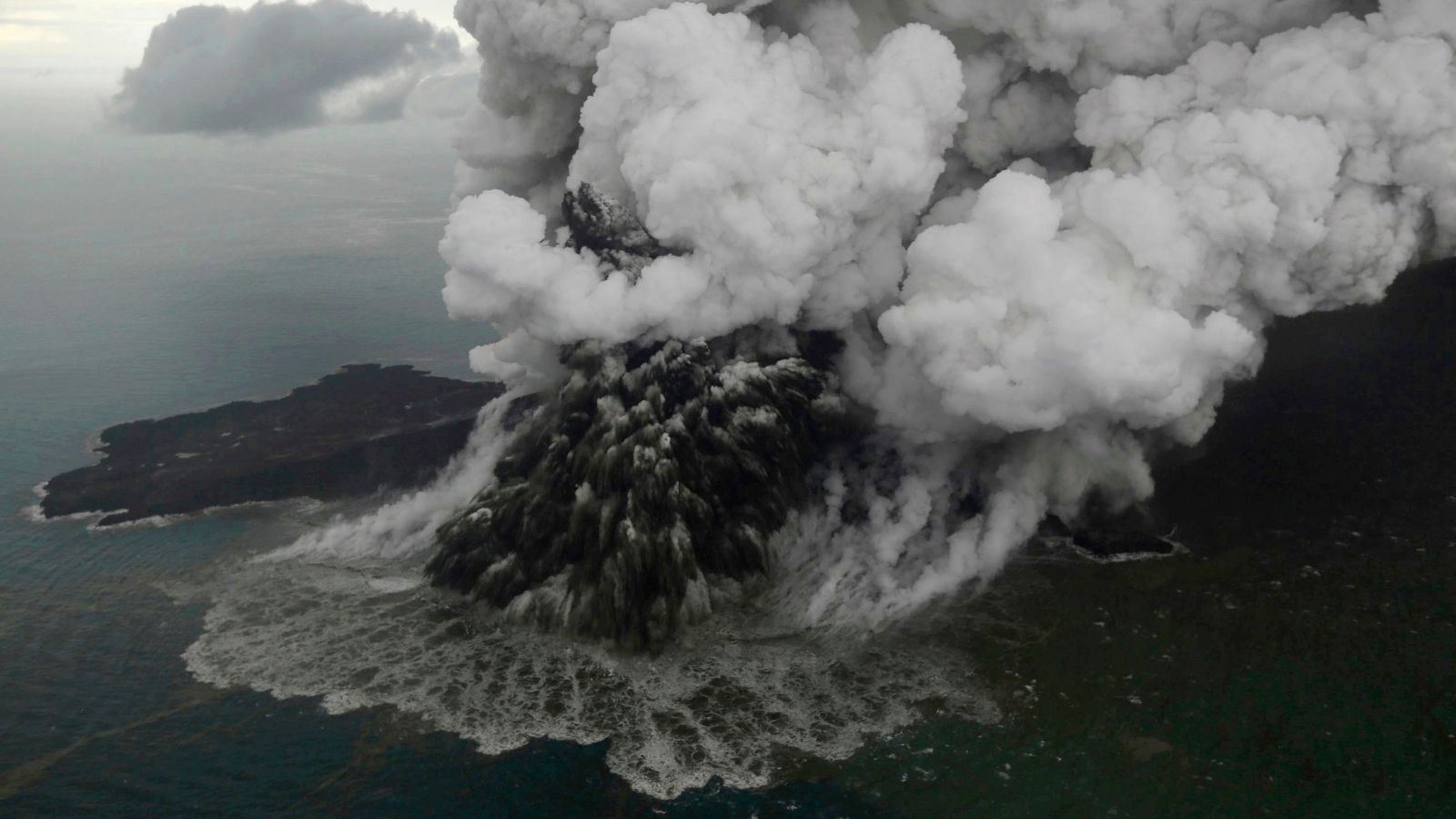
Volcanic events in active island arcs generate systemic network failures extending far beyond immediate blast radii. When Mount Anak Krakatau erupted, releasing particulate plumes reaching altitudes of 50,000 feet over the Sunda Strait, conventional disaster reporting tracked local closures while missing the underlying propagation mechanics. The event exposed critical vulnerabilities in aviation scheduling concentration, regional air traffic management, and institutional shock absorption capacity. Understanding how a localized magmatic discharge cascadingly halts international transit and municipal infrastructure requires analyzing the operational variables governing volcanic ash dispersal and macro-logistical dependency.
The Aerodynamic Cost Function of Particulate Dispersion
Volcanic ash is not mere dust; it consists of pulverized silicate rock, glass shards, and mineral crystals that behave as an abrasive, high-temperature ceramic compound when ingested by commercial turbofan engines. The physical mechanics of jet engine failure under ash ingestion follow a predictable threshold model: Also making news recently: The Chalk Dust of a Forgotten Decade.
- Melting point depression: Turbine operating temperatures routinely exceed 1,400°C, a threshold that surpasses the melting point of silicate ash constituents. Upon entering the combustion chamber, these particles melt, transition into a viscous liquid phase, and subsequently resolidify upon contacting cooler downstream turbine stator blades.
- Aerodynamic choking: The accumulation of vitrified deposits alters blade geometry, disrupts internal cooling air passages, and induces premature compressor stalls or complete engine flameouts.
- Secondary structural abrasion: High-velocity particle impact erodes compressor blades, pits cockpit windscreens, and contaminates onboard pitot-static systems, neutralizing critical flight data instrumentation.
The decision by authorities to suspend operations at Soekarno-Hatta International Airport—located more than 150 kilometers from the crater—was governed by spatial wind vector modeling rather than visual surface conditions. Tropospheric wind currents transported plumes southeastward toward Java and west toward Sumatra, blanketing densely populated economic corridors. The resulting closure of multiple Indonesian airports halted hundreds of domestic and international rotations, illustrating how point-source geological hazards create network-wide bottlenecks through centralized hub dependencies.
Institutional Response Latency in Educational and Municipal Systems
Municipal resilience depends on the speed of administrative decoupling from physical infrastructure. When airborne particulates reduce ambient air quality and trigger acute conjunctivitis and respiratory distress among students, traditional full-day schooling schedules fail. The Indonesian Ministry of Primary and Secondary Education addressed this operational friction by decentralizing continuity plans, directing impacted administrative districts in Banten and Lampung to shift instruction online or migrate classes to structurally insulated environments. Further insights into this topic are explored by Al Jazeera.
This administrative pivot highlights the mechanics of institutional shock absorption:
- Threshold-based triggers: Shifting from physical to remote delivery requires predetermined particulate density thresholds measured in micrograms per cubic meter rather than qualitative visual assessments.
- Resource reallocation lead times: Distributing protective equipment, such as particulate respirators to motorists and pedestrians in Cianjur, requires pre-positioned municipal stockpiles rather than reactive procurement.
- Schedule compressibility: Compressing instructional hours or pivoting to asynchronous modules prevents long-term curriculum degradation during multi-day atmospheric events without exposing populations to cumulative particulate inhalation risks.
Maritime Vulnerability and Sub-Aqueous Hazard Vectors
While airspace closure commands immediate economic attention, maritime transit through the Sunda Strait operates under a different set of physical risk variables. Marine diesel engines ingest lower volumes of high-altitude ash compared to jet turbines, but surface-level particulate fallout fouls deck machinery, contaminates open cooling water intakes, and severely degrades horizontal visibility for navigators. Port authorities enforced a strict exclusion zone within a three-kilometer radius of the crater to mitigate the immediate impact of ballistic projectile ejections and localized water displacement.
A critical variable in sub-aerial stratovolcano monitoring is the assessment of flank collapse potential. The 2018 collapse of Anak Krakatau generated a lethal tsunami without direct warning due to underwater mass-wasting events. Current post-eruption assessments indicate no immediate tsunami vector, primarily because the sub-aerial edifice volume displaced during the current phase remains below the critical threshold required to trigger massive water displacement in the Sunda basin. However, continuous bathymetric surveying remains the only reliable metric for predicting secondary wave generation, superseding surface observations.
Strategic Capital Allocation for Volcanic Risk Mitigation
Regional infrastructure operators facing recurring stratovolcanic hazards must transition from reactive crisis management to probabilistic risk engineering. Airport operators in the Western Pacific should implement automated real-time LIDAR-based ash detection arrays along approach corridors to minimize blanket administrative closures. By replacing wide-radius pre-emptive shutdowns with localized, vector-specific corridor restrictions, transit authorities can preserve network throughput while maintaining safety margins. Decentralizing educational delivery mechanisms into default operational protocols ensures continuity during environmental disruptions without requiring ad-hoc ministerial intervention.