Foreign policy clichés die hard, but few are as intellectually lazy as the domestic family metaphor. When Nepal’s Foreign Minister Shisir Khanal stood before an audience in Kathmandu and declared that he would not tell his "father to replace the mother or the mother with the father" regarding New Delhi and Beijing, diplomatic circles cooed. It sounded folksy. It sounded balanced.
It was also complete geopolitical nonsense.
The lazy consensus in international relations commentary treats small-state buffer zones like children caught in a messy custody battle between two giant parents. Pundits love this narrative because it reduces structural power dynamics to a soap opera. But realpolitik does not care about maternal instincts or paternal authority. States do not have parents; they have balance sheets, choke points, and existential vulnerabilities.
Treating India and China as interchangeable parental figures is a dangerous delusion that masks Nepal's actual strategic constraints.
The Geography Trap That Destroys the Family Metaphor
Let us look at the structural reality that Khanal’s folksy quip neatly sweeps under the rug. Two-thirds of Nepal’s total trade is anchored directly to India. The southern border is an open, porous expanse where millions of citizens cross effortlessly without bureaucratic friction. Conversely, the northern border sits behind the impassable wall of the Himalayas, controlled by a hyper-surveilled Tibetan autonomous region where trade flows are dictated entirely by Beijing's political calculus and arbitrary border closures.
A father and a mother share domestic responsibilities, emotional bonds, and a joint household. India and China are nuclear-armed rivals competing for supremacy in the Himalayas. When they sneeze, Kathmandu catches pneumonia.
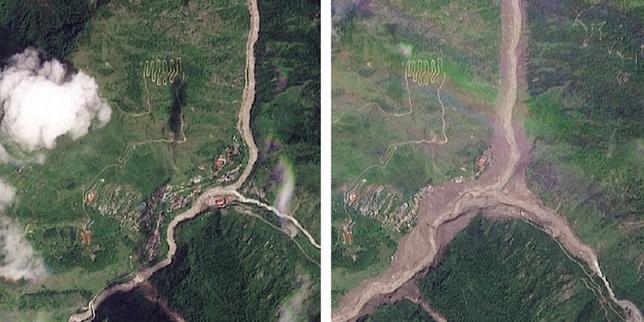
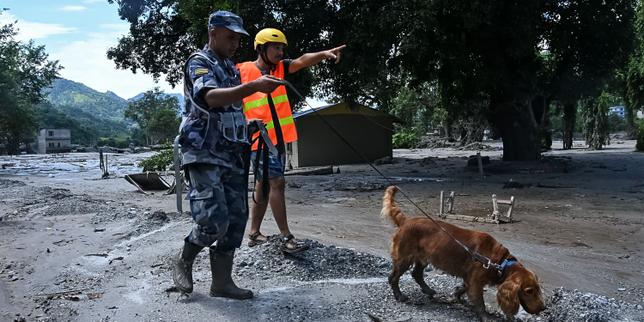
Imagine a scenario where a major regional crisis forces a hard infrastructure or security alignment. A metaphorical mother does not cut off supply lines during a blockade, the way India did in 2015. A metaphorical father does not delay critical early-warning data during a catastrophic glacial outburst flood, leaving downstream villages to drown in silence.
By framing bilateral dependencies as familial harmony, leadership in Kathmandu avoids hard choices. They treat foreign policy like a PR exercise where a clever soundbite substitutes for actual strategic leverage.
Why Non-Alignment is Morphing Into Strategic Paralysis
The doctrine of equidistant neutrality sounds noble on paper, but in practice, it often rewards inertia. Nepal’s policymakers use the "two parents" defense to stall unpopular structural reforms, delay contentious infrastructure audits, and kick accountability down the road.
Look at the Belt and Road Initiative projects that have languished in administrative purgatory for years due to financing disagreements and corruption investigations. Look at how border disputes are casually minimized as mere neighborhood friction while real sovereignty questions gather dust.
When you treat every external power as equally vital, you incentivize neither to respect your boundaries. True leverage does not come from claiming you love both neighbors equally. It comes from making yourself indispensable to both while remaining vulnerable to neither. Nepal has plenty of geographic vulnerability, but its structural indispensability is squandered every time a minister reaches for a Hallmark card metaphor instead of a hardheaded risk assessment.
The Real Cost of Neutrality Rhetoric
The stakes are far too high for diplomatic poetry. Climate catastrophes in the mountains, shifting trade corridors, and intense great-power competition demand institutional grit, not folksy aphorisms. When regional giants converge on security architecture over the head of a smaller state, poetic neutrality will not save your supply chains.
Stop looking for parents in geopolitics. Start looking for insurance policies.