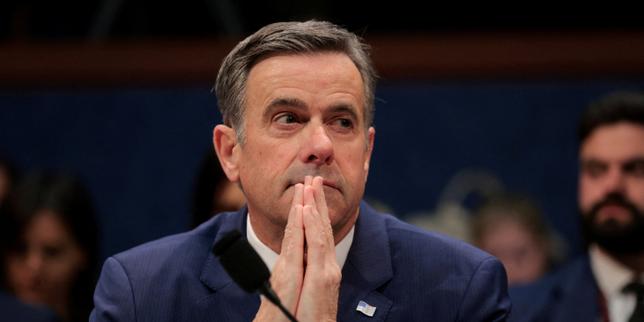
Secret intelligence flights don't just happen for routine coffee chats. When CIA Director John Ratcliffe landed in Moscow via a U.S. Air Force C-17A Globemaster transport plane, Washington and foreign capitals instantly went into overdrive.
American outlets quickly flooded the airwaves with warnings. They claimed Ratcliffe rushed to Russia to deliver a blunt ultimatum. The narrative was simple: Moscow was planning a direct, limited military test against NATO, and the top American spy flew straight into the lion's den to stop it. Discover more on a related subject: this related article.
Moscow hates being cornered in the press. Kremlin spokesman Dmitry Peskov didn't mince words, shooting down the reports as alarmist scare stories that completely miss reality. Yet, behind the public posturing, intelligence channels are grinding away.
The Reality Behind Closed Doors in Moscow
Let's cut through the noise. High-level spy chiefs don't travel across enemy lines just to trade empty threats. Additional analysis by Associated Press explores related perspectives on the subject.
While the White House played down the mission as semi-routine, security analysts know these rare diplomatic-intelligence maneuvers only happen when structural red lines are close to snapping. Think back to late 2021. Back then, CIA Director William Burns flew to Moscow right before the full-scale invasion of Ukraine. History doesn't always repeat itself identically, but it certainly rhymes.
This time around, U.S. intelligence assessments flagged potential worries that the Kremlin's risk calculations are shifting. Western intelligence worries that Moscow might test the alliance's collective defense via cyberattacks or hybrid border provocations in the coming years. Ratcliffe's itinerary wasn't just about Ukraine. Reports indicate regional flashpoints like the Middle East and sensitive Iranian positioning also made the briefing notes.
Why the Kremlin Pushed Back So Hard
Moscow wants control of the narrative. Peskov was quick to point out that while intelligence talks are useful on paper, bilateral relations remain stuck in a profound crisis.
Blaming American media for manufacturing panic is a classic playbook move. It allows the Russian government to project strength at home while dismissing Western pressure. Yet, the Kremlin confirmed that Ratcliffe met face-to-face with Russian intelligence counterparts, even if Vladimir Putin stayed out of the room. Putin was briefed, but the heavy lifting stayed at the spy-to-spy level.
Notice the timing. Before the delegation touched down, Washington reportedly asked Kyiv to hit pause on specific drone strikes near major Russian hubs. That kind of logistical accommodation proves the visit carried immense weight.
What This Means Moving Forward
Diplomatic peace tracks regarding the grinding war in Ukraine remain largely stalled. Both sides are dug in too deep.
When official diplomatic channels freeze up completely, intelligence backchannels become the only safety valve left. They keep miscalculation from turning into total catastrophe.
Don't expect a sudden breakthrough from this unannounced summit. Expect instead a hardened posture on both sides, wrapped in public denials and private warnings.