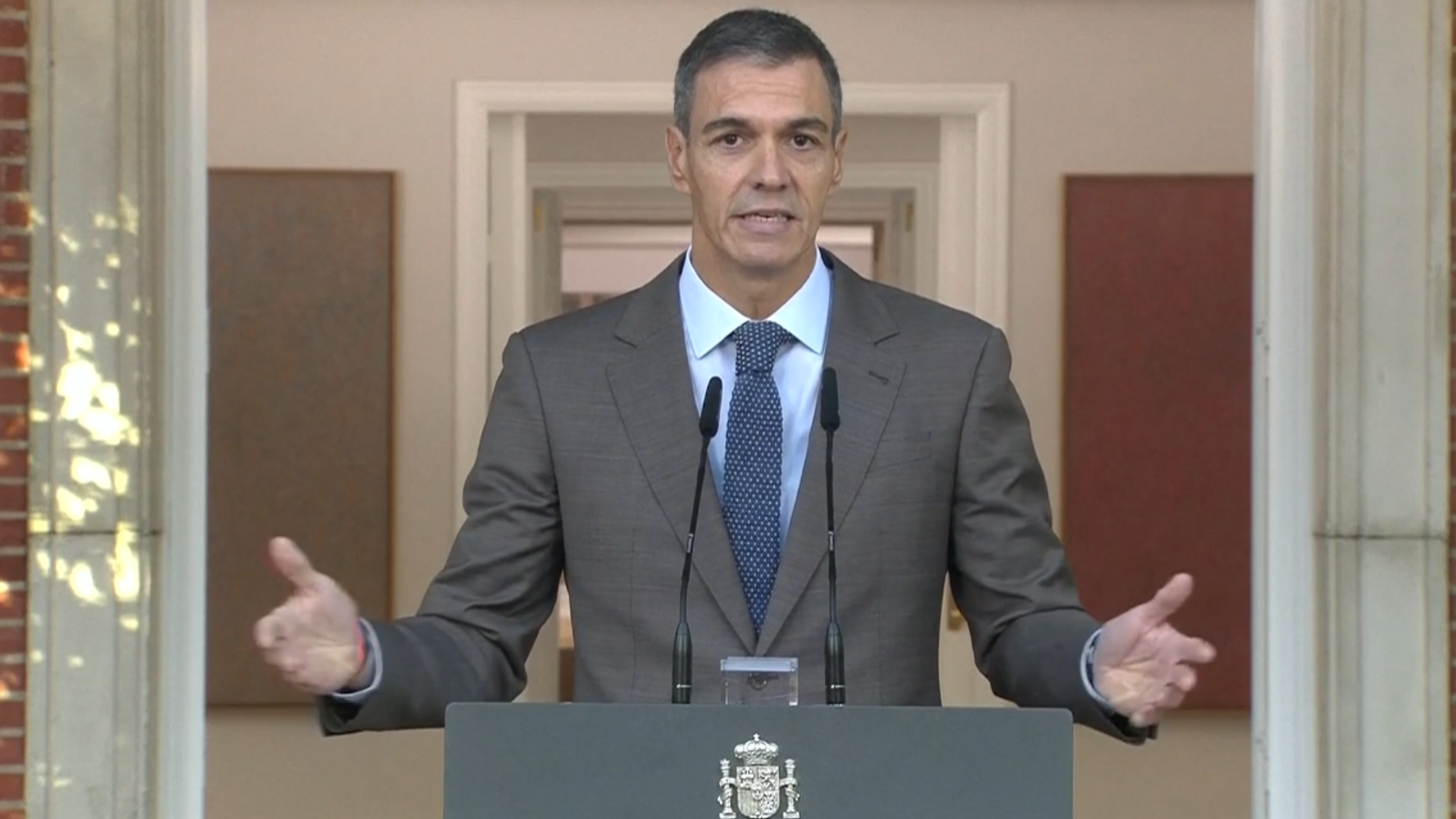
Prime Minister Pedro Sanchez did not trigger a snap general election out of sudden democratic idealism. When Spain’s Congress of Deputies flatly rejected emergency housing decrees—a defeat engineered by an unholy alliance of the conservative People's Party (PP), the far-right Vox, and the Catalan separatist party Junts—Sanchez faced a grim mathematical reality. His minority coalition had stalled. Without a reliable parliamentary majority, governance had devolved into an exhausting exercise of daily survival, haunted by corruption scandals, crumbling public infrastructure, and an escalating housing affordability meltdown.
Rather than slowly bleeding out in office until his term expired, Sanchez chose to burn the table. By forcing a high-stakes electoral showdown, the Spanish leader converted a legislative humiliation into an aggressive political gamble. It is a quintessential maneuver from a politician who has long thrived on defying political gravity, but this time, the structural headwinds facing his administration are formidable.
To understand why this snap election carries existential weight for both Spain and the broader European left, we have to look past the superficial headlines of parliamentary deadlock. The spark that lit the fuse was not abstract economic theory; it was the raw, visceral anger over housing. When an 87-year-old Madrid resident named Maricarmen Abascal was evicted after facing a staggering rent hike from an investment fund, it exposed the festering wound of Spain’s urban centers. Millions of citizens, squeezed by skyrocketing costs and stagnant purchasing power, took to the streets.
The socialist-led government rushed out emergency decrees designed to cap market excesses and shield vulnerable tenants. Yet, the opposition smelled blood. By voting down the measures, the PP and Vox calculated that they could pin the blame for the entire housing crisis directly on Sanchez’s doorstep, painting his administration as incompetent and out of touch. Instead of absorbing the blow, Sanchez weaponized the defeat. His message to the electorate is blunt: if voters want structural change, they must hand him an undisputed mandate capable of overriding legislative obstruction.
This strategy relies entirely on polarization, a playbook Sanchez successfully deployed in 2023. Back then, opinion polls universally predicted a landslide victory for the conservative opposition. Sanchez clawed his way back by framing the choice as an existential binary: his brand of progressive social democracy versus a regressive right-wing alternative beholden to the far-right.
Yet the political landscape has darkened significantly since then. The administration is shadowed by persistent corruption investigations, including inquiries touching close to the prime minister's inner circle and family. Furthermore, public trust took a severe hit following catastrophic failures within Spain's transport infrastructure. A high-speed rail disaster claimed dozens of lives on the exact same transit corridor that had suffered a fatal crash months prior, forcing the resignation of his transport minister amid fierce accusations of institutional neglect. Add to this the persistent pressures of migration management—exemplified by border crises in North African enclaves—and the government's defensive perimeter looks fragile.
Across the aisle, the conservative opposition under Alberto Núñez Feijóo smells an historic opening. For the PP, the path to Moncloa Palace requires navigating a delicate dance with Vox. If the polls hold true and the PP finishes first but short of an absolute majority, they will likely need Santiago Abascal’s far-right party to form a governing coalition. Should that coalition materialize, it will mark the first time a far-right force has entered Spain's central government since the end of the Franco dictatorship, sending shockwaves across a European Union already anxious about the creeping normalization of nationalist populism.
Meanwhile, the fractures on the left present an entirely separate vulnerability for Sanchez
Spain Risks Everything After Prime Minister Triggers Snap Election
news, politics
Pedro Sanchez thrives on high-stakes political poker. The Spanish Prime Minister has once again upended the national chessboard, calling a snap general election following a crushing defeat for his Socialist party in local and regional ballots. This is not merely a tactical maneuver. It is a calculated gamble that threatens to reshape the European Union's southern anchor and test the limits of voter endurance in a fractured political environment.
When regional and municipal ballot boxes emptied across Spain, the verdict from the electorate was unambiguous. Conservative forces surged, sweeping through traditional leftist strongholds and signaling a profound shift in public mood. Rather than waiting out the remainder of his term and enduring months of legislative paralysis, Sanchez opted for shock therapy. By dissolving parliament and forcing an accelerated national contest, he chose to short-circuit the momentum of his opposition and dare the country to choose between continuity and a sharp turn to the right.
The Mechanics of Political Survival
To understand why Sanchez pulled the trigger, look past the rhetoric of democratic mandate and examine the raw arithmetic of power. Incumbent coalitions often bleed support slowly over time, eroded by inflation, housing crises, and fatigue. Waiting until the scheduled end of the legislative term would have allowed conservative momentum to cement itself across every level of municipal government, creating an unassailable grassroots infrastructure for the opposition.
A snap election compresses the timeline. It forces conservative leader Alberto Nunez Feijoo of the Popular Party into an uncomfortable sprint, while simultaneously demanding that potential coalition partners on both the extreme left and right scramble for ballot placement and funding. Sanchez is betting that the shock of a sudden summer campaign will mobilize progressive voters who stayed home during the municipal contests out of apathy rather than ideological defection.
Yet, this strategy carries severe structural hazards. Spanish voters are exhausted. Inflationary pressures have squeezed household budgets, and the political class has spent years trading ideological barbs while structural unemployment remains a stubborn scar on the economy. Dragging an exhausted electorate back to the polls during peak holiday seasons risks alienating the very demographic Sanchez needs to retain: the pragmatic center.
The Shadow of the Extremes
The most dangerous variable in this election equation is the polarization of the political spectrum. Spain broke away from its traditional two-party duopoly years ago, fracturing into a multi-party landscape where governance requires fragile, often volatile coalitions.
On the right, the Popular Party finds itself tethered to Vox, a nationalist formation whose hardline stances on regional autonomy, immigration, and social policy make moderate voters deeply uneasy. On the left, Sanchez relies on a constellation of leftist splinters and regional nationalist parties whose price for support is often concessions that alienate voters in central regions like Madrid and Castilla-La Mancha.
When voters head to the booths, they are not simply choosing a Prime Minister. They are voting on the structural design of the Spanish state. The campaign will inevitably descend into a referendum on nationalism versus centralism, past governance records, and the acceptable boundaries of political alliances.
Economic Realities Beneath the Noise
While politicians trade insults over identity and past scandals, the underlying macroeconomic indicators tell a sobering story. Spain's tourism-driven recovery has proven resilient, but public debt remains elevated, and the cost-of-living squeeze is hitting working families hard. Youth unemployment stubbornly persists as a structural failure that successive administrations have managed rather than solved.
Neither major political bloc has presented a credible, transformative blueprint to alter Spain's long-term economic trajectory. Instead, the campaign promises to focus on tax maneuvers, symbolic social policies, and institutional appointments. The winner will inherit a nation grappling with European fiscal rules that are tightening once again, leaving little room for populist spending sprees regardless of who occupies the Moncloa Palace.
The Final Roll of the Dice
Pedro Sanchez has built a career on defying political gravity. Allies call him a master strategist; detractors call him an opportunist willing to burn institutional norms for personal tenure. Both assessments contain elements of truth.
As the campaign machinery roars to life across the Iberian Peninsula, the outcome remains entirely unsettled. A miscalculation here will not just end a government; it will validate a hardline conservative coalition empowered by nationalist elements, shifting Spain's diplomatic weight within the European Union. A victory, conversely, will cement Sanchez as one of the most durable political survivors of his generation. The ballots are printed, the clock is running, and the political future of the country hangs on a knife-edge.