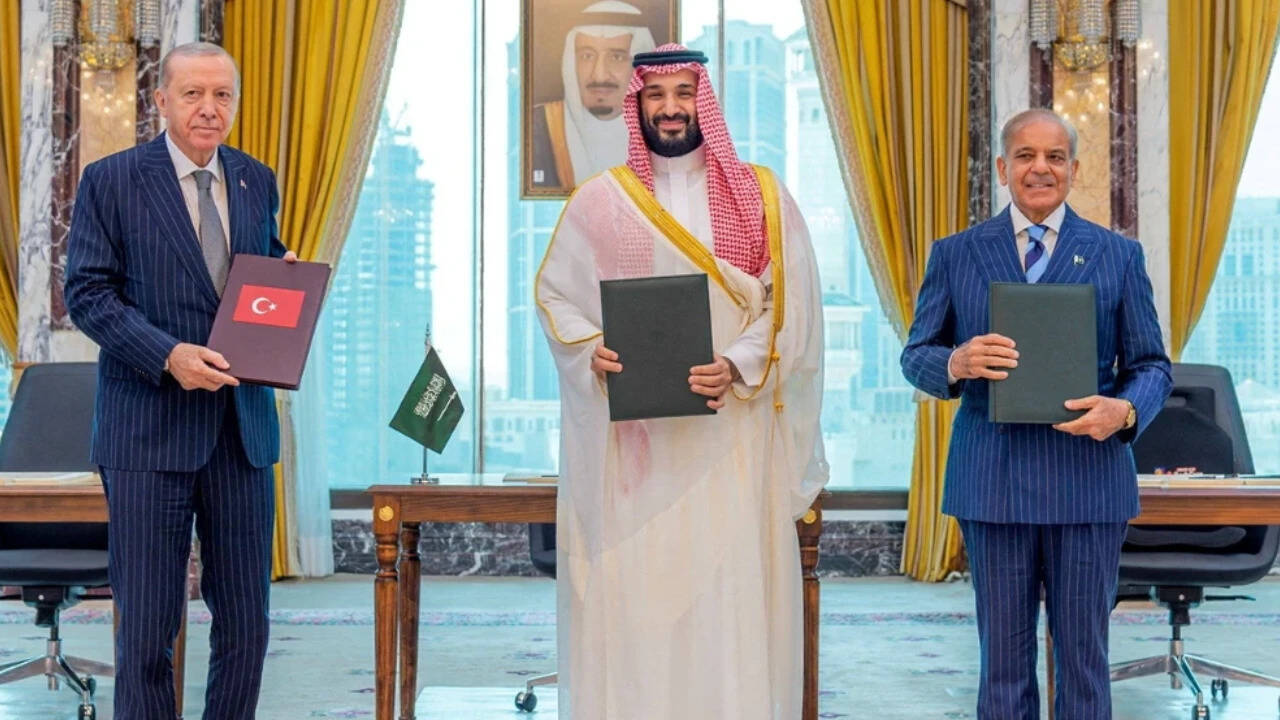
Geopolitics in the Middle East is shifting away from Washington. When Saudi Arabia, Pakistan, and Türkiye formalized the Mecca Joint Defence Agreement, people called it an Islamic NATO. That label misses the point. This isn't just about treaties on paper. It's a calculated, hard-nosed response to shifting power vacuums, escalating Houthi threats, and a region adjusting to life after decades of heavy reliance on Western security umbrellas.
If you look closely at how this alliance came together, the speed is what stands out. What started as a bilateral framework between Riyadh and Islamabad quickly evolved into a trilateral powerhouse once Ankara stepped in. With Turkish parliamentary ratification complete and the final legal mechanisms locked into place, the pact is fully operational. Troops and logistical assets are already moving, backed entirely by Saudi financing.
Why the Yemen Conflict is the Real Stress Test
You can't talk about this alliance without looking at the southern border of the Kingdom. The war in Yemen remains an open wound, and despite shifting diplomatic channels, cross-border threats haven't vanished. The Mecca Pact changes the calculus completely. Under the core mutual defense clauses, an attack on one signatory is treated as an attack on all.
For Pakistan, committing military personnel to Saudi soil—specifically stationed around critical infrastructure like the Eastern Province—is a massive foreign policy gamble. Islamabad has to balance domestic sensitivities, a massive border with Iran, and deep economic commitments elsewhere. Yet, military planners in Rawalpindi clearly decided that staying out of the Gulf's security architecture carried a higher long-term cost.
For Türkiye, joining hands with Saudi Arabia and Pakistan allows Ankara to project strategic depth from the Mediterranean down to the Arabian Sea. Turkish drone technology, joint defense manufacturing, and tactical training are plugging gaps that Western suppliers are increasingly hesitant or slow to fill.
Beyond the Headlines: What the Pact Actually Changes
Skeptics love to point out that defensive alliances often lack teeth when member states have divergent foreign policies. That's a fair criticism. Riyadh, Islamabad, and Ankara don't see eye to eye on every regional file. But reducing this agreement to mere rhetoric ignores the hard assets moving into place.
- Joint Deterrence: The alliance relies heavily on deterrence by denial, signaling to hostile non-state actors and regional rivals that missile or drone strikes will trigger a coordinated response.
- Defense Industrial Integration: Expect to see a massive uptick in joint defense production, intelligence sharing, and hardware standardization, cutting out traditional procurement bottlenecks.
- Diplomatic Leverage: By coordinating their foreign ministries, these three nations are positioning themselves as the primary arbiters of security in the Muslim world, bypassing Western mediation.
The old security order built entirely around Washington's presence is fracturing. Local powers are taking matters into their own hands because they have to. If you want to understand where the Middle East is heading over the next decade, stop watching Washington briefings and start watching how fast troops deploy under the Mecca framework.
Mecca Alliance activates defence pact as Yemen forces ...
This video provides a detailed breakdown of how the Mecca Joint Defence Agreement was activated and the immediate military movements responding to the escalation in Yemen.