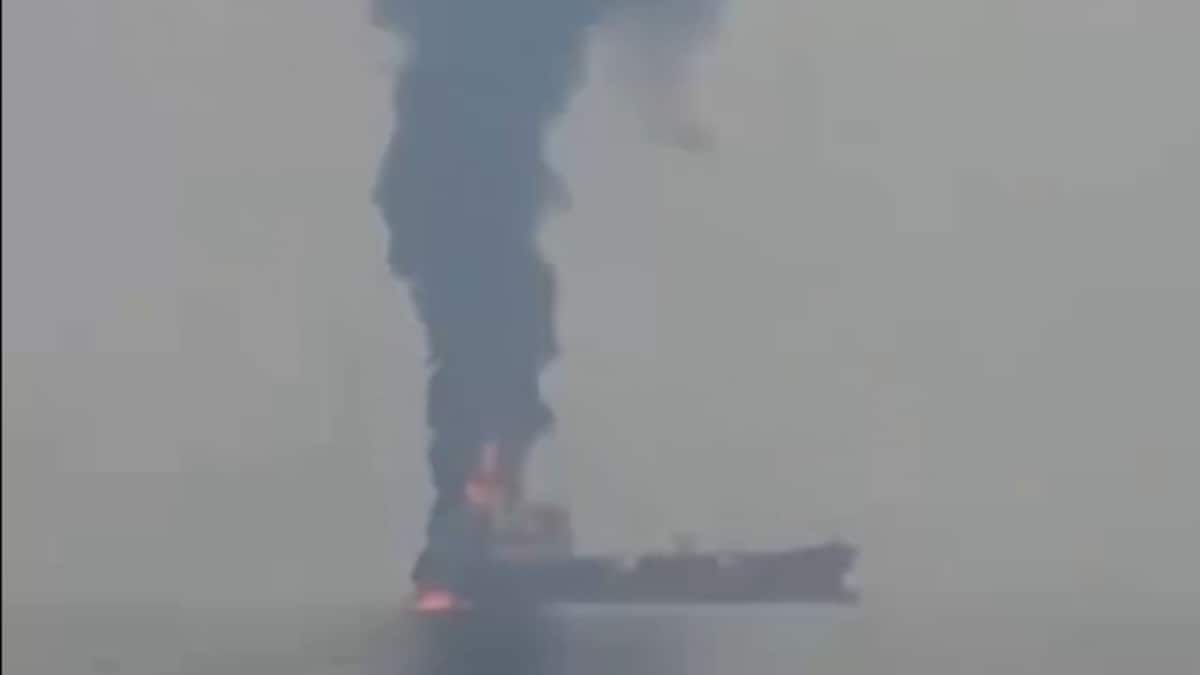
Donald Trump’s decision to launch Operation Epic Fury on February 28, 2026, was not a sudden burst of temper. It was the clinical execution of a second-term doctrine that treats the Middle East as a corporate restructuring project rather than a diplomatic puzzle. By authorized a massive joint strike with Israel targeting the Iranian leadership—reportedly killing Supreme Leader Ali Khamenei—Trump has bet his presidency on the idea that the "Islamic Republic" is a business with a failing board of directors that simply needs to be decapitated to become profitable again.
This is not the "forever war" of the Bush era or the cautious containment of the Obama years. It is a hostile takeover.
The strategy hinges on a single, massive gamble: that the Iranian people will see the smoke over Tehran as a signal to rise up and that the Iranian military will fold rather than fight. But as the smoke clears, the reality on the ground looks less like a "new dawn" and more like a high-stakes liquidation where the assets are burning and the neighbors are terrified.
The Architecture of Epic Fury
To understand the strikes, one must look at the 2026 National Defense Strategy. It redefined the Middle East from a security burden into an "economic and technological platform." Trump isn’t interested in nation-building; he’s interested in regional burden-sharing. He wants a Middle East where Israel provides the security "tech" and the Gulf monarchies provide the "venture capital."
The military buildup that preceded the strikes was the largest since 2003. It involved an "armada" of naval assets and a relentless series of air sorties designed to dismantle Iran’s nuclear infrastructure and command-and-control centers in one fell swoop. The White House calls it "Peace Through Strength," but for the 93 million people in Iran, it is a structural rupture.
- The Kill Shot: The strike on Khamenei was intended to create a power vacuum that the U.S. hopes will be filled by a more "transactional" leadership.
- The Economic Hook: Trump’s team has already prepared a "Board of Peace" for Gaza and expects the same model—massive investment in exchange for total security compliance—to eventually apply to a post-regime Iran.
- The Burden Shift: Saudi Arabia has pledged $600 billion in U.S. investments, and the UAE has committed $1.4 trillion to the AI sector. These aren't just deals; they are the "ante" for American protection.
The Mirage of a Painless War
Trump has long preferred short, decisive operations with "pain-free off-ramps," much like the lightning raid in Venezuela earlier this year. However, Iran is not Venezuela. It is a regional power with a deeply entrenched ideological military—the Islamic Revolutionary Guard Corps (IRGC).
The administration’s assumption that air strikes can incite a popular uprising is a dangerous echo of past intelligence failures. While the streets of Tehran have seen protests, the "monopoly of force" still rests with the security apparatus. If the regime collapses, the most likely successor isn't a Western-style democracy; it’s "IRGCistan"—a military-run state that could be even more hardline and less predictable.
The economic fallout is already manifesting. Oil prices spiked 20% in the lead-up to the attack, and any attempt by Iran to close the Strait of Hormuz could trigger a global recession. For a president who campaigned on lowering the cost of living, a war that sends gasoline prices to record highs is a political suicide mission.
The Silicon Shield and the AI Arms Race
Behind the missiles lies a more subtle conflict over the future of technology. The Trump administration has integrated Middle Eastern partners into the U.S. defense industrial base through massive tech transfers.
The $1.4 Trillion AI Bet
The UAE’s commitment to invest in data centers and AI is a cornerstone of the new strategy. Washington is essentially trading advanced semiconductors—like the 35,000 Nvidia chips recently approved for Saudi Arabia—for regional loyalty and a decoupling from Chinese tech.
The Critical Minerals Nexus
The Middle East is being recast as a logistical hub for rare earth minerals and battery production. This is about ensuring that the supply chains for the next generation of American military hardware are secured by allies who are too invested in the U.S. economy to walk away.
Why the Neighbors Are Shuddering
Despite the "Peace Through Strength" rhetoric, America's closest Arab allies are far from enthusiastic. Saudi Arabia and several Gulf states reportedly informed Washington that their airspace could not be used for the attack. They are caught in a brutal middle ground: they want the Iranian threat gone, but they don't want the "regional conflagration" that follows.
Iran’s initial retaliation has already seen missiles hitting targets in the UAE and Saudi Arabia, pulling six nations into a conflict they desperately tried to avoid. The fear in Riyadh is that an "Epic Fury" that fails to completely destroy the IRGC leaves the Gulf monarchies as the primary targets for a wounded, vengeful neighbor.
The administration’s reliance on Israel as the "future leader of the Middle East" also creates friction. While the Abraham Accords provided a framework for cooperation, the maximalist rhetoric from Washington regarding Israeli territorial "entitlement" risks shattering the very coalition Trump needs to manage the aftermath.
The Looming Midterm Reckoning
Domestically, the gamble is just as risky. Polls show a majority of Americans oppose fresh military action in the Middle East. Trump’s approval ratings are already sliding as voters prioritize the domestic economy over foreign "victories."
If the conflict drags into a "forever war" of attrition, the "America First" coalition may fracture. Vice President JD Vance has dismissed the idea of a protracted conflict, yet history suggests that once the first bomb is dropped, the timeline is no longer in Washington’s control.
The Iranian regime is under unprecedented strain, but it has survived decades of sanctions and isolation. If the "popular uprising" doesn't materialize by the time the next wave of sorties ends, Trump will be left with a shattered region, an energized IRGC, and an American public that feels betrayed by the promise of no more "stupid wars."
Success requires the Iranian people to act as the ground force that the U.S. refuses to send. If they don't, the "Epic Gamble" will be remembered as the moment the restructured Middle East collapsed under the weight of its own ambition.
Would you like me to investigate the specific breakdown of the $1.4 trillion UAE-AI investment deal and its impact on U.S. semiconductor export controls?