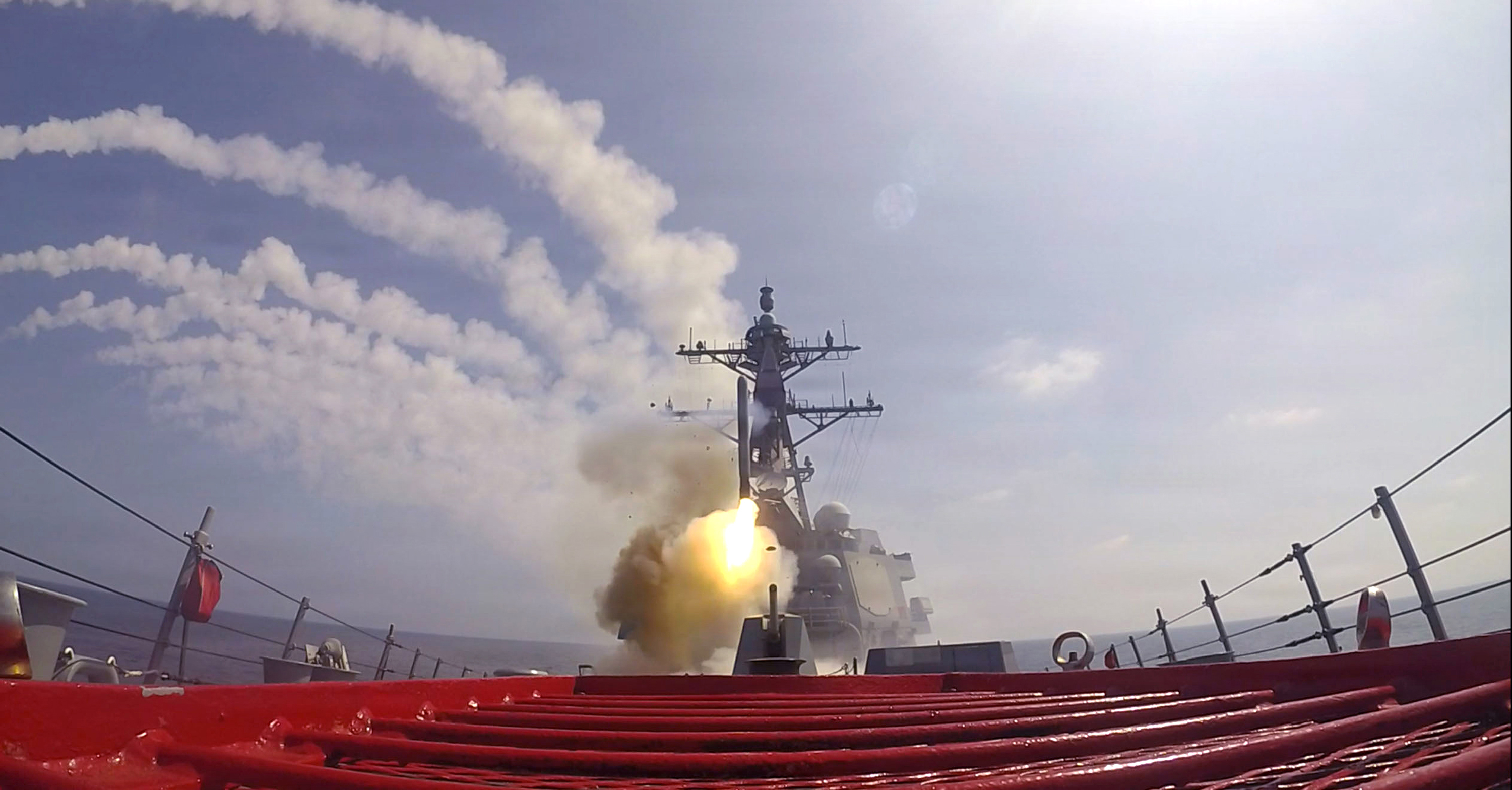
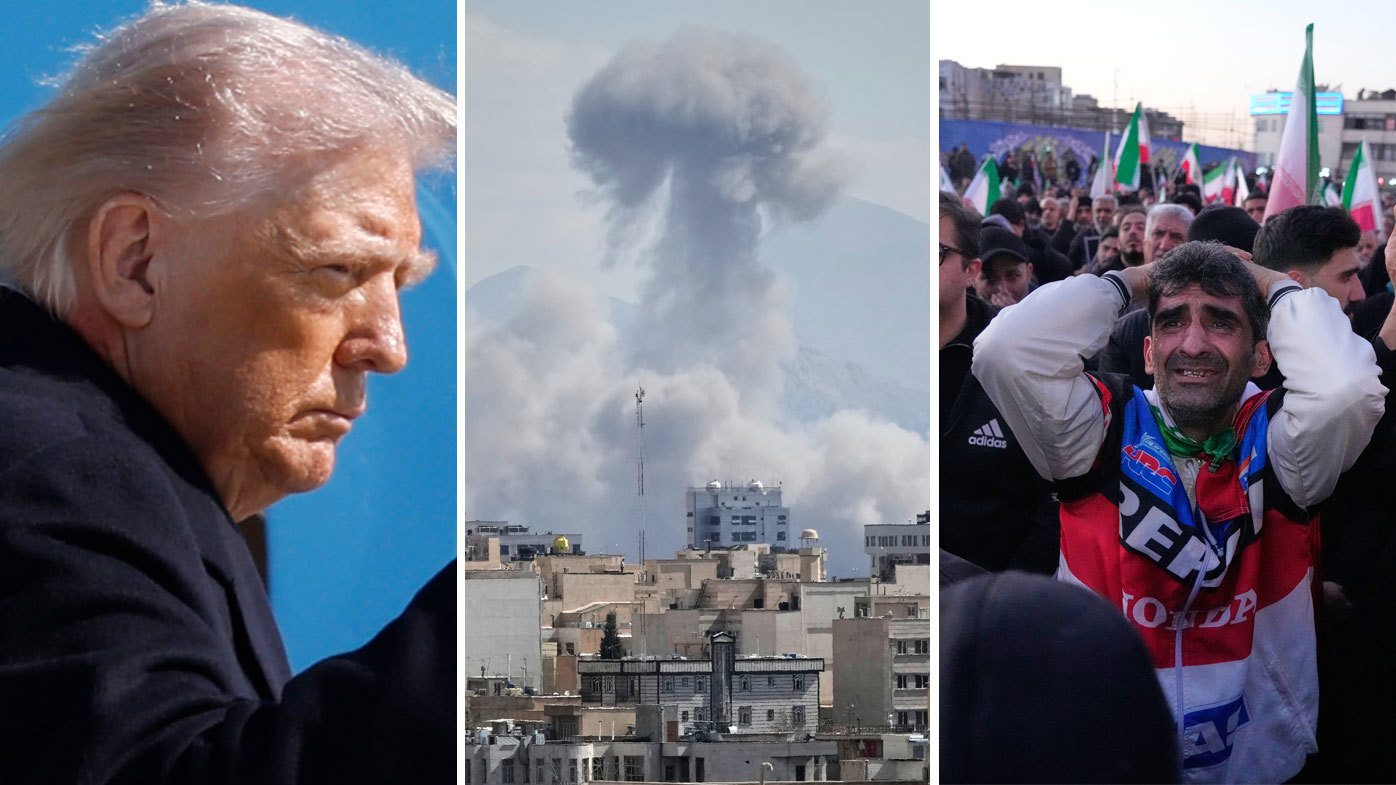
The shift in Iranian military doctrine from proxy-led attrition to direct state-on-state signaling represents a fundamental recalibration of the "Cost-Imposition" framework in the Middle East. By transitioning away from the historical reliance on the "Shadow War" (Jang-e-Sayeh), Tehran has introduced a new mathematical variable into regional stability: the normalization of direct ballistic escalation as a tool of diplomatic leverage. This transition is not an emotional response to tactical losses but a calculated pivot to address the diminishing returns of the "Axis of Resistance" in the face of advanced integrated air defense systems (IADS) and targeted decapitation strikes.
The Three Pillars of the Retaliation Pivot
The current Iranian strategy rests on three distinct operational pillars designed to maximize political signaling while managing the risk of total theater war. Understanding these pillars is essential for quantifying the likelihood of future escalation.
- Threshold Testing: Iran utilizes large-scale, telegraphed salvos to map the saturation points of the "Arrow" and "David’s Sling" systems. By forcing the expenditure of high-cost interceptors against lower-cost one-way attack (OWA) drones and older-generation liquid-fuel missiles, Tehran conducts a live-fire audit of Western interceptor inventories.
- Sovereign Directness: The shift from using Hezbollah or Houthi assets to launching from Iranian soil (Kermanshah or Isfahan) aims to establish a new "Rules of Engagement" (ROE). This logic dictates that any strike on Iranian diplomatic or military personnel abroad will be met with a domestic response, attempting to create a "Mutual Assured Vulnerability" (MAV) without crossing the nuclear threshold.
- Technological Diversification: The integration of maneuverable reentry vehicles (MaRVs) and hypersonic claims serves to complicate the defensive calculus. Even if the majority of assets are intercepted, the arrival of a single warhead on a high-value military installation serves the strategic narrative of "permeable defense."
The Cost Function of Modern Air Defense
The economic asymmetry of Iranian retaliation is the primary driver of its sustainability. Analyzing the "Cost-per-Kill" ratio reveals a structural advantage for the attacker in a prolonged war of attrition.
- Attacker Costs: A Shahed-136 drone costs approximately $20,000 to $50,000. A Fattah-1 or Kheibar Shekan ballistic missile ranges from $100,000 to $300,000 depending on the guidance package.
- Defender Costs: A single Standard Missile-3 (SM-3) or an Arrow-3 interceptor costs between $2 million and $9 million.
This creates a geometric disparity. If Iran launches a composite strike costing $50 million, the defensive coalition may be forced to expend $1 billion to $2 billion in munitions to ensure a 99% interception rate. The strategic bottleneck for the defender is not just financial, but industrial capacity. The lead time for producing advanced interceptors is measured in years, while the assembly of fiberglass-and-moped-engine drones is measured in days.
Strategic Depth and the Geographic Buffer
Iran’s geography provides a natural defensive moat that its adversaries lack. With a landmass of 1.6 million square kilometers and a rugged, mountainous interior (the Zagros and Alborz ranges), Iran utilizes "Strategic Depth" to harden its command and control centers.
The "Missile Cities"—vast underground complexes carved into mountain bedrock—render traditional pre-emptive strikes largely ineffective. For an adversary to achieve "Mission Kill" status against the Iranian missile program, they would require sustained, multi-week sorties involving heavy bunker-busters (GBU-57 MOP), which introduces a logistical burden that most regional air forces cannot sustain without direct U.S. kinetic involvement.
The Bottleneck of Proxy Reliability
The "New Retaliation Strategy" also reflects a quiet crisis in the proxy model. While the Axis of Resistance provides "Plausible Deniability," it also introduces "Agency Risk."
- Hezbollah’s Domestic Constraint: As a political party in Lebanon, Hezbollah must balance its military utility to Tehran against the risk of total Lebanese state collapse.
- Houthi Autonomy: The Yemen-based group often operates on its own ideological timeline, which can inadvertently trigger escalations that Tehran is not yet prepared to finance or defend.
- Iraqi Militia Fragmentation: Internal Iraqi politics often dilute the effectiveness of PMF (Popular Mobilization Forces) strikes, leading to "nuisance" attacks rather than strategic shifts.
By taking the lead in direct strikes, the Islamic Revolutionary Guard Corps (IRGC) regains centralized control over the escalation ladder, ensuring that the timing and intensity of conflict align perfectly with Tehran’s broader nuclear and economic negotiations.
Precision and the Intelligence Gap
A critical variable often ignored in standard military briefings is the "Kill Chain" efficiency. Iran’s reliance on commercial-off-the-shelf (COTS) technology for GPS guidance and satellite imagery has narrowed the precision gap. Ten years ago, Iranian missiles were "area-effect" weapons; today, they are "point-effect" weapons.
However, the "Intelligence Gap" remains the Achilles' heel of the IRGC. While they can hit a fixed coordinate with high probability, their "Time-Sensitive Targeting" (TST) against mobile units or hidden assets is underdeveloped. This creates a defensive strategy focused on "Fixed-Asset Deterrence"—threatening cities, ports, and airbases—rather than tactical battlefield superiority.
The Escalation Dominance Paradox
In game theory, "Escalation Dominance" is the ability to increase the stakes of a conflict to a level where the opponent is unwilling or unable to follow. Iran’s new strategy seeks to achieve this by signaling a "Zero-Sum" mindset.
The logic follows:
- Stage 1: Kinetic harassment via proxies (Low cost, high deniability).
- Stage 2: Direct, limited ballistic strikes on military targets (Medium cost, low deniability).
- Stage 3: Unrestricted maritime disruption in the Strait of Hormuz (High cost, catastrophic economic impact).
Iran’s leverage is the threat of Stage 3. By demonstrating competence in Stage 2, they validate the credibility of their Stage 3 threat. The global economy’s sensitivity to energy prices acts as a "Secondary Shield" for Tehran, as any total war would likely see the closure of a waterway responsible for 20% of the world’s petroleum liquids.
Operational Constraints and Systemic Risks
No strategy is without friction. The transition to direct engagement exposes Iran to three primary risks:
- Internal Legitimacy: Direct strikes invite direct counter-strikes. If the Iranian state cannot protect its own infrastructure from high-end stealth assets (like the F-35), the internal narrative of the "Strong State" begins to erode.
- Technological Attrition: Iran’s domestic industry is proficient but lacks the high-end semiconductor access required for next-generation electronic warfare (EW) suites. In a prolonged conflict, their assets would become increasingly vulnerable to spoofing and cyber-kinetic interference.
- Coalition Cohesion: The April 2024 and subsequent engagements proved that regional Arab states are willing to participate in a "Central Command" (CENTCOM) led defensive umbrella. Iran’s strategy relies on isolating its primary adversary; a unified regional wall makes the "Threshold Testing" pillar significantly more expensive and less effective.
The Strategic Play
The transition to a direct retaliation posture is a permanent shift in the regional security architecture. The "Shadow War" has matured into a "High-Visibility Deterrence" model. For regional actors and global powers, the move requires a shift from "Deterrence by Denial" (building better shields) to "Deterrence by Cost" (making the offensive maneuvers politically and economically ruinous for the Iranian leadership).
The immediate requirement for counter-strategy is the deployment of directed-energy weapons (lasers) to break the "Cost-per-Kill" asymmetry. Until the cost of an intercept is lower than the cost of a Shahed drone, Iran maintains the structural advantage in a war of attrition. Strategic focus must pivot from the "Warhead" to the "Supply Chain," targeting the dual-use components that allow for the mass production of these low-cost kinetic assets.