The air in a climate summit hall at four in the morning smells like stale espresso, damp wool, and quiet panic.
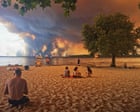
If you have ever sat in the back rows of a United Nations plenary while exhausted diplomats argue over whether to replace the word "shall" with "should," you know how absurd the whole enterprise looks from the outside. Outside those convention center doors—whether in Belém, Brazil, where negotiators argued past their deadline in late 2025, or in Antalya, Turkey, where talks fractured into overtime in November 2026—the physical world does not wait for consensus. Pine forests in southwestern France char into black toothpicks. Olive groves in Greece turn to ash. Insurance companies quietly pull out of coastal zip codes.
So when people ask, more than a decade after nearly 200 nations wept and cheered over the Paris Agreement in December 2015, whether these endless climate talks are actually getting anywhere, the most honest reaction is a heavy sigh.
On paper, the verdict looks grim. In 2015, the world promised to hold global warming well below 2 degrees Celsius above pre-industrial levels and to fight like hell to cap it at 1.5 degrees. Eleven years later, the UN Environment Programme has had to admit what climate scientists already saw on their screens: the world is going to blow past that 1.5-degree threshold, likely within the next few years. The United States walked away from the treaty once again, geopolitical rivalries have hardened, and oil-producing nations have fought tooth and nail to keep the words "fossil fuel phaseout" buried under diplomatic footnotes.
Cynicism feels smart right now. Cynicism feels earned.
And yet, cynicism misses the single most important shift happening on Earth.
The Invisible Thermometer
To understand why these clunky, infuriating summits still matter, step away from the microphone and meet two people living in the space between diplomatic failure and real-world survival. (Both are composite portraits drawn from the communities and workers caught in this transition, though every number behind their lives is real.)
First, meet Elena, a third-generation citrus grower outside Valencia. In 2015, when diplomats were popping champagne in Paris, Elena’s grandfather worried about an occasional late frost. Today, Elena watches weather apps with the dread of a gambler. Since the Paris treaty was signed, the planet has warmed by roughly another three-tenths of a degree, pushing average global temperatures past 1.3 degrees above pre-industrial levels. That tiny sliver on a thermometer sounds trivial until you live inside it. It translates into an average of eleven extra dangerously hot days every single year, and heatwaves that used to strike once a century now arriving ten times more often. For Elena, those extra days mean baked blossoms, rationed irrigation water, and harvest yields dropping by a fifth.
Now meet David, a grid engineer in northern Germany. In 2015, David spent his days balancing coal-fired power plants against predictable industrial demand. Back then, energy analysts predicted that global coal and oil consumption would climb relentlessly for decades, locking humanity into roughly 4 degrees of catastrophic warming by the end of the century. Four degrees is not an inconvenience. Four degrees means 114 extra scorching days a year, drowned coastal cities, and collapsed global breadbaskets.
Today, David rarely touches a coal schedule. He spends his shifts managing surges of cheap offshore wind and rooftop solar that did not exist at scale eleven years ago. Because of the rules, market signals, and national targets forced into existence by the Paris framework, projected end-of-century warming has dropped from 4 degrees down to roughly 2.6 degrees if nations deliver on their current pledges.
Stop and hold both of those truths in your hands at the same time.
2.6 degrees is still terrifying. It means 57 extra hot days a year compared to today, severe crop failures, and existential peril for low-lying island nations. Nobody celebrating a 2.6-degree trajectory understands what that heat actually does to human kidneys, concrete highways, or coral reefs.
And still.
Shaving 1.4 degrees off the worst-case scenario in a single decade is an achievement without precedent in human history. Think of the Paris Agreement not as a magic brake that stops a speeding freight train on a dime, but as a heavy iron rudder bolted onto a supertanker. For ten years, tugboats and diplomats have been leaning against that wheel. The ship has not stopped. It is still going to scrape against the reef at 1.5 degrees. Yet the bow has swung measurably away from the open ocean abyss of 4 degrees.
Why Nobody Walks Out Forever
If the treaty is only a rudder, why keep flying tens of thousands of people around the globe every November to argue in windowless halls?
Because without the room, the pressure vanishes.
When the United States pulled out of the accord, pundits immediately wrote obituaries for climate diplomacy. One diplomat from a developing nation muttered before recent talks that with Washington absent, there was nothing left to negotiate. For a moment, it looked like the entire architecture might collapse into a free-for-all of narrow national self-interest.
Instead, something stubborn happened. At the COP30 summit in Belém, right on the edge of the Amazon, nearly ninety countries—from European industrial powers to tiny Pacific atolls—banded together to demand an explicit roadmap to transition away from fossil fuels. Even when talks in Antalya a year later deadlocked over weak draft language and broke down into overtime, the fight itself exposed who was stalling and forced major economies like China to double down on low-carbon electrification commitments.
Diplomats call this the "ratchet mechanism," though a better analogy is a neighborhood watch with floodlights. Under the Paris rules, every country has to show up, lay its national climate plan on the table, and submit its emissions math to public scrutiny. You cannot hide behind vague promises when three hundred island-nation negotiators, youth activists, and financial journalists are reading your spreadsheets in real time.
Money follows that scrutiny. Investors hate stranded assets more than they love ideology. Once 195 nations signed a document stating that the fossil fuel era had an expiration date, pension funds, banks, and sovereign wealth managers began quietly moving trillions of dollars out of coal mines and into solar factories, battery plants, and high-voltage transmission lines. Solar power became the cheapest electricity in history not because oil executives grew a conscience, but because policy certainty unlocked global manufacturing scale.
The Bill That Nobody Wants to Pay
Still, if you feel a knot in your stomach when you read about these summits, trust that instinct. The biggest flaw in the Paris system is not a lack of green technology. It is a brutal, unresolved fight over fairness.
Consider what happens next when a monsoon washes away bridges in Pakistan or a multi-year drought starves livestock across the Horn of Africa. Those communities burned almost none of the coal and oil that heated the atmosphere. Yet they are paying the tuition for a century of Western and industrial wealth.
In Paris, rich nations promised to help poorer ones adapt to a volatile climate and build clean energy grids without repeating the dirty industrial revolution. That promise has been broken repeatedly. Adaptation finance—money for seawalls, drought-resistant seeds, and early warning sirens—peaked at around 28 billion dollars a year, far short of even the modest 40-billion-dollar target promised, and nowhere near the hundreds of billions actually needed. At recent summits, wealthy countries finally agreed to work toward mobilizing 300 billion dollars a year by 2035, inside a broader aspirational target of 1.3 trillion. To a diplomat from a sinking atoll in the Pacific, a pledge due in 2035 sounds like promising a fire truck next Tuesday while the roof is already blazing.
This is where the talks nearly break every single year. Developing nations refuse to sign onto stricter emissions cuts unless the checks for clean energy and disaster recovery actually clear. Wealthy nations, squeezed by domestic inflation, populist backlashes, and defense budgets, balk at writing blank checks.
It is messy. It is deeply frustrating. Sometimes, as in Antalya, the sheer weight of that distrust brings the gavel crashing down without a clean deal.
What Happens When the Lights Turn Off
So what is the point?
Ask a negotiator from Nepal or Barbados why they still board sixteen-hour flights to sit in freezing conference rooms where their voices are routinely drowned out by oil lobbyists. They will tell you a simple, unvarnished truth: the UN climate table is the only room on Earth where a tiny island state of 100,000 people holds the exact same legal veto as a nuclear superpower.
In a world of bilateral trade deals and military alliances, small nations get crushed. Inside the Paris framework, unanimity is required. A handful of vulnerable countries can—and regularly do—block an entire global agreement until their survival is written back into the text. That moral compass, imperfect and bruised as it is, keeps the floor from falling out entirely.
Meanwhile, out in the real world, the transition has developed its own momentum. Even when political winds blow backward in one capital or another, cities keep electrifying bus fleets, automakers keep shuttering combustion engine lines, and engineers like David keep wiring wind turbines into the grid. Every tenth of a degree we shave off the peak matters. The difference between 1.7 degrees and 2.6 degrees is measured in millions of lives, intact coastlines, and harvests that survive the summer.
Late at night, after the plenaries adjourn and the janitors sweep up the discarded plastic badges and crumpled draft texts, the real work of the Paris Agreement begins—not in the speeches, but in the quiet, unglamorous grind of building a different world before the heat arrives.
Somewhere outside Valencia right now, Elena is walking her rows of trees before dawn, checking the soil moisture sensors installed with a regional climate adaptation grant, betting her family’s land on a fraction of a degree.