Two hundred miles per hour feels less like falling and more like lying on a mattress made of solid concrete.
That is the first thing they never tell you about terminal velocity. In the movies, skydivers float in a serene, balletic hush, smiling effortlessly at a camera lens while clouds drift gently past their shoulders. In reality, the wind is a violent, screaming physical wall. It vibrates your cheeks against your teeth, tears moisture straight out of the corners of your eyes, and roars in your ears with the deafening volume of a freight train passing three feet from your skull. You are not floating. You are fighting a relentless aerodynamic storm just to keep your belly pointed at the earth.
And inside that storm, visibility is a lie.
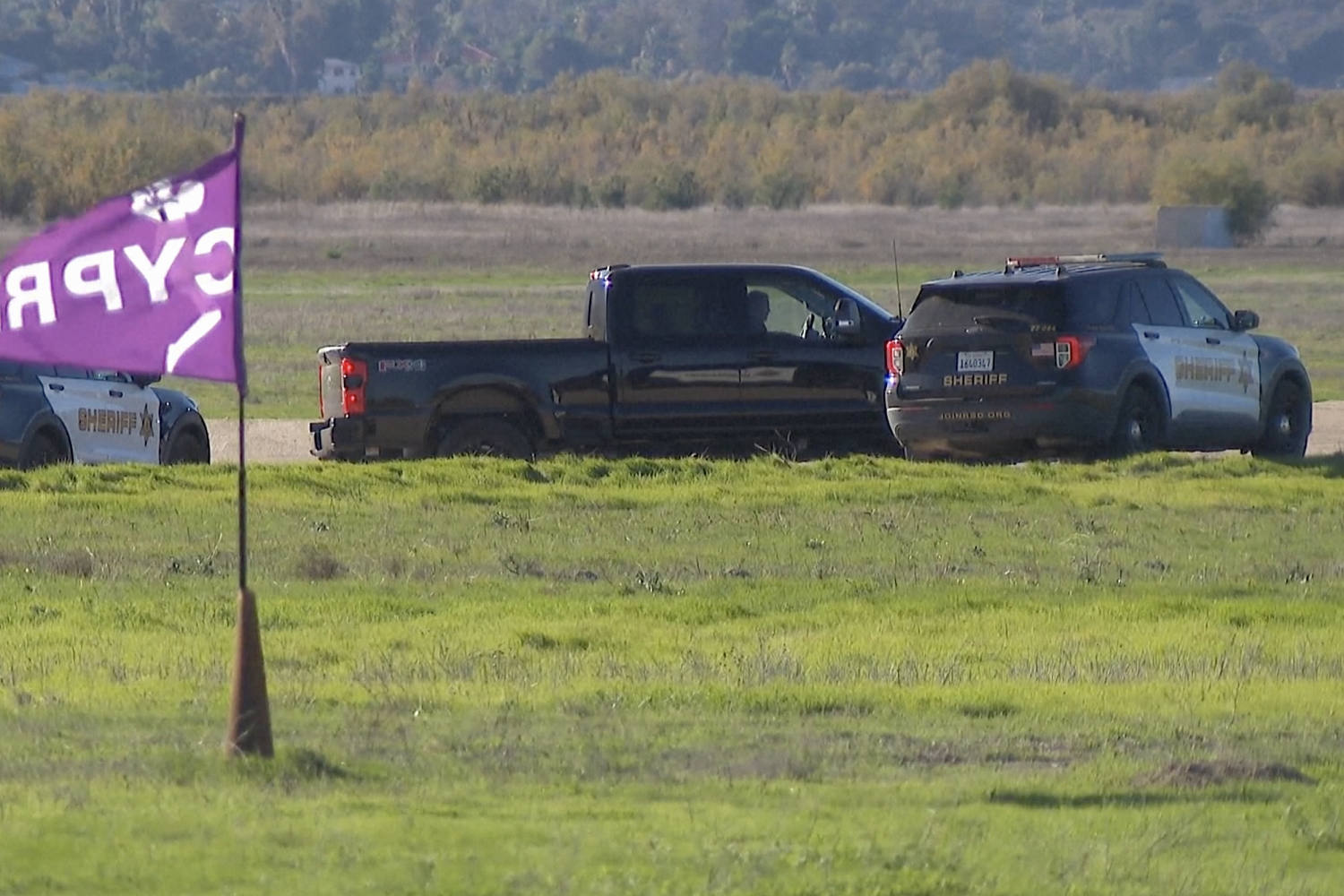
When two skydivers collided in the skies over Southern California—a fatal mid-air impact that reduced a routine weekend jump at a bustling desert drop zone into a quiet tragedy of tangled nylon and silent radios—the public reaction followed a familiar, predictable script. News tickers flashed the bare, clinical facts. Two jumpers. One collision. A fall from altitude. Comment sections immediately filled with the easy moralizing of people who keep both feet firmly planted on asphalt. They knew the risks. Why jump out of a perfectly good airplane? Gravity always wins.
Those reactions miss the entire point. They treat a catastrophic failure of spatial geometry as a simple cautionary tale about thrill-seeking.
To understand how two experienced human beings can occupy the exact same cubic meter of empty sky when they have thousands of square miles of desert air to share, you have to understand the invisible architecture of a drop zone. You have to step inside the door of a climbing Twin Otter at thirteen thousand feet, smell the sharp tang of burnt aviation fuel mixing with cold mountain air, and see what happens when human perception collides with unforgiving physics.
The Illusion of the Open Sky
Let us step onto the flight line for a moment. Consider a hypothetical Saturday morning at a busy Southern California airfield—places like Perris or Lake Elsinore, meccas of the global skydiving community where dozens of aircraft loads climb and empty into the high desert thermals every single day.
Imagine two jumpers on the same load. Call them Elena and Marcus. Neither is a reckless novice. In the real-world incidents that haunt the United States Parachute Association safety logs—and specifically in the fatal Southern California collisions that have forced the sport to rethink its traffic patterns—the victims are rarely first-time tandem students. They are almost always licensed, passionate regulars. They own their own rigs. They log hundreds of jumps a year. They know the rules.
Elena is flying a high-performance wingsuit, or perhaps tracking horizontally across the sky with a group of four friends, trying to build a geometric formation before break-off altitude. Marcus is two groups behind her, exiting the aircraft seven seconds later, diving head-down at nearly two hundred miles an hour to catch his formation partners.
Seven seconds. On the ground, seven seconds is the time it takes to tie a shoelace or check a text message. At one hundred knots of aircraft forward speed, seven seconds translates to roughly one thousand feet of horizontal separation between exit groups.
That thousand-foot gap feels enormous when you are staring down at the patchwork quilt of brown scrubland and suburban cul-de-sacs two and a half miles below. The sky looks infinite. It looks empty.
It is neither.
I remember the first time I experienced a genuine canopy traffic scare—not a collision, just a terrifyingly close pass at three thousand feet over a sun-baked landing area. A jumper beneath me executed a sudden, unannounced three-hundred-and-sixty-degree hook turn to bleed off altitude. One heartbeat, he was a tiny speck of neon green fabric safely below my boots. The next heartbeat, his canopy flared directly across my flight path, close enough that I could see the frayed stitching on his chest strap and the wide, panicked whites of his eyes through his tinted visor. The wake turbulence from his wing collapsed the left side of my parachute with a sickening whump, dropping me thirty feet in a fraction of a second before the nylon snapped back open.
My hands shook so badly after I landed that I couldn't unbuckle my leg straps for five minutes. Nobody got hurt. There was no news report. Just a quiet, terrifying realization: in three-dimensional airspace, distance evaporates without warning.
Blind Spots in a 360-Degree World
Why does this happen? Why do two people with unobstructed views of the horizon fail to see each other until the exact millisecond of impact?
The answer lies in a brutal quirk of human visual neurology known as motion camouflage, combined with the mechanical blind spots of modern skydiving gear.
When two objects are on a genuine collision course—whether they are two fighter jets over the Pacific, two sailboats crossing a bay, or two skydivers descending toward a Southern California runway—their relative bearing to one another never changes. To Elena’s eyes, Marcus does not appear to move left or right across the background of clouds and desert floor. He stays frozen in the exact same spot in her peripheral vision. He simply grows larger.
And the human brain is notoriously terrible at detecting an object that is merely expanding in size against a static, complex background, especially when that object is wearing a dark jumpsuit against a dark ground or a white helmet against bright cumulus clouds. For the first five seconds of a closing trajectory, the approaching jumper is a pinpoint. By the time the brain registers that the pinpoint has suddenly bloomed into a human silhouette, the closing speed is often greater than one hundred miles per hour. Reaction time is zero.
Then there is the geography of the helmet and the canopy itself.
Once a parachute deploys—typically between three thousand and four thousand feet above the ground—the chaotic noise of freefall vanishes into an eerie, sudden silence. This is the moment most jumpers relax. The adrenaline spike of the exit fades into the peaceful glide back to earth.
It is also the single most dangerous phase of the jump.
Modern square parachutes are not round umbrellas drifting helplessly with the breeze; they are pressurized, semi-rigid ram-air wings capable of forward speeds exceeding thirty to forty miles per hour, and vertical descent rates that spike dramatically during turns. While hanging beneath that wing, a skydiver has a massive blind spot directly above and behind them—blocked entirely by twenty-five feet of inflated nylon—and another directly beneath their own boots.
If Jumper A is descending rapidly from above while Jumper B is gliding smoothly below, neither can see the other. They are two blind spots converging in quiet air.
What the Data Quietly Reveals
Every year, the United States Parachute Association compiles an exhaustive, sobering post-mortem of every fatality in the sport. If you read through those reports—dry, clinical paragraphs stripped of names and reduced to wind speeds, wing loadings, and altimeter readings—a startling pattern emerges.
Decades ago, skydivers died because their gear failed. Main parachutes tangled, reserve handles jammed, straps snapped. Engineering solved almost all of those problems. Today, modern skydiving equipment is a marvel of redundancy. Automatic Activation Devices—tiny barometric computers tucked inside the rig—will literally slice open a jumper's reserve container with a pyrotechnic cutter and deploy a backup parachute if the jumper is still falling too fast at seven hundred and fifty feet, even if they are completely unconscious.
We engineered the equipment failures out of the sport. What we could not engineer out was human traffic.
Today, mid-air collisions—particularly under open canopies near the landing pattern—rank among the leading causes of skydiving fatalities in North America. Over the past decade, dozens of jumpers have lost their lives not because their parachutes refused to open, but because two perfectly functioning parachutes collided at high speed two hundred feet above the grass.
Southern California carries a disproportionate share of this statistical weight, not because its pilots or jumpers are careless, but because of sheer volume. Blessed with three hundred days of clear, flyable weather a year, the region's drop zones operate like miniature international airports. On a peak weekend, a single airfield might put four or five turbine aircraft into the sky simultaneously, dropping hundreds of jumpers an hour into the same column of air.
When you compress that much human ambition into a finite cylinder of sky, the margin for error shrinks from miles to inches.
The Myth of the Death Wish
People outside the fence line always ask the same question after a tragedy like the one in Southern California: What kind of person chooses to do this?
The assumption is that skydivers are fundamentally broken—adrenaline junkies with a defective survival instinct, chasing a chemical high because normal life feels too dull.
Spend ten minutes in the packing hangar of any drop zone, and that caricature falls apart. You will find software engineers, trauma nurses, schoolteachers, retired mechanics, and college students sitting cross-legged on rubber mats, meticulously folding yards of slippery zero-porosity fabric with the quiet focus of watchmakers.
Skydiving does not attract people who want to die. It attracts people who want to be radically, undeniably awake.
In modern life, almost all of our risks are abstract, delayed, and invisible. We worry about inflation rates, cholesterol numbers, mortgage interest, and slow-moving career anxieties. You can drift through entire months on autopilot, half-present in your own body, insulated from immediate consequences by airbags, ergonomic chairs, and algorithmic feeds.
Stepping to the open door of an airplane at thirteen thousand feet obliterates that insulation in a single breath. Up there, gravity does not care about your resume, your bank balance, or your excuses. Attention is no longer a virtue; it is oxygen. For sixty seconds of freefall and five minutes under canopy, the static of the modern world goes completely dead. You are reduced to pure awareness—wind pressure on your palms, the horizon line level across your goggles, the altimeter needle sweeping steadily counterclockwise on your wrist.
That clarity is addictive. It is also fragile.
Because the very thing that makes a jump feel transcendent—the total immersion in your own flight, the effortless flow of carving through a steep turn or docking onto a multi-person formation—can subtly narrow your field of vision. Tunnel vision is the silent enemy of every pilot. You get locked onto your target, locked onto your landing spot, locked onto the pure joy of flight, and you forget to clear your airspace. You forget to look over your shoulder before turning. You trust that the sky is as empty as it feels.
The Invisible Protocols That Keep People Alive
After a fatal collision makes headlines, the grieving happens quietly behind closed hangar doors. Drop zones do not shut down in panic; they hold safety briefings. Instructors pull out whiteboards, draw landing patterns in red and blue marker, and walk through the exact geometry of what went wrong.
If you want to understand how the sport survives its own risks, look at the obsessive culture of self-policing that defines modern drop zones. Survival in high-density airspace depends entirely on everyone agreeing to obey invisible, painted lines in the sky:
- Exit separation discipline: Waiting an extra three or four seconds at the door when upper-level winds are light, refusing to let the impatience of the plane push you out on top of the group ahead.
- The sanctity of the landing pattern: Flying predictable, squared-off downwind, base, and final legs—just like commercial airliners—so every canopy in the sky moves in the same direction rather than crisscrossing randomly over the turf.
- Dedicated high-performance zones: Separating experienced pilots flying aggressive, high-speed swooping parachutes into entirely different landing areas from standard canopies, keeping radically different closing speeds out of the same corridor.
- Eyes on a swivel: The cardinal rule drilled into every student from jump number one—look before you turn, check your blind spots twice, and assume someone is always lurking directly beneath your feet.
None of these rules are enforced by traffic lights or radar controllers. They rely entirely on trust. Every time you pull your ripcord, you are entering a silent social contract with thirty other human beings suspended in the air around you. You are betting your life that the person three hundred feet above you is looking down, and they are betting their life that you will not make a sudden, erratic turn into their path.
Most weekends, across thousands of jumps nationwide, that contract holds. People land, gather their nylon in their arms, laugh off the adrenaline, and manifest for the next load.
What Remains When the Dust Settles
When that contract breaks—when two trajectories intersect over a Southern California airfield and two lives end in a fraction of a second—there is no villain to blame. There is no defective part to recall, no reckless pilot to prosecute, no simple lesson that ties the grief up in a neat moral bow.
There is only the unbearable weight of a tiny variable. A five-second miscalculation at the exit door. A sudden shift in upper-level winds. A turn initiated half a heartbeat before a head check finished.
The next morning, the sun still rises over the desert floor, burning off the coastal haze and warming the asphalt runway. The turbine engines still spool up with their familiar, high-pitched whine. Jumpers still walk out to the boarding area, tightening their chest straps, tapping each other’s helmets in the universal ritual of mutual inspection, and climbing back into the fuselage.
They do not go back up because they have forgotten what happened. They go back up because they understand the bargain they made with the sky—and as the airplane banks toward altitude, every single pair of eyes on board presses a little closer to the plexiglass window, searching the empty blue for anyone else sharing the air.