Water doesn't just rise in towns like Hagonoy and Calumpit; anger does too. Billions vanish into public works accounts while high tides swallow community streets. If you look closely at the paperwork, the numbers tell a story of grand ambition. Walk down the actual flooded barangays, though, and you find a very different reality.
Where Did the Billions Go
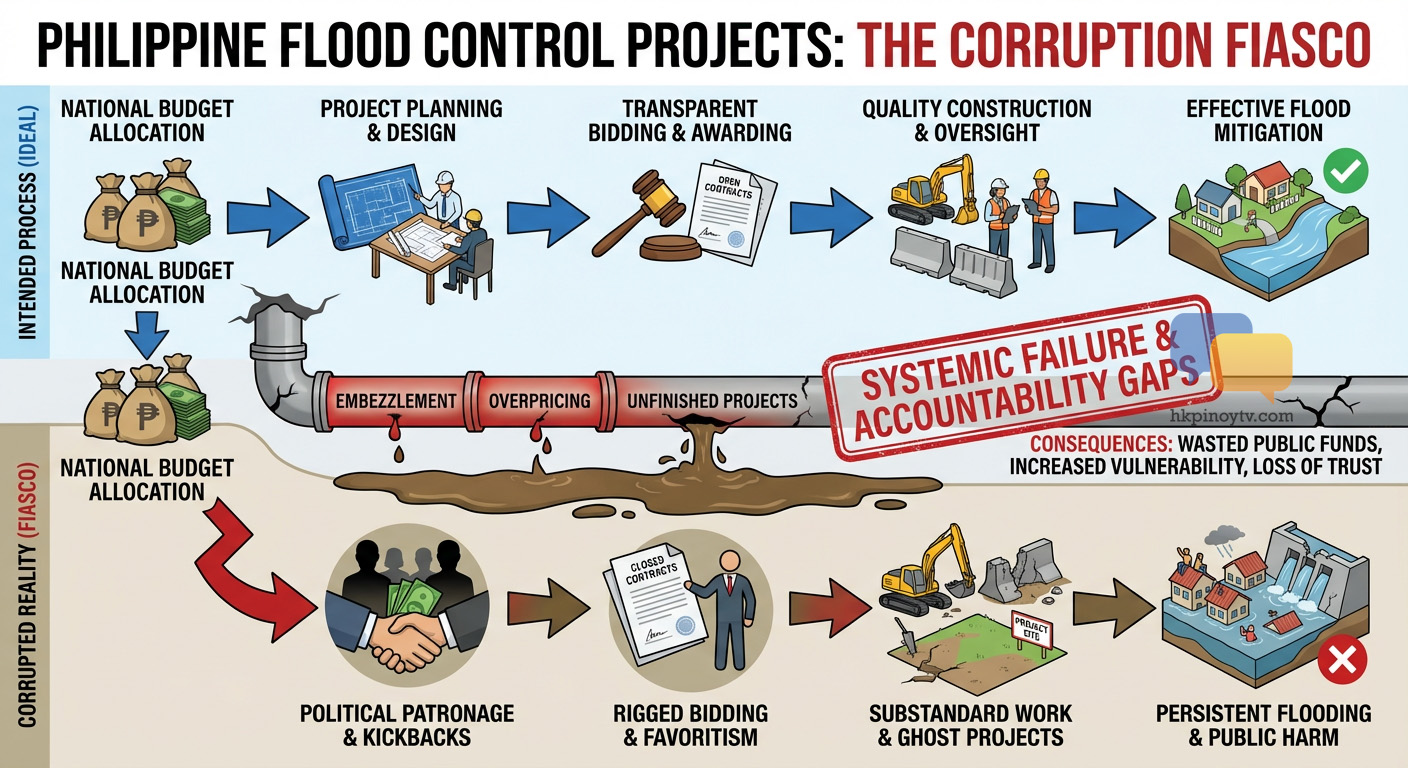
For years, the national budget pumped massive capital into Philippine flood control funds. Millions of residents across low-lying regions expected dykes, pumping stations, and seawalls. Instead, they got waist-deep water every monsoon season. Investigations revealed that a staggering portion of the multi-billion-peso allocations evaporated long before breaking ground. You might also find this related coverage insightful: The Sky Above the Strait.
Ghost projects exist strictly on paper. Contractors collect payouts for infrastructure that was never built, or they slap together substandard concrete that crumbles at the first tropical storm. When heavy downpours hit, these structural failures leave entire neighborhoods helpless.
The Anatomy of Public Works Corruption
How do multi-million-peso drainage systems vanish? It comes down to a cozy arrangement between contractors, local bureaucrats, and national power brokers. Licenses get leased out, meaning small-time builders with zero capacity acquire multi-billion-percent government jobs using borrowed prestige. Kickbacks routinely skim up to a quarter or more right off the top, leaving meager funds for actual construction materials. As reported in detailed reports by TIME, the implications are worth noting.
- Ghost Infrastructure: Projects marked 100% complete that remain completely unbuilt in reality.
- Monopoly Control: A tiny fraction of accredited contractors manage to secure the lion's share of regional awards.
- Substandard Output: Using cheap steel and thin asphalt to pocket the remaining budget differences.
Senate inquiries and Ombudsman probes exposed how routing unprogrammed funds into congressional districts created a steady pipeline for plunder. Lawmakers insert pet projects into national budgets, ensuring their preferred engineering firms bag the contracts.
Communities Demand Real Accountability
Citizens aren't waiting quietly for institutional reform anymore. Local movements are organizing, gathering evidence, and pushing back against systemic theft. Groups across Bulacan and Central Luzon point out the bitter irony of surviving climate disaster while bureaucrats live off stolen public safety money.
The path forward requires transparency that goes beyond temporary Senate hearings. Communities need independent oversight bodies to track every peso from national treasury disbursement down to local cement delivery. Until public office holders face actual prosecution and asset forfeiture, the cycle of washed-out promises will repeat with every incoming typhoon season.
Bulacan flood corruption update
This video discusses the widespread public outrage and ongoing investigations regarding missing flood control funds in affected Philippine communities.
http://googleusercontent.com/youtube_content/1