A departure board at Heathrow is usually a rhythmic thing. The mechanical click-clack or the digital flicker of "On Time" creates a steady pulse, a heartbeat of global connectivity. But on a Tuesday evening, that pulse skipped. Then it stopped. In Terminal 4, the green text began to bleed into a sea of red.
Canceled. Delayed. See Information Desk.
For Sarah, a freelance photographer headed to a wedding in Amman, the change wasn't just a logistical hiccup. It was the sudden realization that the air above the Middle East—a space we usually treat as a transparent, infinite highway—had suddenly solidified into a wall. The United States had launched a series of retaliatory strikes against Iranian-backed interests in Iraq and Syria. In an instant, the invisible corridors of the sky became a tactical map of "no-go" zones.
The headlines called it a "US Blitz." For the thousands of British travelers staring at their phones, it was the sound of vacations shattering and family reunions dissolving into a series of frantic phone calls.
The Cartography of Fear
When we fly from London to Dubai or Doha, we rarely think about the geography of the earth 35,000 feet below. We are cocooned in pressurized tubes, sipping gin and tonics while hurtling over ancient fault lines of human conflict. We trust the pilots, and more importantly, we trust the "Notice to Airmen" (NOTAMs) that dictate where it is safe to breathe.
The Foreign, Commonwealth & Development Office (FCDO) doesn't issue "Do Not Travel" warnings lightly. When they do, it’s because the risk profile has shifted from "theoretical" to "kinetic."
The strikes, a response to a drone attack that killed three US service members in Jordan, targeted over 85 sites. These weren't just dots on a map; they were nodes in a complex web of regional tension. As the missiles flew, the risk of miscalculation rose. Remember 2020. Remember Ukraine International Airlines Flight 752, shot down by Iranian air defenses during a period of high alert. That ghost haunts every flight dispatcher in the UK today.
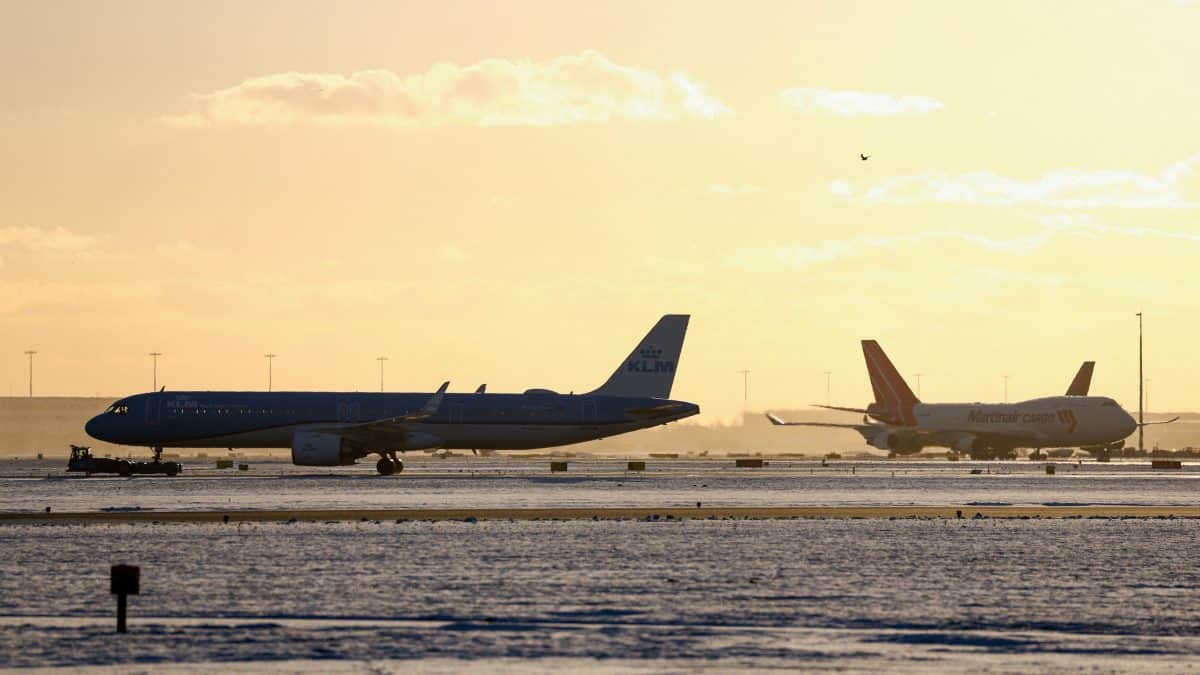
Airspace is a finite resource. When you close the skies over Iraq, Syria, and parts of Jordan, you create a bottleneck. It’s like closing the M25 on a Friday afternoon and expecting the side streets to handle the load. Flights to the UAE, Saudi Arabia, and India suddenly have to "dog-leg" around the conflict zones. They fly further south over Egypt or north over Turkey.
Consider the math of a redirected flight. A three-hour detour doesn't just mean a missed connection. It means tens of thousands of pounds in extra fuel. It means flight crews hitting their legal "on-duty" limits and being forced to ground the plane in a third country. It means the delicate machinery of global travel begins to grind its gears until they smoke.
The Human Cost of a Red Line
Think of a hypothetical traveler named David. He’s spent three years saving for a retirement trip to Jordan—to see Petra, the rose-red city. He’s at the gate when the notification pings. The British government has updated its advice: "Do not travel to areas near the borders with Iraq and Syria."
David isn't a geopolitical analyst. He doesn't care about the intricacies of the Islamic Resistance in Iraq. He cares about the non-refundable deposit on his desert camp. He cares about the fact that his travel insurance might now be void because he’s flying into a zone that his government has explicitly labeled as dangerous.
This is the hidden tax of geopolitical instability. It is a tax on our mobility and our sense of safety.
British Airways, Virgin Atlantic, and regional giants like Emirates and Qatar Airways have spent decades perfecting the "hub and spoke" model. They turn cities like London and Dubai into the lungs of the world, inhaling and exhaling travelers. But those lungs require clear air. When the US blitz began, those airlines had to make split-second decisions. Do we fly? Do we cancel?
The logistics are staggering. If you are halfway to Singapore and the airspace closes behind you and in front of you, where do you put the 300 people on board?
The Fragility of the "Open Sky"
We have grown spoiled by the era of the low-cost carrier and the long-haul miracle. We view the sky as a utility, like water or electricity. But the sky is sovereign. It belongs to the people below it, and when those people are at war, the sky becomes a weapon or a shield.
The current situation isn't just a "Middle East problem." It’s a British problem. The UK has deep historical, economic, and military ties to the region. RAF Akrotiri in Cyprus is a vital staging ground. When the region catches fire, the smoke reaches the departure lounges of Gatwick and Manchester.
Safety is an illusion maintained by rigorous data and cautious men and women in windowless rooms in Swanwick. They watch the radar. They see the "blips" that represent thousands of souls. And when a blitz occurs, they see the map turn into a minefield.
The FCDO’s "Do Not Travel" warning is a legal and moral lever. It allows airlines to cancel flights without being sued into oblivion, and it allows travelers to trigger their insurance—if they’re lucky. But for many, it’s a source of profound confusion. "Is it safe to go to the beach in Dubai if there are strikes in Iraq?" the forums ask.
The answer is rarely a simple yes or no. It is a "yes, but." Yes, but the flight path might be longer. Yes, but the GPS might be jammed. Yes, but the atmosphere in the hotel might be clipped by the flickering news on the television in the lobby.
The Long Way Home
The ripples of the US strikes extend far beyond the immediate targets. They affect the price of the oil that fuels the planes. They affect the diplomatic weight of the British passport. Most of all, they affect our collective psychology.
The "Travel Advice" page on the government website is the most boring, most terrifying document in the world. It is written in the dry, rhythmic prose of the civil service, yet it contains the power to end a honeymoon or delay a funeral. It warns of "increased tension," a phrase that feels light until you are the one sitting in an airport terminal, watching the sun set, wondering if you’ll be sleeping on a plastic chair tonight.
We are living in a time where the maps are being redrawn in real-time. The "US Blitz" is a reminder that the world is small, and the paths we take through it are narrower than we think.
Sarah eventually got a flight, but not to Amman. She went home. She sat in her flat in London and watched the news footage of the strikes—the grainy, infrared explosions in the desert night. It felt worlds away, yet it was the exact reason she was sitting on her sofa instead of a balcony in Jordan.
The sky isn't empty. It’s a crowded, complex, and currently bruised territory. For the British traveler, the message is clear: the world is open, until the moment it isn't. And when the red lights flash on the departure board, all the planning in the world can't compete with the sudden, violent gravity of history.
The planes are still flying, of course. They always do. But they are taking the long way around, skirting the edges of the fire, carrying their passengers through a world that feels just a little bit wider, and a lot less certain, than it did yesterday.