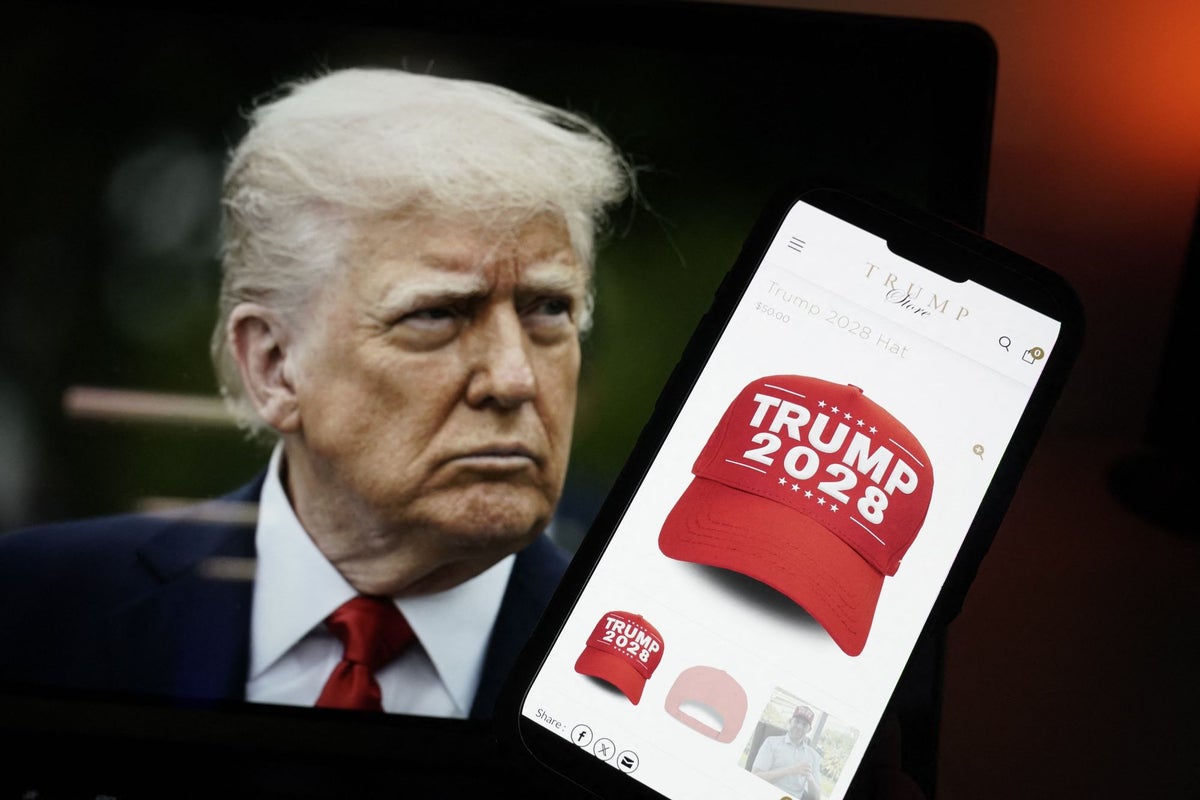
Donald Trump isn't just the President; he’s a walking, talking e-commerce powerhouse. While most world leaders spend their downtime focused on legacy or golf, Trump has spent his return to the White House scaling a retail empire that would make a Silicon Valley startup blush. We’re talking about more than 600 unique products launched or peddled since he took the oath again. This isn't just a side hustle. It's a calculated $8 million windfall that blurs the line between public service and private profit.
You’ve likely seen the headlines about the gold sneakers or the $60 Bibles. But when you look at the raw data, the sheer volume of "Trump-branded" everything is staggering. He’s selling a lifestyle, a political identity, and a piece of the MAGA movement, all wrapped in a shipping label. It’s a masterclass in direct-to-consumer marketing that utilizes the highest office in the land as a billboard.
The Massive Scale of the Trump Digital Storefront
If you think this is just a couple of red hats and some t-shirts, you’re missing the bigger picture. Since January 2025, the sheer variety of items hitting the market is unprecedented for a sitting president. We've tracked everything from high-end watches to digital trading cards and even physical pieces of the suit he wore during his 2024 debate.
The strategy is simple. Flood the zone. By offering over 600 products, he ensures there's a price point for every supporter. You want a $20 sticker? It's there. You want a $100,000 "Victory" tourbillon watch? He’s got that too. This isn't a retail strategy built on inventory depth; it's built on constant novelty. The "drop" culture usually reserved for brands like Supreme or Nike has been adopted by the White House.
He’s not just selling merchandise. He’s selling access and a sense of belonging. When you buy a "Trump" product, you aren't just a customer; you're a stakeholder in his personal brand. That psychological connection is why he’s managed to pull in $8 million in such a short window. Most of this money flows through licensing deals—meaning he doesn't even have to manufacture the goods. He just lends his name and collects the check.
Why the $60 Bible and Gold Sneakers Actually Work
Critics laughed when Trump announced the "God Bless the USA" Bible or the "Never Surrender" high-top sneakers. They called it tacky. They called it "unpresidential." But from a business perspective, it was genius. He understands his audience better than any consultant in D.C.
The Bible wasn't just a book. It was a cultural signifier. It signaled to his base that he shared their values at a time when the media was questioning his character. The sneakers? Those were a play for a younger, more urban demographic, or at least the optics of it. They sold out in hours. These products serve as lightning rods for media attention. Every time a news anchor mocks a product, it’s free advertising.
He’s effectively hacked the attention economy. He creates a product that is inherently "meme-able," waits for the outrage, and then watches the sales figures climb as his supporters buy the items to "own the libs." It’s a feedback loop that fuels his bank account and his political momentum simultaneously.
Navigating the Ethical Gray Area of Presidential Merchandising
Let’s be real. This is uncharted territory. Traditionally, presidents have gone to great lengths to separate their personal finances from their official duties. We’ve seen the "blind trust" model used by previous administrations to avoid even the appearance of a conflict of interest. Trump didn't just break that mold; he smashed it with a sledgehammer.
The $8 million earned since his return to office raises serious questions about the emoluments clause and general government ethics. If a foreign entity buys 500 pairs of gold sneakers, is that a retail transaction or an attempt to curry favor with the leader of the free world? The lack of transparency in these private businesses makes it nearly impossible to track who is actually putting money into the President’s pocket.
Government ethics experts, including those from organizations like Citizens for Responsibility and Ethics in Washington (CREW), have pointed out that this creates a massive loophole. When the President is the brand, every policy decision could theoretically impact the value of his merchandise. If he slaps tariffs on a certain country, does that help or hurt the company manufacturing his shirts? These aren't just academic questions anymore. They're part of the daily reality of the 2026 political landscape.
The Licensing Loophole and the $8 Million Payout
Trump’s wealth isn't coming from him personally packing boxes in the basement of the White House. The vast majority of this $8 million comes from licensing. He signs a deal with a third-party company—like CIC Ventures LLC or 45Footwear—and allows them to use his likeness.
This model is low-risk and high-reward. He doesn't have to worry about supply chain issues, shipping delays, or customer service. He just cashes the royalty checks. This structure also provides a layer of legal insulation. If a product is defective or a company goes bust, it’s not "Trump" the President who failed; it’s the licensee.
It’s a brilliant way to monetize the Presidency without the overhead of running a traditional retail business. He’s turned the Oval Office into a licensing powerhouse. Every speech, every tweet, and every public appearance serves as a marketing event for the broader Trump brand. When he shows up to a rally wearing a specific hat, that hat becomes the best-selling item on his site within ten minutes.
How the 600 Product Strategy Changes Politics Forever
We’ve officially entered the era of the "Influencer-in-Chief." Trump has proven that a political movement can be funded and sustained through consumerism just as much as through traditional donations. Why ask for a $50 campaign contribution when you can sell a $50 hat and give the supporter something tangible in return?
This shift has huge implications for how future candidates will run their campaigns. We’re likely to see more politicians launching their own lifestyle brands, podcasts with paid subscriptions, and exclusive digital content. The "Trump Model" shows that political power is the ultimate marketing tool.
Don't expect this to stop. As long as there's a market for "Trump" branded goods, the products will keep coming. We’ll likely see more "limited edition" drops and high-ticket items as the administration continues. The blur between the public servant and the private businessman isn't a bug in his system—it's the primary feature.
If you're looking to understand the modern political economy, stop looking at the polls and start looking at the "Sold Out" labels on the Trump store. That’s where the real power—and the real money—resides. To see the full impact, track the quarterly financial disclosures that are required by law, though be prepared to dig through layers of LLCs to find the truth. The next step for any observer is to watch the FEC filings closely to see how much of this "private" profit ends up supporting political operations or legal defenses. The line is thinner than you think.
Keep an eye on the upcoming NFT drops and specialized memorabilia surrounding the 2026 midterms. It’s the clearest indicator of where the movement is headed next. Don't buy into the idea that this is just about money; it’s about maintaining a constant presence in the lives—and wallets—of the American public.