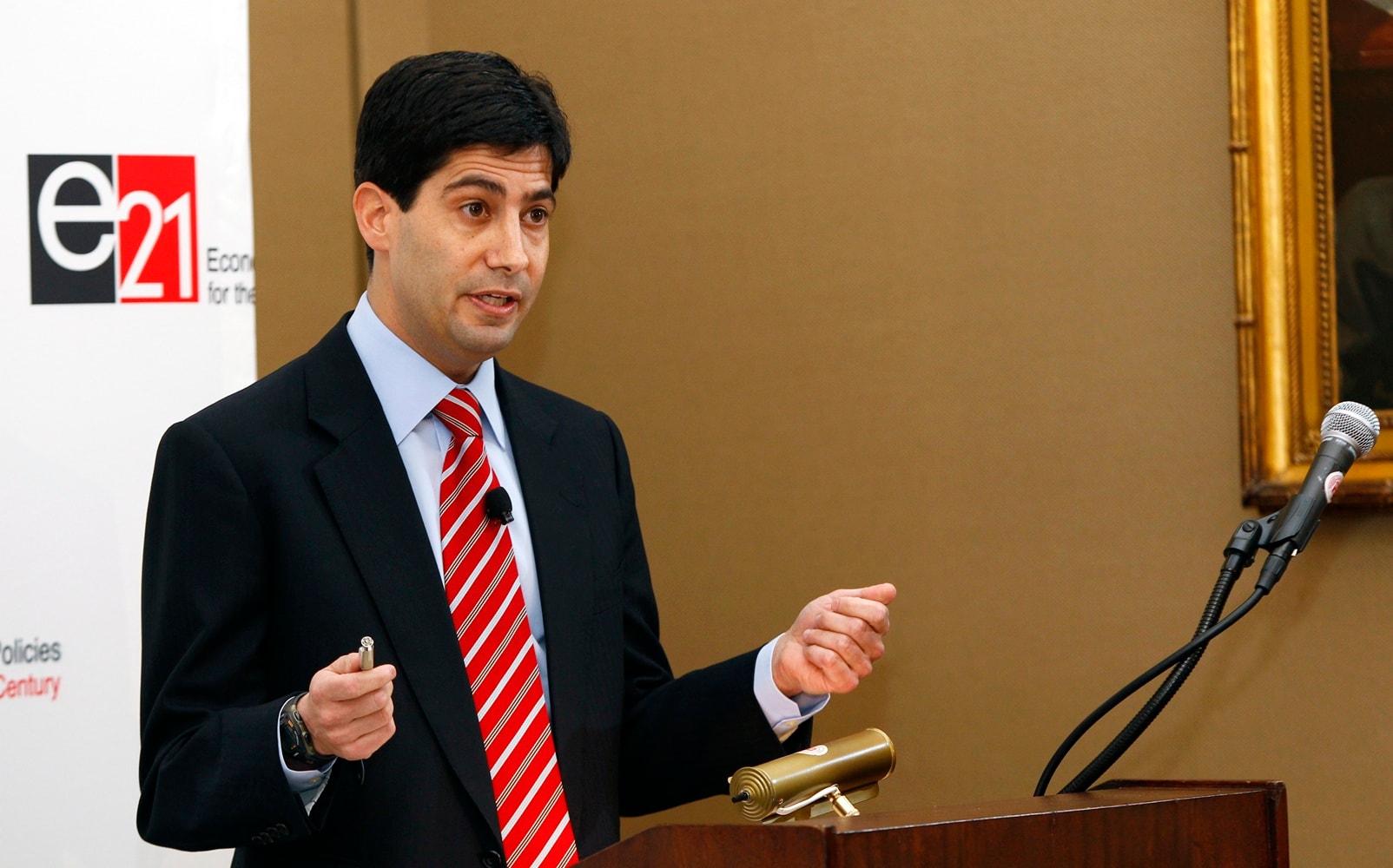
The Federal Reserve was never intended to be an ivory tower for the destitute, but the 69-page financial disclosure dropped by Kevin Warsh this week signal a fundamental shift in the central bank’s tax bracket. Warsh, the nominee to succeed Jerome Powell, has revealed a personal fortune and an marital alliance that effectively makes him the first billionaire-adjacent chair in the institution's history. While previous chairs like Powell brought private equity millions to the table, Warsh is operating on a different plane of liquidity.
His personal assets are pegged between $135 million and $226 million, a figure that would make him the wealthiest Fed leader in a vacuum. However, the real gravity of the filing lies in the shadow of his wife, Jane Lauder. As an heir to the Estée Lauder beauty empire, her personal stake is estimated at $2.5 billion. Together, they represent a level of concentrated wealth that the Senate Banking Committee has never had to parse when vetting the person who controls the price of money.
The Druckenmiller Connection
The most scrutinized line items in the Warsh disclosure aren't just the zeros, but the sources. Warsh has spent much of the last decade as a high-level advisor to Stanley Druckenmiller, the legendary hedge fund manager. The filings show Warsh received $10.2 million in consulting fees from Duquesne Family Office in 2025 alone.
This isn't a standard advisory gig. It’s a deep-tissue integration into the world of macro-trading. Warsh holds two positions in the Juggernaut Fund LP, each valued at "over $50 million"—the highest bracket the government reporting forms allow. Because of confidentiality agreements, the underlying assets of these funds remain shielded from public view. We know the value, but we don't know the bets. For a man who will soon decide whether to hike or cut interest rates, the lack of transparency regarding what exactly is inside those $100 million-plus vehicles is a glaring target for the April 21 confirmation hearings.
A Portfolio of Tomorrow and Yesterday
Warsh’s disclosure reads like a "who’s who" of the modern economy, blending old-world board seats with frontier tech. He holds significant stakes in Coupang, the South Korean e-commerce giant, where he has served as a director since 2019. His holdings there are valued between $2 million and $10 million.
Then there is the venture side. Warsh disclosed investments in:
- SpaceX: Elon Musk’s private aerospace juggernaut.
- Polymarket: The crypto-based prediction market that skyrocketed in profile during the 2024 election.
- Various AI and Cryptocurrency startups: Over 60 individual assets that reflect a pivot toward the digital frontier.
The sheer volume of these holdings creates a logistical nightmare for ethics officials. Warsh has pledged to divest these assets if confirmed, but the process of untangling himself from private, illiquid stakes like SpaceX isn't as simple as selling 100 shares of Apple. It requires finding buyers for private equity interests and potentially creating blind trusts that, in the eyes of his critics, are rarely truly blind.
The Estée Lauder Shadow
While Warsh’s $200 million is the focus of the "investigative" headlines, Jane Lauder’s $2.5 billion is the structural reality. She holds more than **$1 million in Estée Lauder Class A stock** and significant blocks of Class B stock, which carry superior voting rights. Beyond the beauty empire, her portfolio includes over 30 municipal bond positions, each worth more than $1 million.
This creates a unique "optics trap." The Fed chair’s words can move markets in seconds. If Warsh speaks and the dollar strengthens, or if consumer discretionary spending forecasts shift, the Lauder family fortune—built on global luxury retail—vibrates in response. Warsh isn't just a regulator; he is a peer to the very elite whose portfolios are most sensitive to Fed policy.
| Nominee | Estimated Wealth (Entry) | Background |
|---|---|---|
| Alan Greenspan | ~$8M | Consultant |
| Ben Bernanke | ~$2M | Academic |
| Jerome Powell | ~$55M | Private Equity |
| Kevin Warsh | **$2B+ (Combined)** | Wall Street / Heir |
The "Neutrality" Problem
The argument for Warsh is that his wealth makes him "un-buyable." Supporters claim that someone with a billion-dollar household doesn't need to curry favor for a post-Fed payout. He has already "won" the game of capitalism.
The counter-argument is more cynical. Critics suggest that a person who exists entirely within the stratosphere of the 0.01% cannot possibly maintain the "common man" perspective required to manage the "dual mandate" of maximum employment and stable prices. When Warsh considers a rate hike that might cool the housing market or tighten credit for small businesses, he does so from a Manhattan residence and a social circle where those pressures are theoretical, not existential.
The Divestiture Hurdles
Divestment is the standard fix for conflicts, but Warsh’s portfolio is particularly thorny. He has listed THSDFS LLC, a series of 24 different positions ranging from $15,000 to $5 million each. These are often complex, early-stage investments with lock-up periods.
If the Senate demands a "clean" entry, Warsh may have to offload these at a significant discount or transfer them into structures that remain under the broader Lauder family umbrella. This raises the question of whether a Fed chair can ever truly be "divested" when their spouse’s family is one of the most powerful corporate dynasties in America.
Warsh has the technical chops. He was the youngest Fed governor in history during the 2008 crisis and acted as a key liaison to Wall Street. But 2026 is not 2008. The public mood has soured on the "revolving door" between the central bank and the hedge fund elite.
The upcoming hearing won't just be about inflation targets or the "dot plot." It will be an interrogation of whether the Federal Reserve should be led by a man whose personal balance sheet is a microcosm of the very markets he is tasked to police. Every decision Warsh makes will be viewed through the lens of those 69 pages of disclosures. He is no longer just an economist; he is a symbol of the concentrated financial power that the Fed is supposed to keep in check.
The Senate must now decide if his expertise is worth the baggage of a two-billion-dollar household.