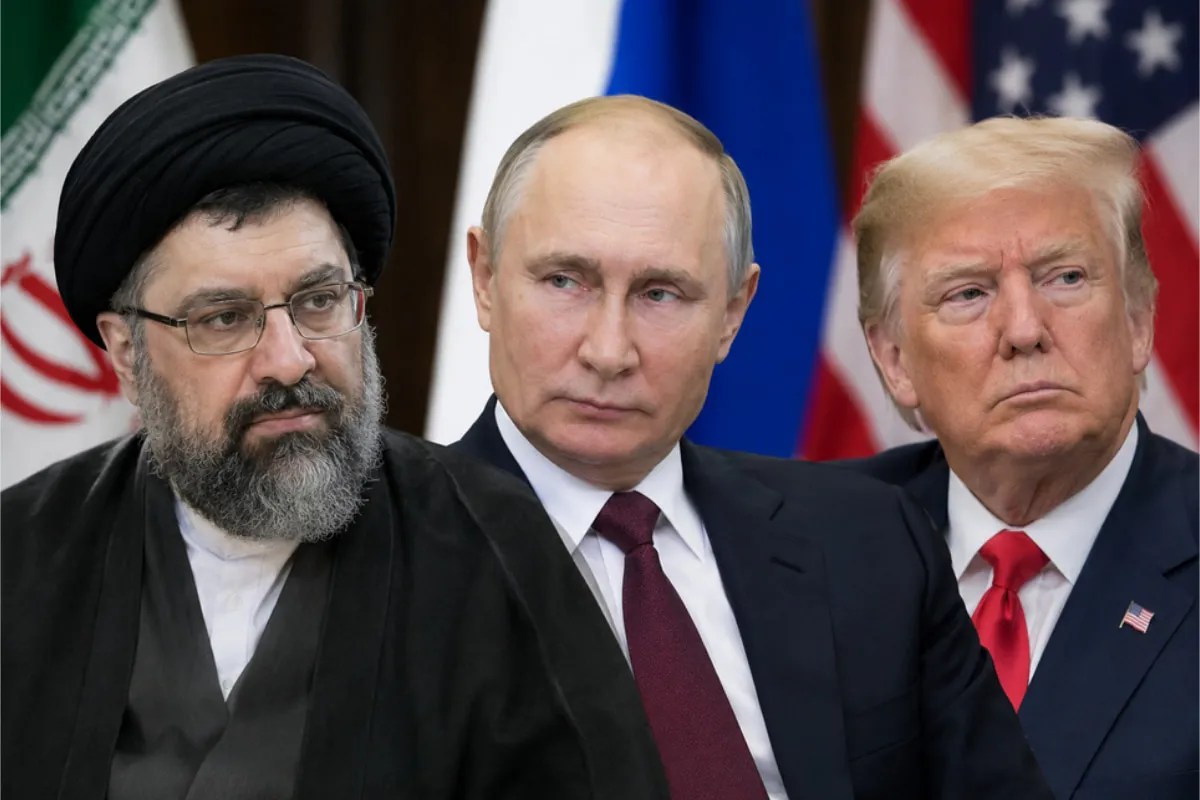
Everybody loves a good diplomatic fairy tale. The conventional narrative suggests that Moscow is sitting in the catbird seat, perfectly positioned to broker a historic détente between Washington and Tehran. Analysts in comfortable think tanks nod sagely, arguing that Russia's warm ties with Iran and its complex standoff with the United States make it the ideal honest broker. It is a neat, lazy consensus that crumbles the moment you look at actual geopolitical incentives. Moscow has zero interest in solving the underlying friction between the United States and Iran. In fact, a permanent thaw between those two capitals would be a strategic disaster for the Kremlin.
Let us dismantle the core myth right away. The standard line is that Russia acts as a stabilizing bridge in the Middle East. I have spent years tracking back-channel diplomacy, and I can tell you that states do not mediate out of the goodness of their hearts or a sudden yearning for global harmony. They mediate to extract rents, maintain leverage, and keep adversaries off-balance. Russia does not want a grand bargain. It wants perpetual, managed tension. You might also find this connected article interesting: Why Digital Genetic Data Is the Next Battleground for Indian Farming and Science.
The Rentier State of Geopolitics
To understand why Moscow's mediation pitch is a hollow exercise, look at the economics of isolation. Since Western sanctions hammered the Russian economy, Moscow has relied heavily on alternative trade corridors, military exchanges, and sanctions-evasion networks built alongside Tehran.
When Iran is fully engaged with the West, buying commercial aircraft, integrating into global financial systems, and exporting oil directly to European markets, its reliance on Moscow plummets. Tehran looks west, not north. A normalized Iran has options. An isolated Iran has only one major security patron left standing with a veto at the United Nations Security Council. As highlighted in recent coverage by BBC News, the effects are significant.
Therefore, every time Moscow offers its services as a mediator, it is playing a classic double game. It dangles the prospect of restraint in front of Western diplomats while simultaneously deepening military and intelligence cooperation with Tehran. The objective is not resolution. The objective is relevance. As long as Washington needs someone to talk to Tehran, Moscow remains a mandatory stop on the diplomatic circuit.
The Myth of the Neutral Peacemaker
An honest broker requires neutrality. Show me a neutral party in this equation, and I will show you a map drawn by someone who skipped history class.
Russia's involvement in the Middle East is transactional to its core. Moscow trades air defense technology for drones, shares intelligence, and coordinates naval patrols in the Caspian and the Gulf. These are not the actions of a disinterested referee trying to clean up the neighborhood. These are the actions of a co-belligerent in a shadow war against Western economic dominance.
Imagine a scenario where a sudden diplomatic breakthrough occurs, sanctions on Iran are permanently lifted, and foreign direct investment floods back into Tehran. Overnight, Russia loses its monopoly on supplying sanctioned goods to the Iranian market. It loses its privileged discount on Iranian energy exports. More importantly, it loses a primary wedge issue that it uses to divide Washington from its European and regional allies.
Why would any rational strategist in the Kremlin cut the throat of their own geopolitical leverage? They wouldn't.
Dismantling the People Also Ask Fallacy
If you plug this topic into a search engine, the predictable queries pop up immediately: Can Russia successfully pressure Iran into a nuclear compromise? Will Washington accept Moscow's terms for regional stability?
The premise of both questions is fundamentally flawed. They assume that Russia has coercive leverage over Iran. It does not. Tehran is fiercely nationalistic, historically suspicious of foreign interference from the north just as much as from the west, and fully aware of its own regional weight. Iran does not take orders from Moscow. At best, they share a temporary alignment of convenience against a common adversary.
When analysts ask if Russia can force a deal, they misunderstand the power dynamics. Moscow can nudge, it can supply hardware, and it can amplify diplomatic posturing at the UN. But it cannot compel Tehran to sign away its regional security architecture any more than Washington can bomb it into submission. The relationship is transactional, transactional, transactional.
The Real Game Being Played
Stop looking at the diplomatic theater in Geneva or Vienna and start looking at logistics hubs, shipping lanes, and payment rails.
The real power play is about who controls the fracture lines of the global economy. By maintaining a monopoly on mediation, Russia ensures that the communication channel runs through its capital. It positions itself as the tollbooth on the road to Middle Eastern stability. Every conversation about de-escalation reinforces the fiction that Moscow is indispensable to global security.
We have seen this playbook before. In various regional conflicts, powers posture as peacebuilders while quietly weaponizing the chaos. The moment you mistake a pyromaniac for a firefighter is the moment you deserve to get burned.
If Washington actually wanted a breakthrough with Tehran, outsourcing the diplomacy to a Kremlin eager to keep the West bogged down in perpetual crisis is the single most counterproductive move imaginable. And if Tehran thinks Moscow is looking out for Iranian interests ahead of Russian ones, they are ignoring centuries of brutal imperial history.
Nobody is mediating a solution because nobody with power actually wants one. They want management. They want leverage. And until we stop buying the glossy PR of the grand mediator, we will keep mistaking the architect of the deadlock for the author of the peace.