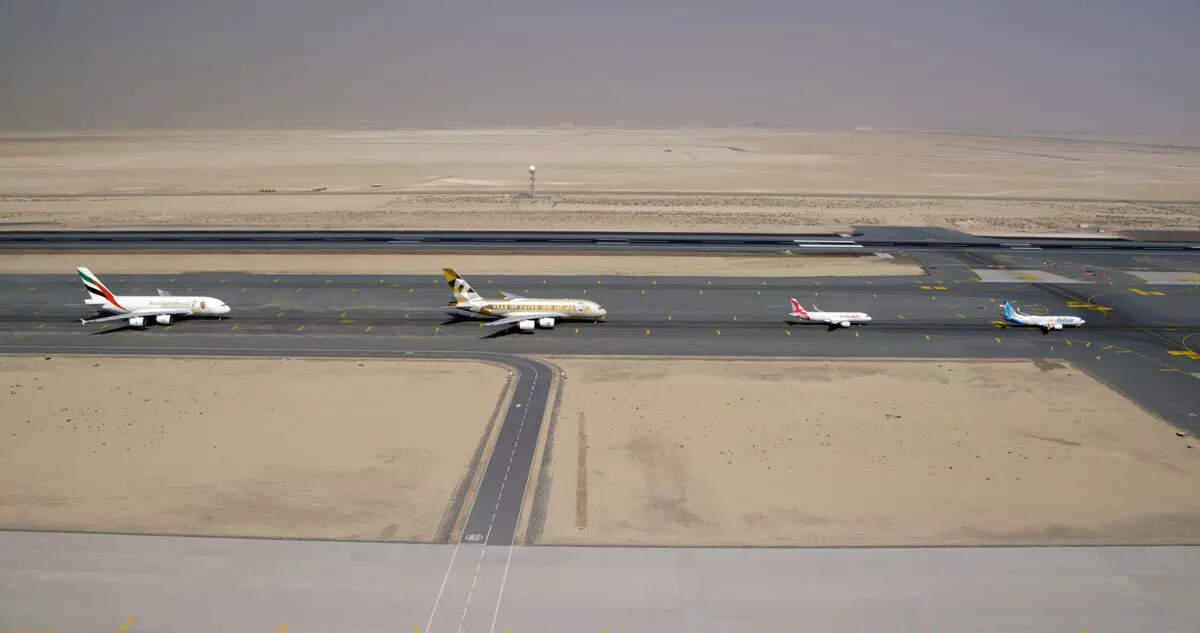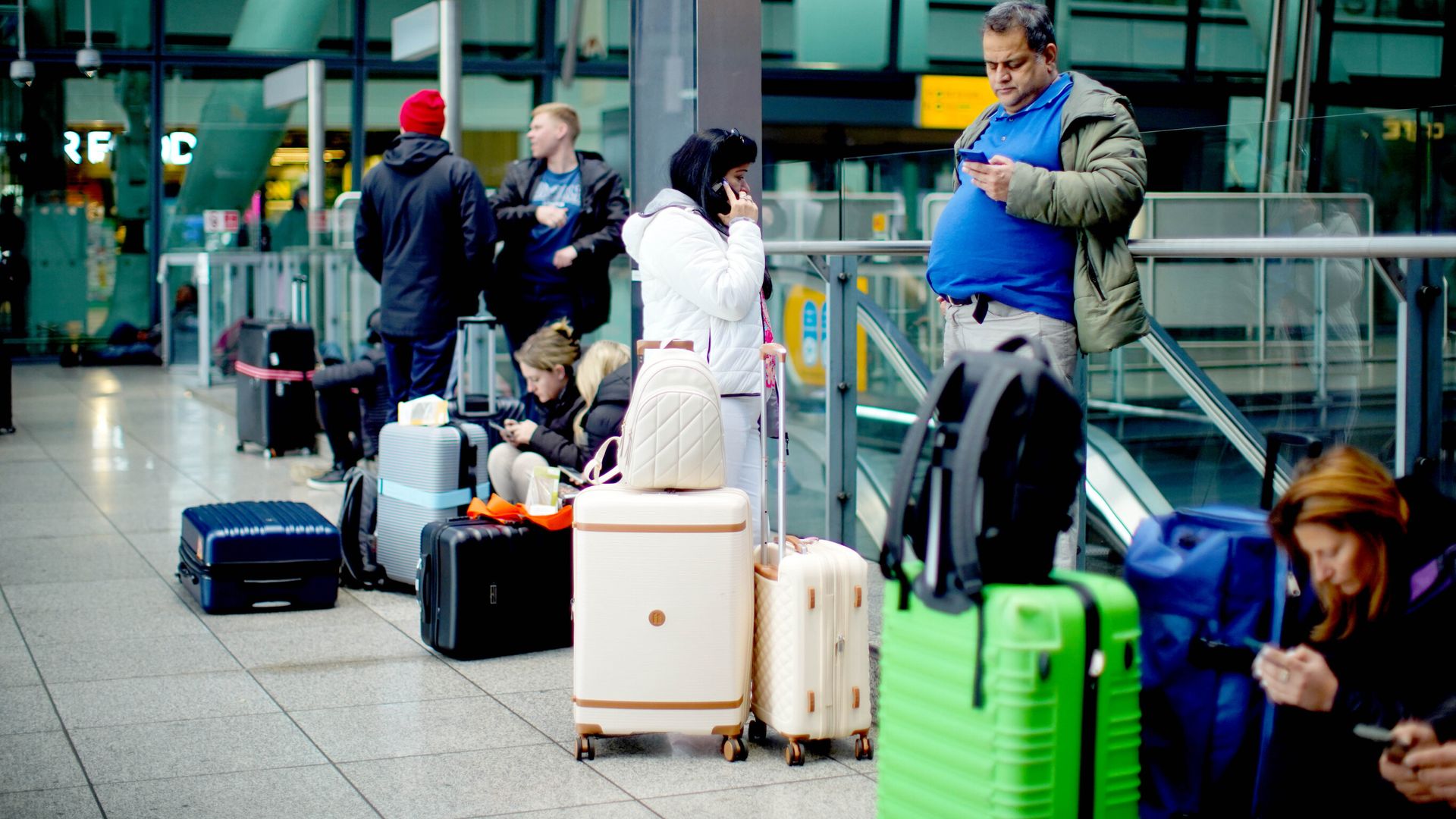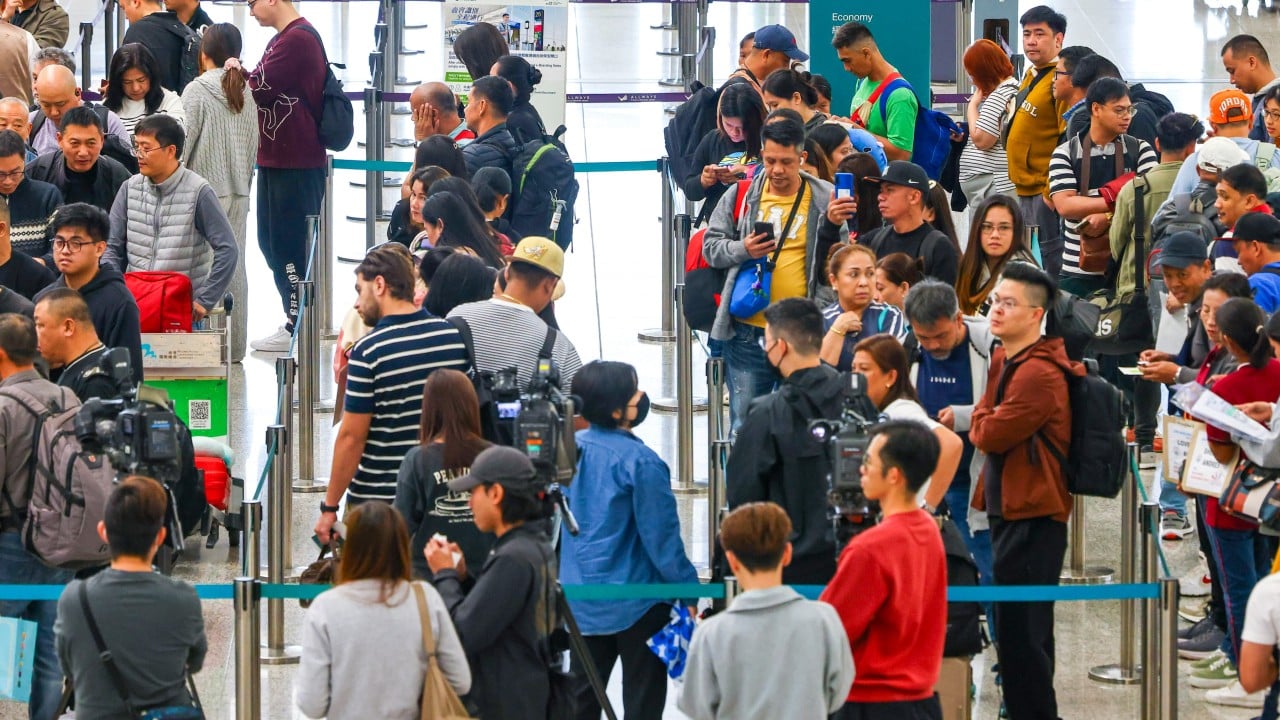
Hong Kong International Airport usually runs like a Swiss watch, but even the best-oiled machines grind to a halt when geopolitics and weather collide. If you've been following the news, you know the scene. At least 27 flights to and from the Middle East were scrapped or delayed, leaving hundreds of travelers sprawled across terminal benches. It's a mess. Honestly, it's the kind of situation that makes you rethink that "convenient" layover in Dubai or Doha when the world is on edge.
The disruption didn't just happen in a vacuum. A mix of escalating regional tensions in the Middle East and unpredictable weather patterns created a perfect storm for carriers like Emirates, Qatar Airways, and Cathay Pacific. When airspace closes or becomes a "no-go" zone, your flight path doesn't just shift by a few miles. It adds hours of fuel, creates crew timing issues, and eventually, the airline just pulls the plug on the flight entirely. Learn more on a related issue: this related article.
For the people stuck at Check Lap Kok, this wasn't just a line on a flight board. It was missed weddings, lost business deals, and the exhausting reality of sleeping on a hard plastic chair while clutching a $150 HKD voucher that barely covers a sandwich and a coffee.
Why the Middle East is the Pin in the Map
Most travelers don't spend much time thinking about "Flight Information Regions" or "Notams." You book a ticket, you show up, you expect to leave. But the Middle East serves as the literal bridge between Europe and Asia. When that bridge has a "Road Closed" sign on it, the global aviation network feels the heat instantly. More journalism by AFAR delves into similar perspectives on the subject.
Airspace over places like Iran, Iraq, and Lebanon is heavily monitored. When tensions spike, airlines have to decide: do we fly a massive detour that eats up thousands of gallons of extra fuel, or do we cancel? Often, the answer is the latter. This isn't just about safety, though that's the primary concern. It's about math. An Airbus A350 or a Boeing 777 carries a specific amount of weight. If a flight that usually takes 9 hours now takes 12 because it has to skirt around three different countries, it might not even have the fuel capacity to make it safely with a full load of passengers.
The Ripple Effect on Hong Kong Operations
Hong Kong is a premier hub. When 27 flights get the axe, it's not just 27 planes sitting idle. It’s thousands of people who now need hotel rooms, rebooking assistance, and luggage retrieval. The "ripple effect" is a term people love to use, but here, it’s a tidal wave.
- Gate Congestion: Planes that can't depart take up space. This prevents incoming flights from docking, leading to "tarmac delays" where you're stuck on a plane for two hours after landing.
- Staff Burnout: Ground crew and gate agents at HKIA are efficient, but they aren't machines. Dealing with 300 angry passengers from a cancelled Dubai flight while simultaneously trying to manage a delayed flight to Riyadh is a recipe for errors.
- Cargo Backlogs: People forget that many of these passenger planes carry tons of belly cargo. Electronics, perishables, and medical supplies destined for Middle Eastern markets are now sitting in a warehouse in Lantau.
The Reality of Being Stranded
If you're one of the "lucky" ones stuck in the terminal, the experience is a lesson in patience and bureaucracy. Airlines are legally obligated to provide some level of care, but the fine print is where they get you.
Many travelers at HKIA reported that communication was the biggest failure. It's one thing to be told your flight is cancelled. It's another to be told "check the app" for eight hours while the app remains frozen. I've seen this play out a dozen times. The airline's system gets overwhelmed, the "automated" rebooking tool fails, and suddenly you're in a physical line that stretches across the entire terminal.
Insurance and the Force Majeure Trap
Here is something nobody tells you until it's too late. Most travel insurance policies have a "Force Majeure" or "Act of War/Terrorism" clause. If your flight is cancelled due to regional conflict, your standard insurance might just shrug its shoulders.
I've talked to travelers who thought their premium credit card would cover a $400 night at the Regal Airport Hotel. They found out the hard way that because the cancellation was "outside the airline's control," the coverage was limited. Always, and I mean always, read the "Exclusions" section of your policy before you fly through a volatile region.
What You Should Do When the Board Turns Red
Stop waiting for the gate agent to solve your life. By the time they have an answer, the last hotel room in Tung Chung is gone. You need to be your own advocate.
The Double-Track Method
While you're standing in that massive line at the transfer desk, get on your phone. Call the airline’s international customer service line—not just the local Hong Kong number. Try their UK or US offices. They often have shorter wait times and access to the same rebooking systems. At the same time, keep refreshing the airline's official app.
Forget the Voucher, Get the Receipt
Airlines love giving out meal vouchers. They're usually worth a pittance. If the delay looks like it’s going to be 12+ hours, ask for a "Duty of Care" statement in writing. If they won't provide a hotel, book one yourself (if you can afford the upfront cost) and keep every single receipt. Even the bottle of water. Even the taxi. You'll fight for the refund later, but having the paper trail is your only weapon.
Consider the "Reverse" Route
Sometimes the fastest way to get to the Middle East isn't waiting for the direct flight to resume. Look for routes through Singapore, Bangkok, or even Istanbul. Yes, it's a detour. But sitting in a lounge in Suvarnabhumi beats sleeping on a floor in Hong Kong for two days straight.
The Bigger Picture for Hong Kong
This surge in cancellations is a blow to Hong Kong’s efforts to reclaim its status as the world's leading transit point. Since 2023, the airport has been fighting hard to get passenger numbers back to pre-pandemic levels. Events like this remind travelers that "hub" life is fragile.
The airport authority has been trying to improve "contingency smoothing." They’ve introduced more automated check-in kiosks and better digital wayfinding. But no amount of tech can fix a closed airspace. We're seeing a shift where travelers are starting to prioritize "safe" routes over "fast" ones.
If these disruptions continue, we might see a permanent shift in how Cathay Pacific and its partners route their long-haul traffic. Avoiding certain regions entirely might become the new standard, even if it means higher ticket prices for the extra fuel.
Your Immediate Checklist for Future Trips
Don't let the 27 cancelled flights scare you off flying, but let them make you smarter.
- Check the Airspace: Use sites like FlightRadar24 to see where your flight actually goes. If it’s crossing over a conflict zone, have a backup plan.
- Carry-on Essentials: Always pack three days of essential meds, a change of clothes, and a high-capacity power bank in your carry-on. Never check these. If the flight is cancelled, you might not get your checked bag back for days.
- Join the Lounge: If you don't have status, pay for a day pass at a lounge like Plaza Premium. It's the difference between a mental breakdown and a shower and a hot meal.
- Document Everything: Take photos of the departure board. Save every "we're sorry" email. These are evidence for your insurance claim or your request for compensation under the airline's specific "conditions of carriage."
The situation at Hong Kong airport is a stark reminder that travel is a privilege that relies on a very quiet, very stable world. When that stability slips, the savvy traveler is the one who already has their hotel booked and their "Plan B" ticket searched before the rest of the terminal even realizes they're stuck.
Check your flight status directly on the HKIA Official Website rather than relying on third-party aggregators which can lag by 20 to 30 minutes. If your flight is part of the Middle East disruption, call your airline immediately to discuss "re-routing" options through European hubs if the direct eastern paths remain blocked.