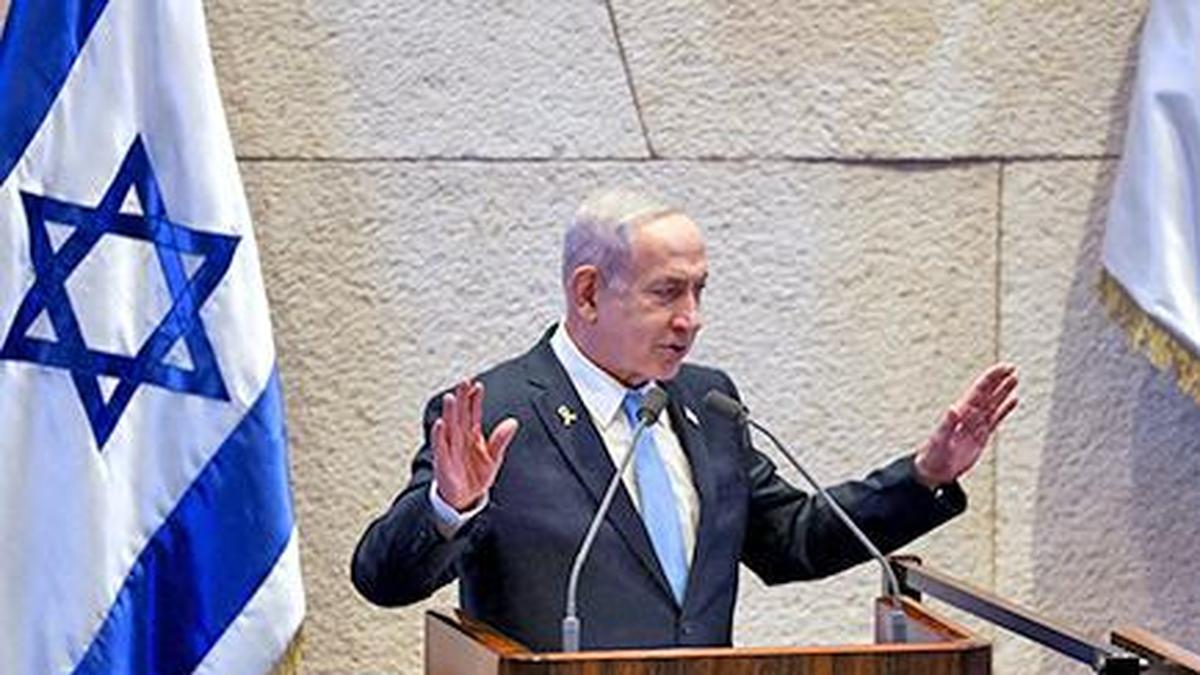
Benjamin Netanyahu is selling a fantasy of a frictionless West Asian alliance that doesn't exist. The standard narrative suggests that through sheer military will and a series of "crushing" blows, Israel can force a permanent tectonic shift in regional power. It’s a seductive story for investors and voters alike, but it ignores the friction of history. You cannot bomb a region into a stable security architecture.
The "lazy consensus" in current geopolitical analysis is that the Abraham Accords and shared fear of Tehran have created a permanent, pro-Israel bloc. This view treats Middle Eastern nations like static pieces on a chessboard rather than dynamic actors with their own domestic pressures. Netanyahu talks about "forging alliances" as if he’s welding steel, but in reality, he’s trying to glue sand.
The Mirage of Systematic Destruction
The phrase "systematically crushing Iran" sounds impressive in a press briefing. In reality, it’s a tactical success masquerading as a strategic victory. Israel has undeniably degraded Hezbollah’s leadership and hit Iranian infrastructure with surgical precision. But decapitation is not destruction.
History shows that decentralized ideological movements thrive on the vacuum left by removed leaders. When you "crush" a proxy, you often just radicalize the next generation of its survivors. The premise that a series of kinetic strikes equals a total victory is the same flawed logic that led the United States into a twenty-year quagmire in Afghanistan. You can dismantle a command structure; you cannot dismantle an idea with a Hellfire missile.
The Alliance of Convenience is Not a Partnership
The "important countries in West Asia" Netanyahu references—primarily the Gulf monarchies—are not Israel’s friends. They are Israel’s neighbors with a shared interest in checking Iranian expansion. There is a massive difference.
I’ve watched diplomats and analysts mistake a temporary alignment of interests for a long-term strategic marriage. The Gulf states are playing a sophisticated game of hedging. They want Israeli technology and intelligence to counter Tehran, but they have zero interest in being the frontline in a regional war that destroys their own multi-billion-dollar "Vision 2030" projects.
The moment the cost of the Israeli alliance outweighs the benefit of Iranian containment, the "forged alliance" will crack. Saudi Arabia, for instance, has been quietly restoring ties with Tehran. Why? Because they know that Israel can leave the region’s problems behind if things get too hot, but they have to live next to Iran forever.
The Intelligence Trap
Netanyahu relies on the perceived invincibility of the Mossad and the IDF to maintain his regional standing. This is a dangerous gamble. High-tech surveillance and assassination capabilities are impressive, but they are not a substitute for a political solution.
The belief that technical superiority can override the need for diplomatic compromise is the ultimate hubris. We saw this on October 7. The most sophisticated border fence in the world and the most advanced signals intelligence on the planet failed because the human element—the desperation and the planning of an asymmetric enemy—was underestimated.
Relying on "crushing" tactics creates a false sense of security. It leads to the "Expert’s Blind Spot," where you become so good at the tactical game that you forget you’re losing the strategic one. While Israel is busy hitting targets in Lebanon and Yemen, the underlying causes of regional instability—poverty, radicalization, and the Palestinian stalemate—are festering.
Dismantling the Iranian Octopus
The "Octopus Doctrine"—targeting the head (Tehran) rather than just the tentacles (proxies)—is the centerpiece of the current Israeli strategy. On paper, it makes sense. If you kill the source of the funding and the orders, the proxies die.
However, this assumes Iran is a rational, centralized actor that will simply quit when hit hard enough. The Iranian regime views its regional influence as an existential necessity, not a luxury. By pushing the "crushing" narrative, Netanyahu is backing a nuclear-capable-adjacent regime into a corner. When you corner a regime that believes it has a divine mandate, you don’t get a surrender; you get a desperate, unpredictable escalation.
The Economic Reality No One Mentions
Wars are expensive. "Crushing" enemies costs billions. Israel’s economy, once the "Startup Nation" darling, is under immense strain. High-tech workers are in uniform, credit ratings have been downgraded, and the cost of defense is eating the budget for social services and infrastructure.
Netanyahu’s allies in the Gulf aren't going to fund a perpetual war. They want stability for their sovereign wealth funds. If Israel becomes a "Sparta" state—perpetually at war and economically drained—its value as an ally plummets. A weak economy is a far greater threat to Israel’s long-term survival than a depleted Hezbollah.
The Wrong Question
People often ask: "Can Israel defeat Iran’s proxies?"
The answer is yes, tactically. But that’s the wrong question.
The right question is: "Can Israel survive the victory?"
If "crushing" Iran results in a regional wasteland, a collapsed economy, and global diplomatic isolation, what exactly was won? The current path assumes that power is the only currency in West Asia. It ignores the currency of legitimacy and the reality of geographic permanence.
Imagine a scenario where Israel successfully eliminates the current leadership of every proxy group. Within five years, new groups will emerge, funded by the same grievances, potentially more radicalized because they saw the "systematic crushing" of their predecessors. This isn't a strategy; it's a treadmill.
Stop Chasing the "Total Victory" Ghost
Total victory is a 20th-century concept that doesn't apply to 21st-century asymmetric warfare. You don't win these conflicts; you manage them. Netanyahu’s rhetoric of "crushing" and "forging" is an attempt to apply old-world solutions to a complex, fluid reality.
Instead of chasing a military finish line that keeps moving, the focus should be on creating a regional equilibrium where the cost of conflict is too high for all parties, including Iran. This requires more than just bombs; it requires a level of diplomatic agility that the current Israeli government has traded for populist slogans.
The "alliances" Netanyahu boasts about are transactional and fragile. If Israel wants a real, "forged" future in West Asia, it has to offer the region more than just a common enemy. It has to offer a vision of shared prosperity that doesn't involve a permanent state of war.
The harder you squeeze the region, the more it slips through your fingers. Real power isn't the ability to crush your enemies; it's the ability to make your presence in the neighborhood indispensable. Israel is currently doing the former at the expense of the latter.
Build a bigger table, not just a bigger hammer.
Would you like me to analyze the specific economic impact of the prolonged conflict on Israel's tech sector?