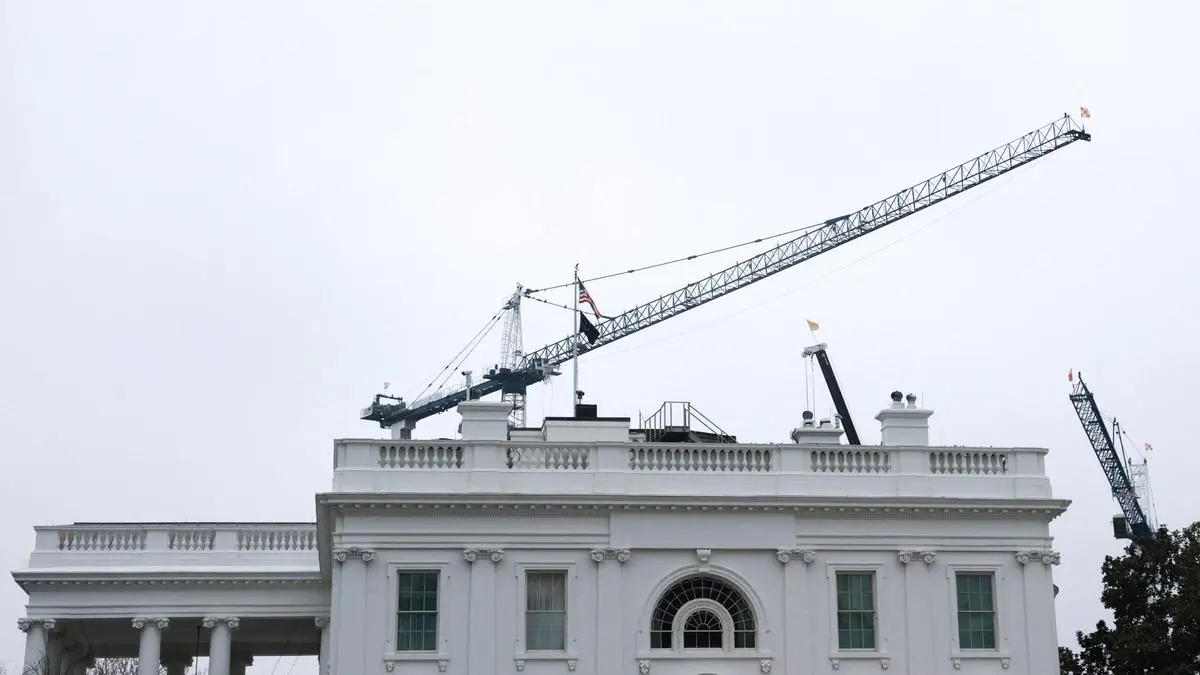
The sound of a hammer hitting a nail is usually the sound of progress. It is rhythmic, industrious, and hopeful. But inside the thick, historic walls of the White House, that same sound can sometimes echo like a heartbeat out of sync. It becomes a question of permission.
Consider a hypothetical carpenter named Elias. He has spent thirty years perfecting his craft, turning raw oak into pieces of history. He receives a work order to begin framing a new ballroom. He isn't thinking about the Constitution or the delicate balance of three branches of government. He is thinking about the grain of the wood, the level of the floor, and the instruction from the West Wing to get it done fast.
Elias is the human face of a much larger friction. When a President decides to renovate the most famous house in the world, it isn't just about interior design. It is about the checkbook of a nation.
A federal judge recently stepped into the dust-filled air of this construction site and told the hammers to stop. The ruling was simple: you cannot build a ballroom without the people’s consent. More specifically, you cannot build it without the money being explicitly cleared by Congress. This isn't a story about architecture. It is a story about the invisible fences that keep a democracy from becoming a monarchy.
The Ghost in the Ledger
Money in Washington is rarely just money. It is a signal of intent. When the Trump administration moved to begin a significant expansion of the White House facilities, they weren't looking for a line item in a public budget. They were looking for a shortcut.
The administration argued that they could move funds from other accounts—pots of gold already sitting in the basement of the executive branch—to fund the construction. They saw it as a matter of efficiency. Why wait for the slow, grinding gears of a divided Congress when the lumber is already bought and the plans are drawn?
But the law sees it differently. The Power of the Purse is the most boring-sounding superpower in the American arsenal, yet it is the most vital. It belongs to Congress. It is the only thing that prevents a leader from waking up one morning and deciding to build a moat, a monument, or a ballroom on a whim.
Imagine you are a taxpayer in a small town in Ohio. You see your bridge crumbling and your local school asking for a bake sale to buy new textbooks. Then you hear that a multimillion-dollar ballroom is being erected in D.C. because someone found a "loophole" in a discretionary fund. The judge’s order was a reminder that every cent spent by the executive branch must have a clear, traceable path back to the people who earned it.
The Weight of the Gavel
The courtroom where this decision landed was quiet. There were no protesters, no flashing lights, just stacks of legal briefs and a judge who had to decide where the White House’s property line truly ends.
The administration’s lawyers argued that the construction was a matter of national security and diplomatic necessity. They painted a picture of a White House that was cramped, outdated, and unable to host the world's leaders with the dignity required of a superpower. There is truth in that. Anyone who has toured the West Wing knows it is surprisingly small, a series of narrow hallways and repurposed closets.
But the judge looked past the floor plans. The ruling focused on a fundamental breach of protocol. To bypass Congress is to bypass the oversight that keeps the system honest. When a President decides to bypass the legislative branch, they are essentially saying that the rules of the house don't apply to the person living in it.
The halt wasn't just a pause in construction. It was a cold shower for an administration that had grown accustomed to moving fast and breaking things. In the private sector, if a CEO wants a new boardroom, they order it. In a democracy, the CEO has to ask the board of directors—and the board of directors is 535 people with 535 different agendas.
The Quiet Power of the No
The beauty of this legal intervention lies in its stubbornness. It is unglamorous. It is a piece of paper that stops a bulldozer.
Think about the precedent. If a President can build a ballroom today without a vote, what can they build tomorrow? A private bypass? A wall? A legacy? The judge's decision was a defense of the mundane. It asserted that the process is more important than the product.
There is a certain irony in the fact that the construction was for a space meant to host grand celebrations. A ballroom is a place for music, dancing, and the soft clinking of champagne glasses. It is a stage for the display of power. But the most powerful thing in that room right now isn't the gold leaf or the chandeliers. It is the empty space where those things were supposed to be.
That emptiness is a monument to the rule of law. It says that even the most powerful man in the world cannot move a single brick if the law says the brick must stay put.
The workers had to pack up their tools. Elias, our hypothetical carpenter, goes home. The wood sits in stacks, covered in plastic, waiting for a vote that may never come. The administration might appeal, and they might find a way to win in a higher court, but for now, the silence in the unfinished room is deafening.
The Stakes We Don't See
Most people will read the headline and move on. They will see it as another political spat, another "us versus them" moment in a polarized era. But look closer at the grain of the story.
This is about the tension between the temporary and the permanent. A President is a tenant. They are there for four years, maybe eight. They are stewards of a building that belonged to the people long before they arrived and will belong to the people long after they leave. When a tenant starts knocking down walls without the landlord's permission, the landlord has every right to call the authorities.
The "landlord" in this case is the American public, represented by the messy, argumentative, and often frustrating members of Congress. We have decided, as a society, that we would rather have a slow government that asks for permission than a fast one that asks for forgiveness.
The construction site stands still. The dust settles on the unfinished floorboards. Outside, the world keeps spinning, and the political cycle continues its relentless churn. But inside those gates, there is a sudden, sharp clarity.
You can have the most expensive architects in the world. You can have the best lumber and the most skilled craftsmen. You can have the vision of a grand hall that will stun the leaders of nations. But if you don't have the signatures of the people's representatives, you don't have a ballroom. You have a pile of wood and a very expensive lesson in humility.
The hammers are silent. The blueprints are rolled up. The law, in its dry and dusty majesty, has reminded everyone that the White House is not a palace, and the man inside is not a king. It is a home that belongs to everyone, and any change to its foundation requires a conversation that includes the whole family.
For now, the only thing being built in that empty space is a reminder that some boundaries are not meant to be crossed, no matter how much gold you have to decorate the other side.