The coffee at the corner bar in Testaccio is always too hot, served in a thick ceramic cup that smells faintly of burnt sugar and old copper. Outside, the Roman morning arrives not with a whisper, but with the metallic rattle of rolling shutters, the screech of a Vespa braking on wet cobblestones, and the heavy, humid heat that settles over the Tiber long before noon.
For decades, the rhythm of life down here was measured by a very specific kind of political vertigo. Governments in Italy came and went like summer storms. You could set your watch by a crisis. A coalition would fracture over a pension reform or a regional tax, a minister would resign over espresso and croissants, and before the dust had settled, a new face would be standing in front of the microphones at the Quirinal Palace, promising a fresh start that everyone in the room knew would last about fourteen months.
Fourteen months. That was the unofficial lifespan of an Italian administration. Long enough to unpack the boxes, short enough to avoid solving any real problems.
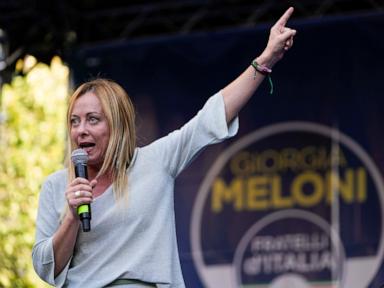
Then came Giorgia Meloni.
And something strange happened to the calendar.
To understand what it means for a government to set a longevity record in a country famous for political ephemera, you have to step away from the television screens in Montecitorio and walk the narrow, laundry-strung alleys of Trastevere. You have to talk to people like Marco, who runs a hardware shop that has been in his family since the lira was still in pockets. Marco doesn't care much for ideological labels. He cares about the price of electricity, the cost of importing steel hinges from Milan, and whether the tourists will keep filling his father's old neighborhood with the sound of rolling suitcases.
When Meloni took office, Marco stocked up on canned goods and waited for the inevitable collapse. It is what you do in Rome. You brace for impact. You expect the rug to be pulled because the rug has always been pulled.
Yet, month after month, the rug stayed firmly on the floor.
Two years bled into three. The seasons turned from the suffocating yellow haze of August to the sharp, bone-chilling damp of January, and still her cabinet remained intact. No dramatic walkouts by disgruntled coalition partners. No midnight knife-fights in the corridors of power. For a political system built on tectonic instability, this prolonged calm feels less like a triumph of democracy and more like holding your breath underwater for an ungodly amount of time.
How did she do it?
The answer is partly arithmetic and partly theater, wrapped in a masterclass of political survival.
(Note: When analyzing a leader's longevity, political scientists often point to parliamentary majorities as pure math, but in Italy, math is merely a suggestion until it is backed by absolute discipline.)
Meloni’s secret weapon was not some brilliant economic breakthrough or a sudden rediscovery of fiscal health. Her secret weapon was sheer, unadulterated scarcity of alternatives. She positioned herself as the lone survivor on a sinking raft, convincing her fractious allies—Matteo Salvini on her right and the fading remnants of Silvio Berlusconi’s Forza Italia party alongside her—that if any one of them rocked the boat, they would all drown together.
It is a remarkably effective glue. Fear binds tighter than friendship.
And so, Italy finds itself in uncharted territory. The statistics are dry, but their implications are heavy. Meloni’s administration has outlasted nearly every post-war government that came before it. In a nation where political mortality is usually measured in seasons, she has claimed years.
(Note: This comparison is based on historical averages tracked by the Italian Ministry of Interior, where the average postwar government lifespan hovers stubbornly around thirteen to fourteen months.)
Yet, longevity in Rome is a double-edged sword. When a government lasts long enough to break records, it also lasts long enough to run out of excuses.
In the beginning, every systemic failure—the sluggish growth, the creaking healthcare infrastructure in the southern provinces, the bitter debates over migration—could be blamed on the legacy of the past. We inherited a mess, the narrative went. Give us time to clean the stables.
Time, however, is a relentless auditor.
Walk past the Colosseum on a Tuesday afternoon, past the tour groups snapping photos of ancient stone, and look at the young people leaning against the stone walls, scrolling through job listings on cracked smartphone screens. For them, a stable government does not translate to a secure future. Youth unemployment remains a persistent, bleeding wound in the Italian social fabric. Young graduates still pack their bags for London, Berlin, or New York, trading the beauty of the Mediterranean for a studio apartment north of the Alps because Rome offers them prestige without a paycheck.
Meloni’s longevity has given her administration a veneer of unshakeable strength on the international stage. Brussels no longer views Rome with the raised eyebrow of skeptical guardianship. European leaders who once whispered warnings about far-right radicalism now find themselves hosting a pragmatist who wears tailored white suits, speaks carefully modulated language about fiscal responsibility, and plays the role of the reliable stateswoman with practiced ease.
She learned the oldest lesson of Italian politics: if you want to change the house, you first have to convince the neighbors that you are not going to set the curtains on fire.
She moderated her tone. She kept Italy firmly aligned with NATO and the European Union’s financial guardrails. She played the hawk on immigration while quietly cutting deals behind closed doors to secure broader European cooperation. It was a bait-and-switch executed with surgical precision. The firebrand of the opposition benches became the institutional mother figure of the executive office.
And the public bought it. Or, more accurately, they grew exhausted by the alternative.
Exhaustion is a powerful political force. After decades of musical chairs in Parliament, the average Italian voter is deeply tired. They are tired of elections called every time a minor minister has a bad week. They are tired of the endless political soap opera that leaves actual infrastructure rotting in plain sight.
When Marco looks out his shop window at the potholes that have gone unfilled for three mayoral terms, he doesn't cheer for Meloni's ideological purity. He just shrugs his shoulders and mutters that at least she is still there. At least nobody has called a snap election that would halt the pension reform talks for another six months of national belly-gazing.
This is the strange, hollow victory of the record-breaking term. It is not built on soaring economic miracles or a renaissance of the Italian spirit. It is built on inertia. The country is not necessarily moving forward with breathtaking speed; it has simply stopped falling backward into the abyss every time the wind blows from the north.
As the sun dips behind the rooftops of Testaccio, casting long, bruised shadows across the cobblestones, the streetlights flicker on with a low, electrical hum. The tables outside the trattorias fill up with families sharing plates of carbonara and carafes of house red. They talk about football, about the price of tomatoes, about the cousins who moved to Canada.
They do not talk about the longevity record. They do not debate the finer points of constitutional stability or the nuances of coalition discipline.
They just live their lives, around and beneath the machinery of a state that, for once, refuses to break apart before tomorrow morning. Whether that survival is enough to heal a country that has been fracturing slowly for generations is a question left for another season. For now, the coffee is cooling, the shutters are staying open, and Rome waits to see what happens when the record-breaker finally has to face the bill.