Salt crusts the windshield of the patrol boat long before dawn breaks over the water.
You cannot smell the oil until the wind shifts. Then, beneath the sharp bite of diesel exhaust and ancient brine, it catches the back of your throat. Heavy. Sweet. The smell of raw wealth, compressed and bubbling up from subterranean vaults thousands of feet below the seabed, waiting to be loaded into the rusted bellies of supertankers.
Out here, the map changes.
In geography classrooms thousands of miles away, the Strait of Hormuz looks like a narrow neck of blue ink, a convenient pinch-point separating the Persian Gulf from the Gulf of Oman. To the politicians in Washington and the strategists in Tehran, it is a chessboard.
To the men staring through salt-flecked binoculars at three in the morning, it is a throat.
And someone is always squeezing.
The Geography of a Chokepoint
Consider the physical reality of the water. At its narrowest point, the shipping lanes are barely twenty-one miles wide. But the deep-water channels—the narrow trenches carved by ancient currents where massive, fully laden crude carriers can safely pass without scraping their hulls on jagged coral or hidden sandbars—are compressed down to just two miles in each direction.
Two miles inbound. Two miles outbound.
Sandwiched between the rugged, sun-baked cliffs of Oman and the militarized coast of Iran, this watery corridor moves roughly a fifth of the world’s petroleum consumption. Every single day, tankers the length of aircraft carriers glide through this bottleneck. They move with the lumbering grace of pregnant whales, vulnerable, heavy, and utterly indispensable to the global economy.
When people talk about energy security, they usually talk about futures markets, OPEC quotas, or strategic petroleum reserves sitting safely underground in salt caverns in Texas. They talk about numbers on a screen.
They rarely talk about the humidity. They rarely talk about the deafening whine of small, high-speed patrol craft cutting across the bow of a million-ton vessel at forty knots, weapons manned, testing the reflexes of a captain who has not slept in thirty-six hours.
The Rhetoric and the Reality
Enter the political theater.
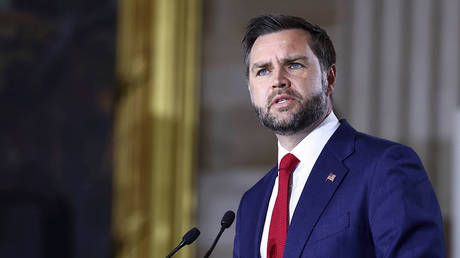
In recent public pronouncements, Donald Trump made a characteristic splash, tossing out a typically unorthodox assertion regarding the strategic waterway and boasting of American success against Iran. Among the soundbites was a striking, provocative claim framing the territory through a lens of absolute dominance, pushing the rhetorical boundaries to suggest a form of ownership or ultimate operational control—effectively labeling the contested artery as "US territory" in terms of power projection.
The diplomatic corps winced. The maritime lawyers sighed. The headlines exploded.
Critics immediately pointed out the obvious, literal error. The Strait of Hormuz is flanked by Oman and Iran. It is governed by international maritime law, specifically the United Nations Convention on the Law of the Sea, which guarantees transit passage through international straits used for international navigation. It is not, by any stretch of cartography or legal statute, American soil.
Yet, dismissing the statement as mere bluster misses the deeper, psychological machinery at play.
Trump was not speaking to a panel of international jurists in The Hague. He was speaking the language of raw, unvarnished hegemony. He was tapping into a foundational American belief that global commerce flows because American steel and American gray-hull warships keep the lanes open.
Think of it this way. Imagine standing on the porch of a house you do not own, but whose locks you change, whose security system you pay for, and whose rent you guarantee. Do you own the house? Legally, no. Practically? Try telling the landlord otherwise when the rent check is signed with an aircraft carrier strike group.
The Invisible Price Tag
Let us ground this in a hypothetical scenario to understand the stakes. Let us call him Captain Miller.
Miller is forty-eight years old, a veteran merchant mariner hailing from the rainy coast of Maine. He commands a 300,000-ton VLCC—a Very Large Crude Carrier. He has spent thirty years on the water, watching the world change through the window of a bridge that smells of stale coffee and electronic heat.
When Miller’s ship enters the Strait of Hormuz, his heart rate does not spike because of the physical width of the water. It spikes because of the silence on the radio.
The Islamic Revolutionary Guard Corps Navy operates fast-attack craft throughout the area. They paint ship hulls with targeting radar. They issue radio challenges in heavily accented English, demanding to know the ship's cargo, destination, and registry.
Legally, under international transit passage rules, Miller does not have to stop for them. He can keep steaming.
Practically, if a swarm of armed speedboats with heavy machine guns and rocket-propelled grenades converges on his bridge wing, international law feels very thin. It is just paper against iron.
This is where the American footprint enters the narrative. Miller looks out over the horizon and sees the silhouette of a guided-missile destroyer riding the swells miles away. That grey hull is an invisible shield. It is the reason the speedboats keep their distance. It is the reason the crude keeps moving.
When political leaders boast about controlling the Strait, they are pointing directly at that destroyer. They are translating the abstract weight of military deterrence into the coarse, vernacular swagger of real estate. We keep it open, therefore it runs on our terms.
The Calculus of Containment
To understand why this matters now, we have to look backward.
For decades, American foreign policy in the Middle East operated on a simple premise: keep the oil flowing at all costs. The Carter Doctrine, articulated in 1980, drew an unambiguous line in the sand. Any attempt by an outside force to gain control of the Persian Gulf region would be regarded as an assault on the vital interests of the United States of America.
Over the years, that doctrine evolved. The primary threat shifted from Soviet invasion to regional friction, specifically the perpetual, low-intensity cold war between Washington and Tehran.
When the United States pursued a campaign of maximum pressure against Iran—withdrawing from the nuclear deal, re-imposing crushing economic sanctions, and targeting Iranian oil exports—Tehran’s response was predictable. If Iranian oil could not move through the Strait of Hormuz, nobody else's oil would move either.
We saw the manifestation of this strategy in the summer of 2019. Tankers were mysteriously sabotaged with limpet mines off the coast of Fujairah. Drones were shot down. Surveillance aircraft were blasted out of the sky. The tension in the water was so thick you could cut it with a knife.
In that environment, deterrence is everything. If the United States projects weakness, the chokepoint tightens. If the United States projects overwhelming strength—or the illusion of absolute territorial command—the risk calculus shifts.
When Trump claims the Strait as a conceptual extension of American power, he is channeling that deterrence doctrine in its most aggressive form. He is arguing that economic success and security are not maintained through polite diplomacy in air-conditioned conference rooms, but through the raw, undeniable assertion of might.
The Human Cost of the Game
We forget the people caught in the middle.
We talk about barrels per day. We talk about Brent crude futures climbing three dollars a barrel on a nervous Wednesday morning. We talk about geopolitical leverage.
We rarely talk about the Filipino welder working down in the engine room of a battered tanker, sweating through his coveralls while the ship passes within artillery range of a hostile shore. We rarely talk about the young Iranian conscript standing on the deck of a patrol boat, clutching a rifle, wondering if the grey behemoth sliding past him is carrying the weapons that will level his city.
The rhetoric from Washington is loud. The rhetoric from Tehran is defiant.
Meanwhile, the water remains blue, deep, and terribly indifferent.
The truth lies somewhere in the messy space between legal fiction and raw power. The Strait of Hormuz is not American territory. Not legally. Not cartographically. Not historically.
Yet, as long as the global economy depends on the steady pulse of crude moving through that narrow maritime artery, and as long as American steel is the only force standing between open commerce and total paralysis, the superpower will continue to treat the world's most critical chokepoint as its own backyard.
The ships keep moving. The captains keep staring through their binoculars into the predawn haze. And the oil keeps flowing, heavier than blood, carrying the weight of empires across the dark, restless sea.