The ink on a target list never truly dries. It smudges, it bleeds, and eventually, it is crossed out by a heavy, black line. In the high-stakes theater of global geopolitics, these lines are often presented to the public as a scorecard—a tally of wins and losses designed to reassure a nervous world that the "good guys" are gaining ground. Recently, that scorecard grew by forty-eight names.
Forty-eight.
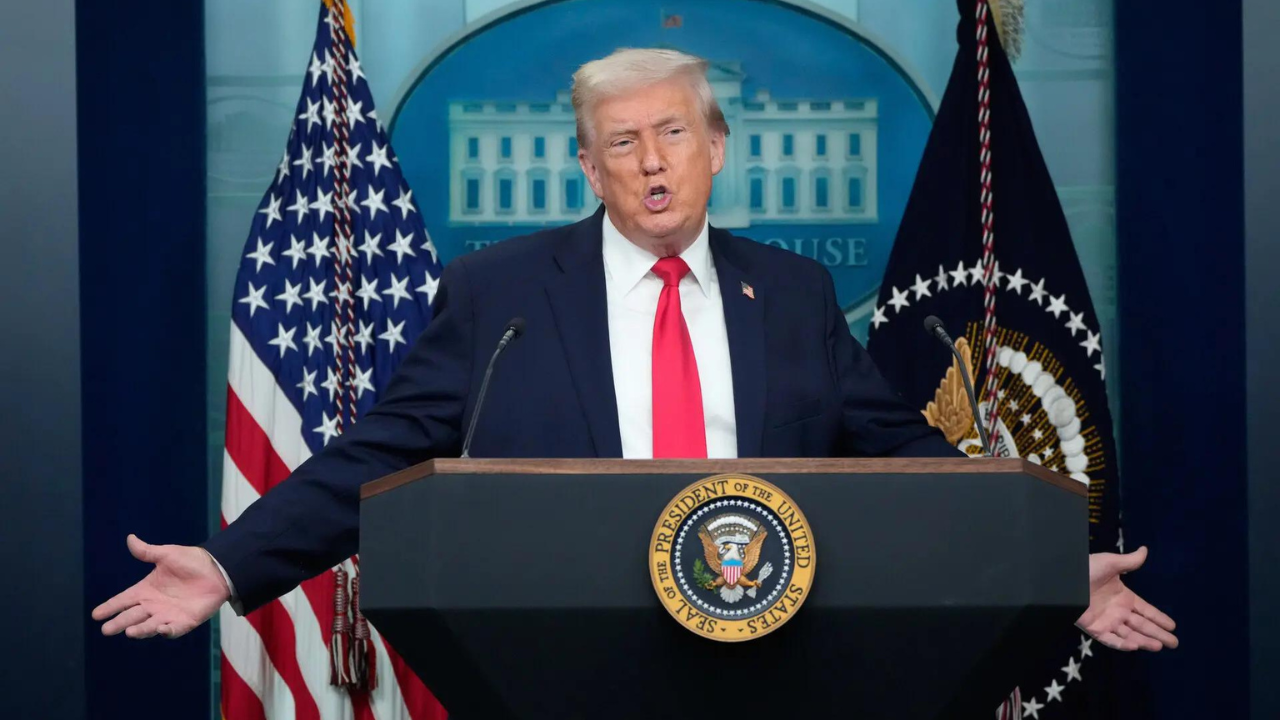
It is a number that fits neatly into a headline. It sounds decisive. It sounds like progress. When Donald Trump announced that nearly five score of Iranian leadership figures had been "taken off the board," he wasn't just reporting military data; he was selling a narrative of surgical finality. But behind the podium and the bravado lies a much more complex, much more human reality. To understand what happens when forty-eight pillars of a regional power are kicked out from under the roof, you have to look past the press releases and into the dust of the streets where the consequences actually live.
Imagine, for a moment, a mid-level bureaucrat in Tehran. We will call him Reza. Reza is not a martyr, nor is he a mastermind. He is a man who carries a briefcase, worries about the rising price of bread, and makes sure the logistics for a specific wing of the Revolutionary Guard run on time. He is a cog. But when the "top forty-eight" are removed, the machine doesn't just stop. It screams. The vacuum left by a leader isn't filled by air; it is filled by the desperate, clawing ambitions of those beneath them.
Reza now looks at the empty chair of his superior not with grief, but with a cold, creeping dread. Who takes over? Is the new boss more radical? Is he more incompetent? In the world of covert conflict, a known enemy is often safer than an unknown one. By removing the established guard, the "major success" claimed by the administration may have inadvertently traded a predictable threat for a chaotic one.
Conflict is rarely a straight line. It is a series of ripples.
The escalation between Washington and Tehran has often been described as a "shadow war," a term that suggests something clean, hidden, and perhaps even sophisticated. The reality is far grittier. It is a sequence of cold-blooded calculations made in rooms with no windows, where the "human element" is reduced to a series of heat signatures on a drone feed. When the President speaks of these forty-eight leaders, he is speaking of the removal of infrastructure. But in the Middle East, infrastructure is made of blood, family ties, and decades of shared history.
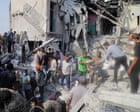
Consider the ripple effect of a single strike. When a high-ranking official is neutralized, the intelligence community celebrates a "kinetic success." However, on the ground, that strike becomes a recruitment poster. Every funeral for one of those forty-eight is an opportunity for the remaining leadership to bind the public's identity to a cause that might have been flickering. It turns a political struggle into a visceral, emotional one.
The strategy behind these removals is rooted in the concept of "decapitation"—the idea that if you cut off the head, the body will wither. It is a logical theory. It is also, historically, a flawed one. Organizations like the IRGC are not structured like Western corporations where the removal of a CEO leads to a dip in stock price. They are structured like hydras. For every name crossed off the list, there are three younger, more ideological, and perhaps more vengeful officers waiting in the wings. They have grown up in the shadow of sanctions. They have watched their mentors die in flashes of silver and fire. They are not looking for a seat at the diplomatic table; they are looking for a way to balance the ledger.
The American public hears "forty-eight gone" and thinks of a game of chess. We think of the King being cornered. But this isn't chess. It’s more like a high-stakes game of Jenga played in the dark. We pull a block out, and the tower wobbles. We pull another, and it leans. The claim of success is based on the fact that the tower hasn't fallen yet. But the leaning is the dangerous part. A leaning tower is unpredictable. It can fall in any direction, crushing anyone standing too close.
There is a specific kind of silence that follows a major escalation. It’s the silence of a breath being held.
In the corridors of the Pentagon and the halls of the White House, the data suggests that Iran is being squeezed. The economy is struggling. The leadership is thinning. The "maximum pressure" campaign is, on paper, doing exactly what it was designed to do. But pressure has to go somewhere. It doesn't just vanish into the ether. It compresses until the container can no longer hold it.
We often talk about "strategic wins" without defining what the ultimate victory looks like. Is victory a world where Iran has no leaders? Is it a world where the current regime is replaced by something else? If so, what? History is littered with the ghosts of "successful" interventions that forgot to plan for the day after the victory. When forty-eight leaders are removed, the immediate threat might diminish, but the long-term instability grows. We are trading today's security for tomorrow's uncertainty.
This brings us to the invisible stakes.
Behind the rhetoric of "taking them out" is the reality of the people caught in the middle. The Iranian student who wants to study abroad but is now viewed with suspicion. The American soldier stationed in a dusty outpost in Iraq, wondering if he will be the target of the "proportional response" that everyone knows is coming. The diplomat who had spent years building a back-channel of communication, only to see it incinerated in a single afternoon.
These are the people who pay the bill for the "successes" touted on the news.
The shift in the conflict is no longer about territory. It’s about the psyche. It’s a war of nerves. By focusing on the body count of the leadership, the administration is leaning into a very old-school version of power—the idea that the loudest voice and the biggest stick always win. But in the twenty-first century, power is also about narrative. If the narrative becomes "the West is an unstoppable force of destruction," then the counter-narrative becomes "resistance at any cost."
It is a cycle that feeds itself.
The news cycle will move on. Forty-eight will become fifty-six, or sixty-four, or perhaps the numbers will stop being reported altogether as the conflict shifts back into the deep shadows. We will be told that we are safer. We will be told that the enemy is weak. We will be told that the mission is being accomplished.
But the families of those in the line of fire—on both sides—know better. They know that every name crossed out on a list is a person who had a story, a family, and a network of influence that doesn't just disappear because they are gone. They know that the cost of a name is often higher than the value of the target.
When the cameras are turned off and the podiums are packed away, the reality remains. We are not just removing leaders; we are reshaping a region’s future with every strike. We are writing a history that our children will have to read, and perhaps, eventually, have to settle.
The ledger is never truly balanced. It is just passed down to the next generation, heavier and more stained than before. We count the forty-eight and call it a win, but the shadows they leave behind are growing longer by the hour.