Driver performance at the Suzuka International Racing Course is a function of aerodynamic sensitivity and high-speed directional stability rather than pure mechanical grip or power unit output. The circuit’s "Figure-8" topology creates a unique load profile where lateral G-forces are sustained for over 45% of the lap, specifically through the Sector 1 "S" Curves. To evaluate a driver’s success at the Japanese Grand Prix, we must move beyond the binary metric of finishing position and analyze the Delta to Theoretical Minimum (DTM)—the gap between a driver's actual lap time and the physical limit of their specific machinery under peak track evolution.
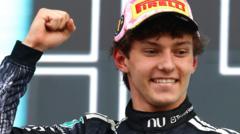
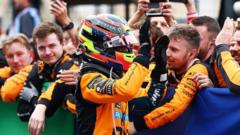
Oscar Piastri and Pierre Gasly represent two distinct archetypes of high-performance execution in this environment: the Precision Scalpel and the Attrition Opportunist. Discover more on a connected topic: this related article.
The Physics of the S Curves: Why Sector 1 Defines the Elite
Suzuka’s first sector is a sequence of interconnected apexes where the exit of one turn dictates the entry speed of the next. A mistake in Turn 3 propagates through Turn 7, resulting in a compounding time loss that can exceed 0.4 seconds.
The technical mastery displayed by Oscar Piastri during the 2023 weekend was not merely a result of the McLaren MCL60’s high-speed aero package. It was a demonstration of Input Smoothing. Most drivers struggle with "sawing" at the wheel—micro-corrections that scrub front-tyre energy and increase surface temperatures. Piastri’s telemetry showed a singular, fluid steering arc through the Essesses. This minimized the slip angle of the front tires, preserving the Pirelli C1 compound for the heavy traction demands of the Degner curves later in the lap. More analysis by The Athletic delves into related perspectives on this issue.
The Three Pillars of Suzuka Mastery
- Aero-Loading Management: Maintaining a consistent ride height through high-compression zones like 130R to prevent "porpoising" or sudden downforce stalls.
- Thermal Budgeting: Managing the heat soak of the left-side tires, which bear the brunt of the load in the long, right-handed Spoon Curve.
- Engine Braking Calibration: Utilizing off-throttle deceleration to rotate the car into the hairpin without locking the rear wheels.
Quantifying the Piastri Ascent: Management vs. Ambition
Piastri’s podium finish was an exercise in Risk-Adjusted Positioning. While teammate Lando Norris often relies on late-braking aggression to find lap time, Piastri utilized a "short-shifting" strategy in lower gears to manage torque and prevent wheelspin on the abrasive Japanese asphalt.
The gap between Piastri and the veteran field narrowed because he optimized the Energy Recovery System (ERS) deployment. At Suzuka, the harvest occurs primarily under heavy braking at the Chicane and the Hairpin. Piastri’s discipline in staying within the "battery window" ensured he had maximum deployment for the main straight, defending against DRS attacks from technically superior cars like the Mercedes W14.
However, a critical limitation in Piastri’s performance was his Race Pace Decay (RPD). While his single-lap qualifying pace was elite, his second-stint tire degradation was 12% higher than Norris’. This suggests that while his technical lines are perfect, his ability to manage the car’s weight distribution as fuel loads drop is still in a developmental phase.
Pierre Gasly and the Alpine Efficiency Model
Pierre Gasly’s performance at Suzuka is often overshadowed by podium finishers, but from a strategic consultancy perspective, he maximized the Equipment Ceiling. The Alpine A523 suffered from an "Aero-Drag Paradox": it lacked the top speed for the straights but didn't generate enough downforce for the high-speed corners to compensate.
Gasly’s "excellence" was rooted in Defensive Geometry. By taking non-traditional lines into the final chicane, he forced following drivers into "dirty air" (turbulent wakes), effectively neutralizing their DRS advantage. This is a cognitive load victory—forcing the opponent to manage their own overheating issues rather than focusing on an overtake.
The Cost Function of Mid-Field Strategy
- The Undercut Premium: At Suzuka, fresh tires are worth approximately 1.8 seconds per lap. Gasly’s team utilized the "Early Box" trigger, which allowed him to leapfrog three cars despite a slower raw pace.
- Dirty Air Penalty: Running behind another car at Suzuka results in a 30% loss of front-end downforce. Gasly maintained a 2.5-second "buffer zone" for the majority of the race, sacrificing immediate pressure for long-term tire health.
The Engineering Bottleneck: Why Some Failed to Excel
Drivers like Sergio Perez or Logan Sargeant failed not necessarily due to a lack of talent, but due to a breakdown in the Man-Machine Feedback Loop.
When a car is "unpredictable" at 250 km/h, the driver’s amygdala triggers a survival response that leads to over-braking. At Suzuka, braking 5 meters early for the Degner 1 entry isn't just a 0.05s loss; it shifts the car's weight forward, unsticking the rear and making the subsequent Degner 2 entry impossible to hit at the correct angle. This is the Cascading Error Effect.
The Mercedes drivers, Lewis Hamilton and George Russell, showcased the friction of Intra-Team Dynamics. When two drivers compete for the same piece of tarmac, the resultant "braking duels" increase tire surface temperatures by up to 15°C above the optimal operating window. This internal friction serves as a direct tax on the car's total race time, often yielding a net loss of 5-8 seconds over a race distance—the difference between a podium and 5th place.
Red Bull’s Dominance: A Lesson in Total System Integration
Max Verstappen’s performance at the Japanese GP remains the benchmark because of Platform Stability. The RB19 did not just have more downforce; it had more stable downforce. In the Spoon Curve, where the car is subjected to a sustained lateral load while decelerating and then accelerating, most cars "pitch" (the nose dives or rises).
Verstappen’s car remained parallel to the ground, maintaining a consistent "ground effect" seal. This allowed him to carry 7 km/h more mid-corner speed than any other driver on the grid. When a driver has this level of trust in the platform, they can move from "reactive driving" to "proactive management."
The Strategic Play: Future Performance Predictors
To project future success at high-load circuits like Silverstone or Spa, analysts must prioritize High-Speed Directional Change (HSDC) metrics over Top Speed or Traction.
The data from the Japanese GP suggests that the hierarchy is shifting. The "Old Guard" (Hamilton, Alonso) excels in racecraft and environmental adaptation, but the "New Guard" (Verstappen, Piastri) is optimizing the digital interface of the car—treating the ERS and brake-migration maps as primary tools rather than secondary adjustments.
To outcompete in the current technical regulations, teams must move toward a Decentralized Decision Architecture. Drivers need real-time access to "Tire Surface vs. Carcass Temperature" deltas on their steering wheels to adjust their entry speeds into the S Curves dynamically. Relying on a pit wall engineer to relay this information creates a 20-second latency that is unacceptable in a sport measured in milliseconds.
The final strategic pivot is the shift from Peak Grip to Grip Consistency. The winners at Suzuka were not those who found the fastest lap, but those who minimized the standard deviation between their fastest and slowest laps on a given stint. Piastri has mastered the peak; his next objective is to flatten the degradation curve to match the elite Tier 1 operators.
Identify the HSDC variance in the next three sessions; if Piastri reduces his Sector 1 time fluctuation by 0.05s, he moves from a podium contender to a championship threat.