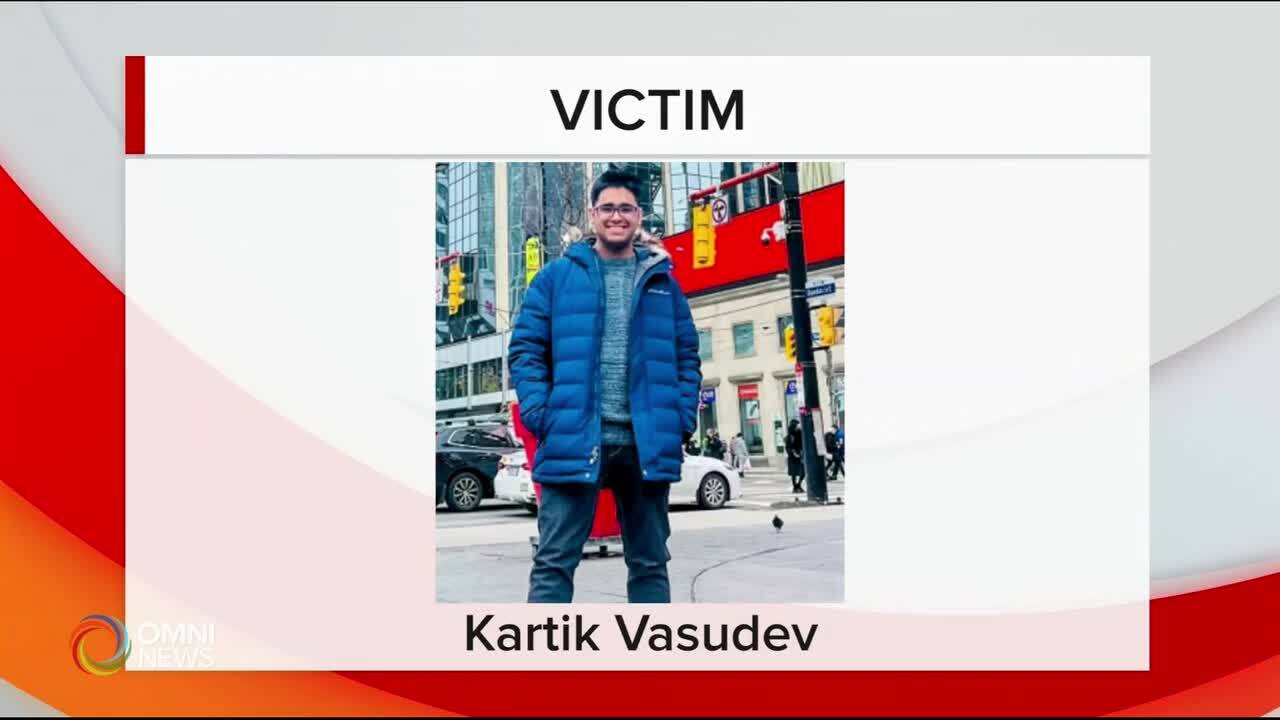
Justice isn't always fast, and it's rarely as simple as a headline makes it seem. For the family of Kartik Vasudev, a 21-year-old international student from India, the wait has been an agonizing four-year journey through a legal system that had to weigh the reality of mental illness against the cold, hard facts of a planned execution. On April 20, 2026, the Ontario Superior Court finally closed that chapter. Richard Jonathan Edwin was found guilty of first-degree murder for the random, unprovoked killings of Kartik Vasudev and 35-year-old Elijah Eleazar Mahepath.
This wasn't a "crime of passion" or a robbery gone wrong. It was a calculated hunt. The judge’s decision to reject the "not criminally responsible" (NCR) defense tells us something crucial about how Canadian law handles the intersection of violent crime and schizophrenia. It’s a case that has shaken the international student community in Toronto and forced a hard look at how someone with a documented history of mental illness could legally amass an arsenal of firearms.
The myth of the impulsive shooter
When we hear about random shootings, we often imagine someone "snapping" or acting out in a sudden, frantic blur. The evidence in the Kartik Vasudev case paints a much darker picture. Superior Court Justice Jane Kelly didn't buy the argument that Edwin was acting solely on the whims of auditory hallucinations.
Instead, the court saw a man who was methodical. He didn't just walk out and fire. He conducted internet searches on how to win gunfights. He researched which human organs were most vulnerable to bullets. He even utilized body-worn cameras. On April 7, 2022, Edwin took the subway to Sherbourne station, waited, and shot Vasudev in the back as the student walked toward the staircase.
What's truly chilling is the "double-back." After Vasudev fell, Edwin didn't just run. He stopped, turned around, and fired again to ensure the job was done. That's not a man who doesn't know right from wrong. That's a man who understands exactly what he's doing.
Why the NCR defense failed
The defense team leaned heavily on Edwin's diagnosis of schizophrenia, which dates back to 2010. They argued his mental state made him incapable of knowing his actions were morally wrong. In Canada, an NCR ruling means the person goes to a psychiatric hospital instead of a prison. It’s a high bar to clear, and for good reason.
Justice Kelly acknowledged the illness but pointed to Edwin’s own admissions to psychiatrists. He told them he wouldn't have shot if his father had been there. He said he wouldn't have shot a woman or a child because they were "more innocent." These distinctions prove he had a moral compass, however warped it was. He also admitted he ran because he knew the police would come.
If you're hiding from the cops, you know you've broken the law. You can't claim you didn't understand the "wrongfulness" of the act while simultaneously taking steps to avoid the consequences of that act.
The victims weren't just statistics
We talk a lot about the killer, but we can't forget who was lost. Kartik Vasudev was a first-semester marketing management student at Seneca College. He’d moved from Ghaziabad, India, to build a future. He was, by all accounts, a "sweet, humble child." His death wasn't just a tragedy for his parents; it was a blow to every family who sends their child across the ocean with the hope of a better life.
Then there was Elijah Mahepath. Killed just two days later near Dundas and Sherbourne. He was walking down the street when Edwin shot him eight times in the back. These two men had nothing in common except they happened to be in the path of a man who decided to play God with a legally purchased handgun.
The massive loophole in gun ownership
How did this happen? It’s the question everyone in Toronto was asking in 2022 and continues to ask today. Edwin had five legally acquired firearms. He had a "cache" of ammunition in his apartment.
Despite a schizophrenia diagnosis that was over a decade old, he navigated the licensing system without a hitch. This points to a massive disconnect between healthcare records and the federal firearm registry. While privacy laws are important, the Kartik Vasudev case is a glaring example of what happens when those silos don't talk to each other.
What happens now for the families
With the first-degree murder conviction, Edwin faces a mandatory life sentence with no chance of parole for 25 years. In Canada, multiple murder sentences are served concurrently, not consecutively, following a Supreme Court ruling a few years back. This means he won't be eligible to even ask for parole until 2047.
For the families, the "life sentence" started four years ago. They’re expected to deliver victim impact statements later this week. If you're following this case, the next step is to watch how the Canadian government responds to the gaps in the gun licensing process. The trial is over, but the policy failures that allowed Edwin to walk into a subway station with a loaded gun are still very much present.
If you’re an international student or a newcomer to the city, don't let this case make you live in fear, but do stay aware of your surroundings. Toronto remains one of the safest big cities in the world, but as this trial proved, "random" doesn't mean "unpreventable."