When Washington gets sucked into a prolonged conflict in the Middle East, someone else always pays the price. Right now, that bill is coming due in Asia. As the ongoing war with Iran drains the United States' finite military stockpiles, security architectures across the Indo-Pacific are buckling.
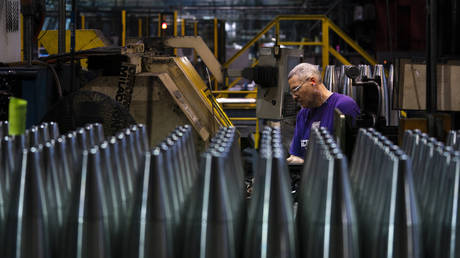
The mainstream press likes to frame military logistics as an abstract budget discussion. It's not. It's about physical inventory. Thousands of multi-million dollar precision interceptors have been fired off to counter incoming Iranian salvos. Because those missiles rely on complex global supply chains, defense contractors can't just flip a switch to replenish them overnight. The US military's remaining inventory of critical defensive assets like Patriot missile batteries has plummeted.
To keep Middle Eastern partners afloat, Washington has quietly delayed or diverted weapons shipments originally earmarked for allies in Europe and Asia. If you're sitting in Seoul, Tokyo, or Taipei, watching Washington drain its reserves for a completely different theater is terrifying.
The High Cost of Draining Patriot Inventories
The numbers tell a brutal story. According to defense analysts, the US military has burned through more than 1,500 Patriot missiles alone during the Iran conflict. Experts estimate current stockpiles have dropped below 1,700 units.
Replacing those interceptors will take at least two years of uninterrupted manufacturing output. That leaves a massive window of vulnerability. Tom Karako, a senior fellow at the Center for Strategic and International Studies, accurately described this crunch as a "generational extinction of conventional deterrence".
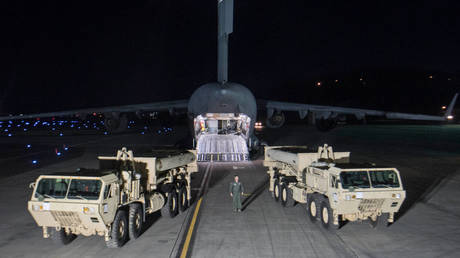
When inventory drops this low, the ripple effects hit forward-deployed units hardest. Tactical surveillance assets and air-defense elements traditionally stationed across the Western Pacific have been pulled away to patch holes in the Persian Gulf. U.S. Forces Korea and regional defense frameworks are operating with fewer safety margins than they've seen in decades.
Why Beijing and Moscow Are Watching Closely
Competitors don't waste crises. Both China and Russia are watching American stockpiles deplete in real-time. They know that every tactical missile expended in the Middle East is one less weapon available for a potential contingency in the Taiwan Strait or the South China Sea.
For years, the Pentagon promised a strategic "pivot to Asia" to counter China's rapid military expansion. Instead, recurring Middle East flare-ups keep dragging Washington backward. This strategic trap exposes a fundamental flaw in American defense planning. The US military tries to maintain global hegemony while possessing a manufacturing base optimized for peacetime.
When a shooting war breaks out, the math doesn't work. You can't fight a multi-front war of attrition without the factory floors to back it up.
The Nuclear Deterrent Dilemma for Asian Partners
This weapon shortfall triggers hard questions in capitals like Seoul and Tokyo. For decades, South Korea and Japan trusted the American nuclear and conventional umbrella to keep adversaries at bay.
When doubts creep in about Washington's ability—or willingness—to supply timely defense hardware, security calculations change fast. Policy circles in these countries are increasingly debating whether relying entirely on an overstretched foreign patron is a smart survival strategy. Some officials are quietly re-examining indigenous deterrence options, including independent nuclear capabilities, because the alternative looks like waiting around to be undefended.
Building indigenous defense capabilities takes years, but the psychological shift happens overnight. Trust is hard to rebuild once it's shaken by empty supply chains.
What Happens When the Smoke Clears
The strategic reality won't reset just because a ceasefire gets signed somewhere in the Middle East. The depletion of advanced munitions creates a multi-year recovery hole.
Washington faces a stark choice. It can either scale back its global commitments to match its actual industrial capacity, or it can keep overextending until an ally pays the ultimate price in a crisis. Until defense production scales up dramatically, America's partners in Asia remain dangerously underequipped for the threats on their doorstep.
Check out this Iran war analysis to understand how regional powers view Washington's military struggles.
http://googleusercontent.com/youtube_content/1